



JS-SEZ poised to attract ‘China Plus One’ investments with fast-tracked approvals, tax incentives
Industry players are pushing hard for expedited approvals, tailored incentives and the establishment of free zones

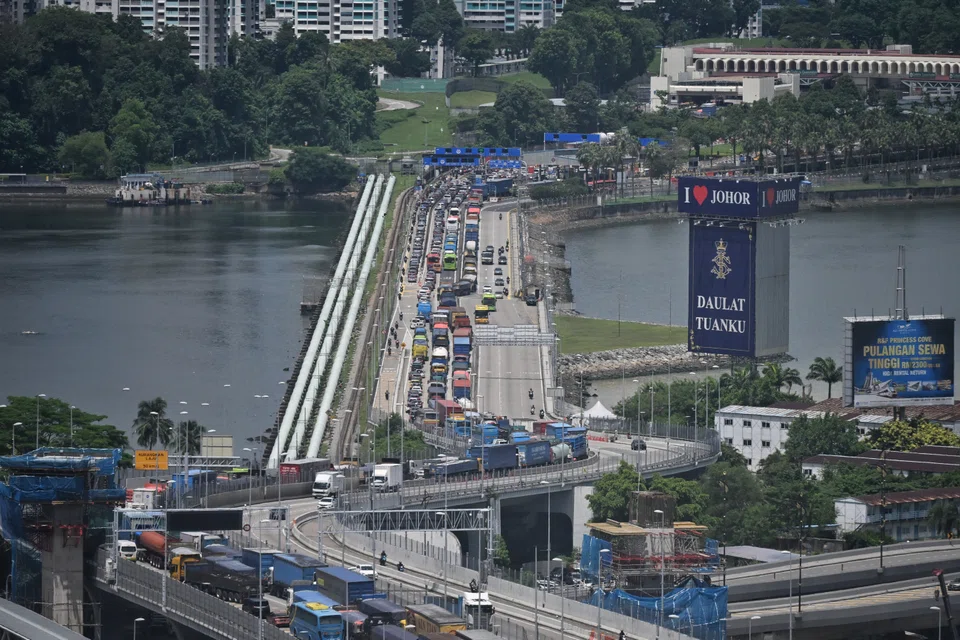
[KUALA LUMPUR] The new Johor-Singapore Special Economic Zone (JS-SEZ) is emerging as a prime destination for global businesses pursuing a “China Plus One” strategy, with market expectations including faster business approvals, targeted incentives and the strategic leverage of Singapore’s financial strength alongside Johor’s cost advantages to drive high-value investments.
With a joint agreement expected to be finalised this month during the Singapore-Malaysia Leaders’ Retreat, the zone is poised to attract a surge of foreign direct investment (FDI) driven by changing trade dynamics and Donald Trump’s return as US president in January.
Market experts said the JS-SEZ offers an ideal platform for diversifying supply chains and capitalising on shifting trade routes, with businesses eager for incentives and funding to fuel growth in the zone.
With Trump set for a second term in the White House, there is now greater interest among international companies looking to relocate operations or investments to South-east Asia, making the establishment of the JS-SEZ timely.
Lee Heng Guie, executive director of the Socio-Economic Research Centre, said the zone will play a pivotal role in addressing the uncertainties stemming from a Trump administration.
“Trump’s potential trade tariffs and escalating geopolitical tensions could disrupt global supply chains, making the JS-SEZ a viable alternative for FDI,” he told The Business Times.
Navigating the Trump effect
Dr Yeah Kim Leng, deputy president of the Malaysian Economic Association, emphasised that Trump’s trade policies could revitalise the “China Plus One” approach.
“The expected increase in tariffs and trade restrictions will amplify supply chain diversification,” he said.
He noted that the JS-SEZ is strategically positioned to attract investment flows redirected from China. In addition to manufacturing, the zone could serve as a base for Chinese companies looking to export to the US and other markets within South-east Asia.
However, he cautioned that industries in the zone must mitigate potential risks, such as US measures against trade circumvention, by diversifying supply chains and reducing dependence on Chinese inputs.
Vincent Loo, senior economist at CIMB Securities, said the collaboration between Singapore and Malaysia will form a stable and business-friendly environment for international investments, especially for multinational companies seeking to diversify their operations and reduce reliance on any single country.
“Maintaining efficient supply chains while mitigating risks associated with geopolitical tensions will be the biggest pulling factors for them to consider expanding to set up their operations in the JS-SEZ,” he added.
The Johor-Singapore equation
A report by CGS International noted that the JS-SEZ represents a shift in the Johor-Singapore dynamic, moving from rivalry to collaboration.
Co-authored by analysts Lim Siew Khee, Chehan Perera and Nazmi Idrus, the report pointed out that Singapore increasingly views Johor as a solution to cost pressures and resource constraints.
“Greater integration and movements of goods and people will allow for prices across the borders to partially equalise. This also extends to businesses, as an investment into Johor would allow for better margins for Singapore corporates aided by cheaper resources and land availability,” they added.
The collaboration, however, comes with some trade-offs.
Drawing parallels with Hong Kong’s experience with Shenzhen, the report noted that Singapore risks a hollowing-out of certain sectors as less productive activities relocate to Johor. This could lead Singapore to focus more on high-value industries such as financial services.
The trade-off to Hong Kong was a heavier concentration on financial services as a source of growth as the manufacturing sector had a consistent decline.
Incentives and expedition of business approvals
Koong Lin Loong, treasurer-general of the Associated Chinese Chambers of Commerce and Industry of Malaysia, emphasised that expedited business application processes are key to accelerate investments, stating that reduction of approval times from three years to six months aligns Johor’s pace with Singapore’s.
Lee of the Socio-Economic Research Centre echoed this sentiment, highlighting the need for seamless collaboration between Johor and Singapore to maximise the zone’s potential.
He pointed out that Singapore’s status as a global financial and trade hub, combined with Johor’s cost advantages, fosters a symbiotic relationship. “By streamlining investment facilitation, particularly on Johor’s side, the SEZ can generate mutual benefits for both countries,” he said.
Incentives, meanwhile, will be vital in attracting high-value investments. Dr Yeah suggested that targeted measures such as workforce training, intensified research and development, and supply chain localisation alongside traditional tax breaks will attract investors to the JS-SEZ.
Koong, from a business operation’s perspective, said the establishment of free zones, cargo-to-cargo arrangements and joint investment promotions to attract more investments from other countries will turn the zone into a regional hub.
Moving up the value chain
The zone, which is estimated to span more than 3,500 sq km – more than four times the size of Singapore – will cover six districts: Johor Bahru (JB), Iskandar Puteri, Pasir Gudang, Pontian, Kulai and Kota Tinggi.
Announced during Malaysian Prime Minister Anwar Ibrahim’s visit to Singapore in October 2023, the JS-SEZ aims to enhance the cross-border flow of goods and people while strengthening the business ecosystem within the Singapore-Johor region to support investment.
Malaysia’s Deputy Prime Minister Ahmad Zahid Hamidi said earlier that the JS-SEZ is expected to create around 100,000 high-quality job opportunities, with around 74,000 jobs currently available and 52,000 positions filled so far.
The JS-SEZ is projected to encompass more than 10 key sectors, including manufacturing, logistics and tourism, and future-proof areas such as food security, renewable energy, digital economy and financial services.
Observers also anticipate the inclusion of the aerospace, chemical, electrical and electronics, as well as pharmaceutical and medical devices sectors.
CIMB’s Loo likened the vision of JB’s transformation to Shenzhen’s rise alongside Hong Kong, noting that the JS-SEZ’s development is expected to create ripple effects in the financial sector, spurring demand for corporate banking, trade financing and fintech solutions.
In August this year, Malaysia announced an initiative to transform the struggling Forest City project in Iskandar Puteri into a special financial zone, offering a zero per cent tax rate for family offices and a special 15 per cent individual income tax rate for knowledge workers and Malaysians employed there.
Infrastructure improvements and passport-free clearance
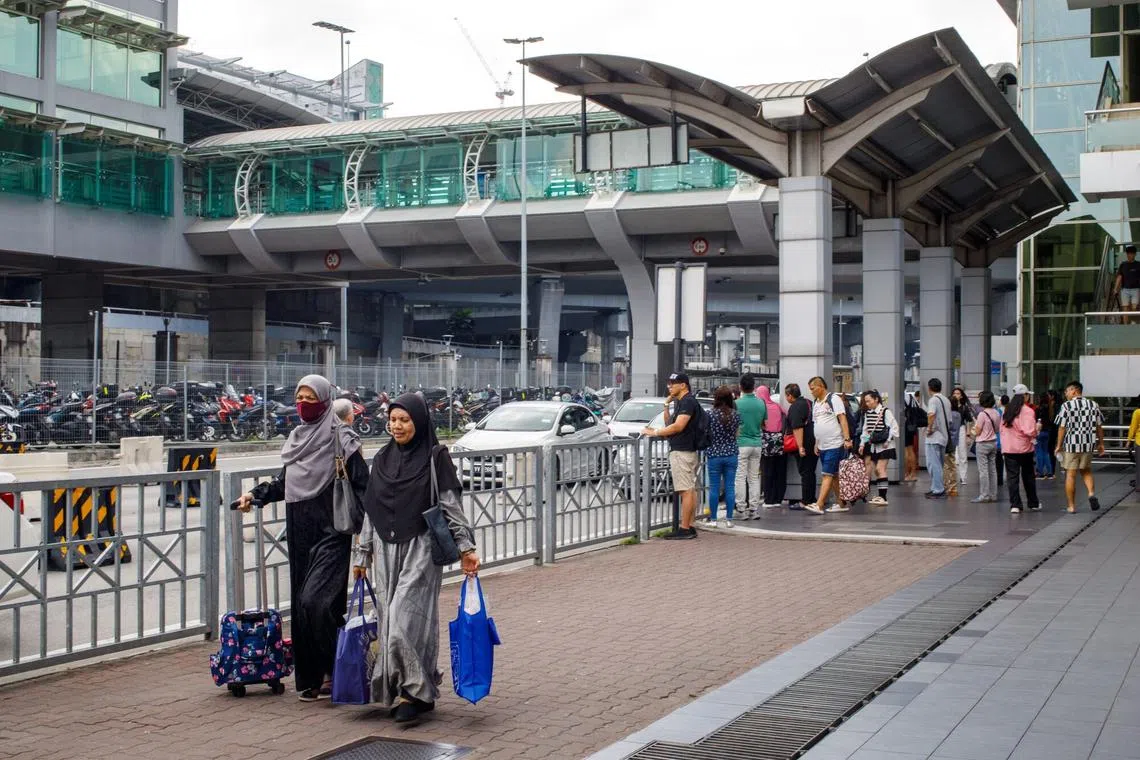
Siva Shanker, chief executive of the estate agency at Rahim & Co International, noted that the vast land and resources in the JS-SEZ provides a fertile ground for advanced manufacturing.
“However, the region’s ability to attract these sectors hinges on its infrastructure and readiness to foster innovation,” he said.
He also noted that support from both governments in improving the infrastructure to facilitate international companies’ expansion will be crucial. For Malaysia, it has a greater role to play in improving the immigration clearance processes – which is vital to attracting talent and fostering economic integration.
The Johor-Singapore Rapid Transit System, which will commence in 2026, promises to ease cross-border commutes, but market observers believe more needs to be done to connect people to other business hubs in the JS-SEZ.
Koong pointed out that the implementation of passport-free QR code clearance will help to achieve the objective of enhancing people’s mobility and encourage the model of “live in JB, work in Singapore”.
“Currently, people work in Singapore and travel to JB for leisure on weekends. However, in the future, this may reverse, with JB residents visiting Singapore for leisure, boosting tourism and retail activities in both countries,” he added.
Shanker shared the same view, adding that this will boost the property sector in the JS-SEZ.
“We are already seeing increased inquiries for residential and commercial properties, as well as industrial land in the proposed JS-SEZ areas. The demand is expected to continue heating up after more announcements made by the leaders of both countries,” he added.
However, he warns against speculative property investment. “The SEZ should remain an economic play, not a property play.”






