Laos-China Railway picks up steam, but S-E Asian country struggles to capture gains
As new industries prove elusive, Laos wants to switch from a transit route to a manufacturing base
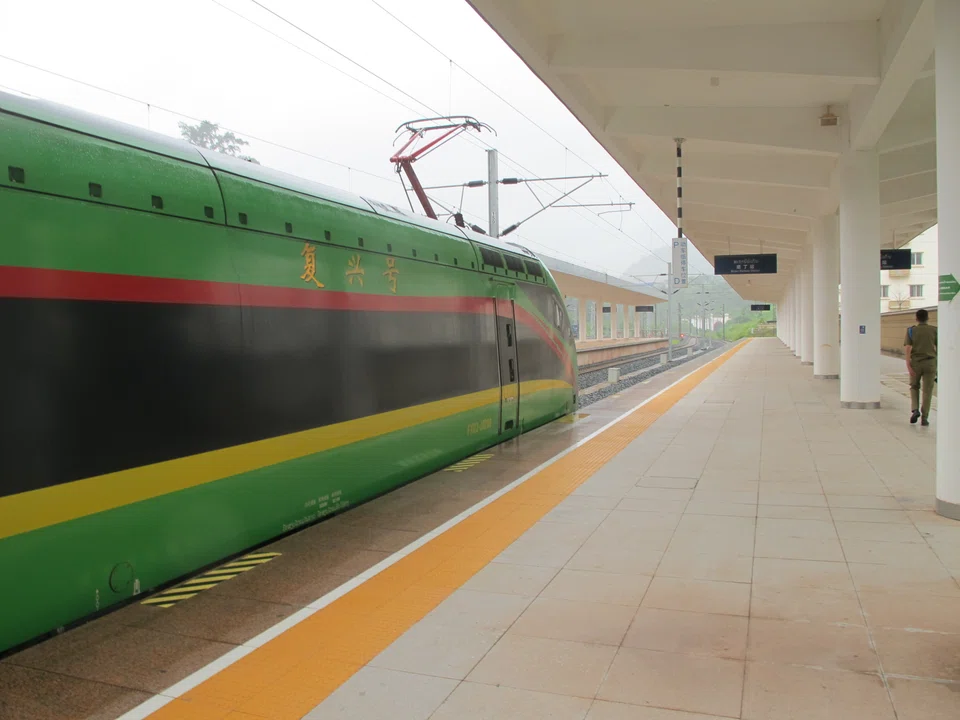
[VIENTIANE] Nearly five years after the first train left Laos’ capital city Vientiane for the Chinese border, the Laos-China Railway is carrying record numbers of passengers and goods.
The train route is also drawing investors to the north of the country, albeit primarily from Chinese companies, mostly in rubber, durian and banana plantations, and mining. And it has cut transport time significantly to the world’s second-largest economy.
But even with all that, the US$5.9 billion railway project has not quite been a magic bullet for Laos, with new industries and new incomes continuing to prove elusive. This is likely to be the South-east Asian nation’s next challenge.
Little of the cargo comes from Laos, a country of about eight million people and with a shallow industrial base.
Much of the freight comprises Thai agricultural exports heading to China, and Chinese consumer goods, including electric vehicles, moving in the opposite direction to Thailand and elsewhere in South-east Asia.
China has offered duty-free imports of various agricultural products from Laos, but Lao exporters have reportedly faced other obstacles, such as China-imposed quality standards.
“We (Lao people) cannot compete with the Chinese,” said a Vientiane-based economist. “No 1, we don’t have the market. Secondly, we don’t have the know-how and, third, we don’t have the money.”
EVs manufactured in Chongqing are reportedly among the goods being transported via the railway through Vientiane and onwards to South-east Asia, with travel time to the Lao capital cut from 20 days to five.
Chongqing’s automotive exports surged 89.3 per cent in the first quarter of 2026, highlighting the growing use of the rail corridor to move vehicles into the region.
Glimmer of hope
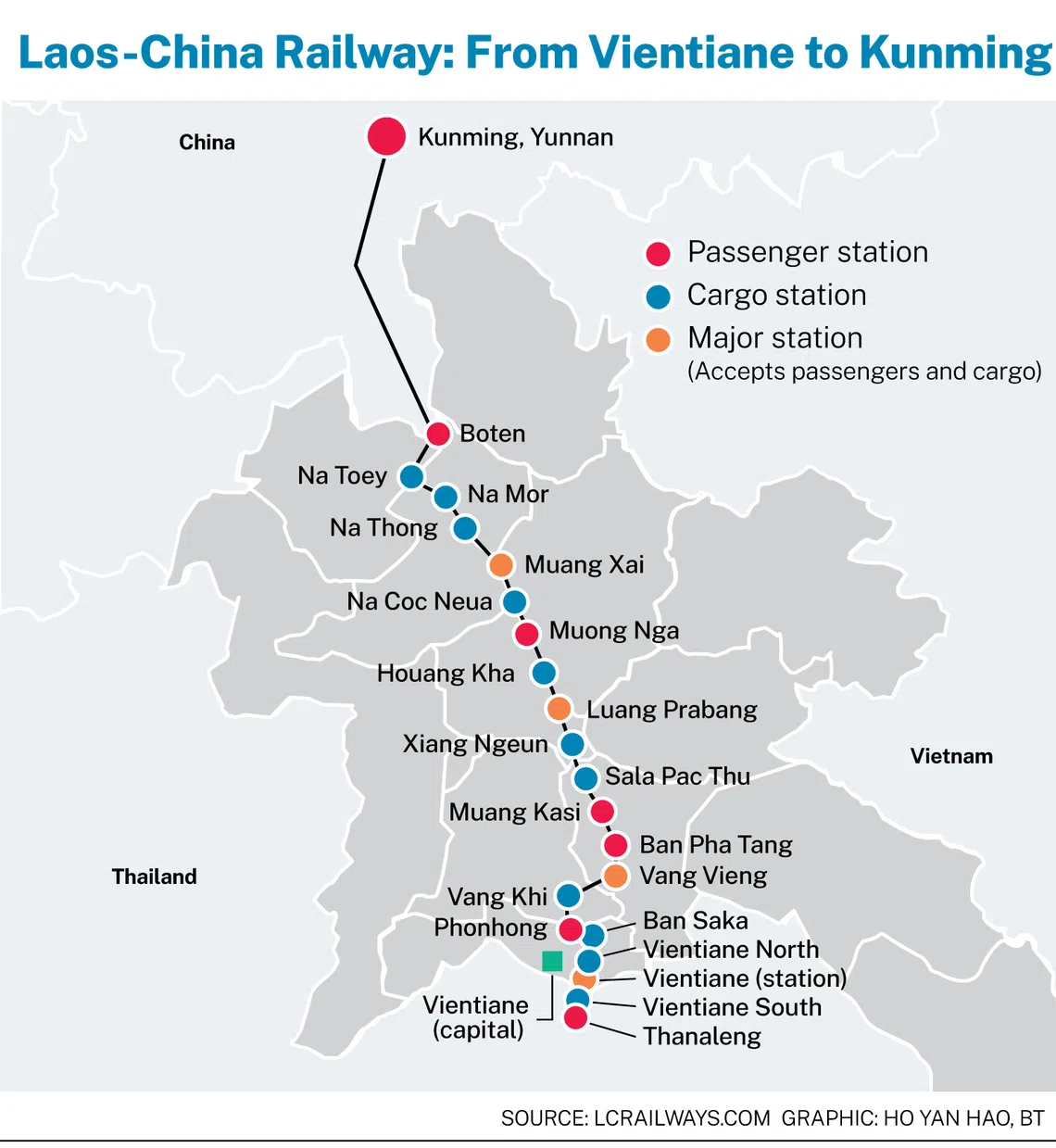
A 420-kilometre stretch of the rail route links Vientiane to Boten, on the Laos-China border. From there, the line goes on to Kunming, the capital of Yunnan, and the rest of the vast China market, with eventual rail links to Central Asia and Europe.
An early test is taking shape in Na Mor in northern Laos, where Thailand’s Amata Corp is developing a 930-hectare (ha) industrial estate beside a cargo station on the railway.
It is betting that cheap hydropower, access to China and planned connections to Thailand can turn the country from a transit route into a manufacturing base.
Amata City Lao Company – part of Amata Corp, a leading industrial estate developer listed on the Stock Exchange of Thailand – secured a concession in 2022 to develop the 930-ha industrial estate in Na Mor, about 50 km from the Laos-China border.
“There is a hydropower plant nearby on the Nam Ou River, in Phongsaly province,” said Varong Tangpraprutgul, managing director of Amata City Lao Company. “Plants on the Nam Ou River produce about 2,000 megawatts (MW) of electricity.”

Laos has the capacity to produce 15,000 MW of hydroelectricity in total in a year, most of which is exported to Thailand and China, with only about 2,000 MW consumed locally.
“We have one thing that even money can’t buy, and that is green energy,” said Varong in an interview with The Business Times. “In Laos, 90 per cent of the energy supply is hydropower. It’s very clean and cheap and there’s plenty of it for the next generation of factories.”
Amata is targeting manufacturers looking to use Laos as a lower-cost production base for exports to China.
“For some products that are not complicated in terms of the supply chain, you can bring in parts from China, assemble them in Laos – where labour and electricity are cheaper – and send them back to China,” Varong added. “Here, electricity is half the price it is in Thailand.”
But further upgrades are needed.
The train route from Na Mor to Thailand is hampered by the lack of a designated railroad bridge across the Mekong River between Vientiane and Thailand’s Nong Khai.
In addition, the construction of a dual-track line from Nong Khai to Laem Chabang Port – Thailand’s main deep-sea port on the eastern seaboard – is taking place at a slow pace.
While the dual track is slated to be completed by 2029-30, construction of the bridge has not even started yet.
Amata expects its Na Mor estate to be ready to receive tenants by the end of 2027, when essential infrastructure and utilities are scheduled to be completed. It is targeting four investment clusters: solar panels, automotive-related industries, high-tech electronics and agricultural processing.
The Lao government has offered a range of incentives for investors in the estate, including a 30-year corporate tax waiver, a 5 per cent personal income tax rate, exemptions from import and export duties, and permission to hire foreign workers.
Varong also cited political continuity and the government’s openness to foreign investment as factors supporting Amata’s plans.
“This country is quite strong and reliable in terms of politics,” he noted. “They have one party, and the party welcomes foreign direct investment in Laos.”
Gathering steam after slow start
Although the railway had a slow start, launched during the Covid-19 pandemic when passenger traffic was severely limited, it has swiftly picked up steam.
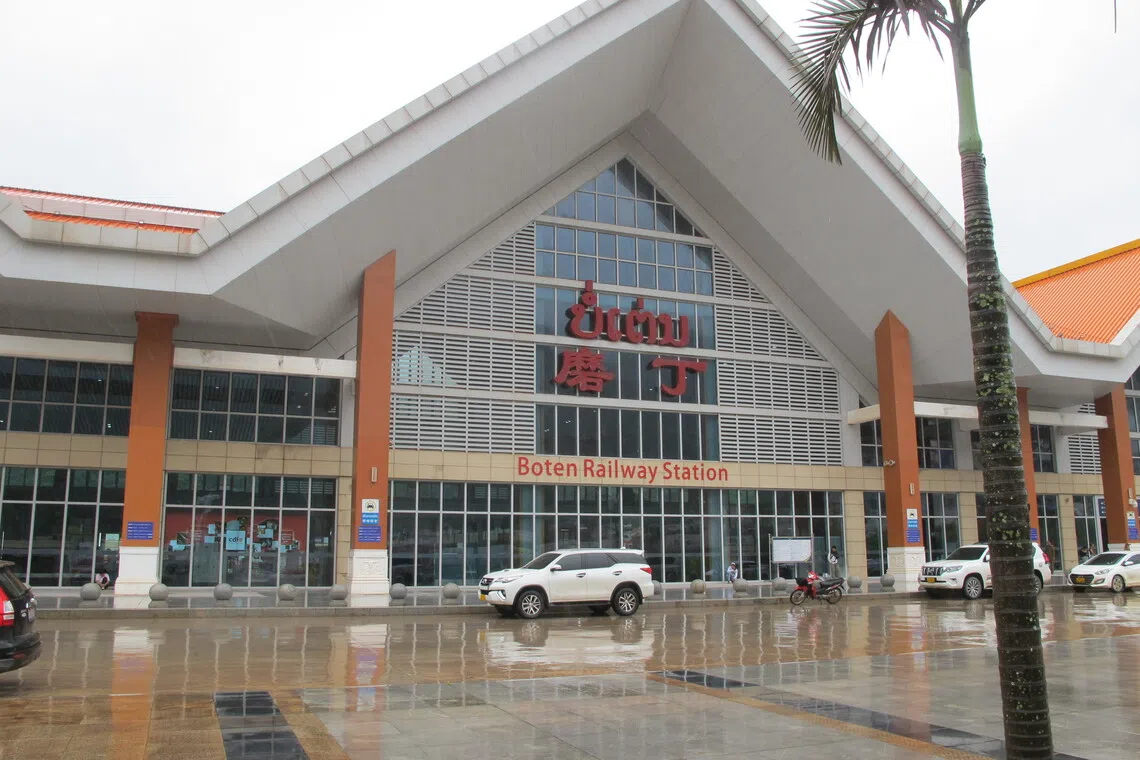
By May 2026, the railway had handled 73.38 million passenger trips since it began operations in December 2021. On the Lao section, daily passenger services have increased from four in early 2022 to 16 currently, according to the railway’s timetable.
Daily freight runs, which are exclusively at night when the passenger service does not operate, are up to 20 to 23, depending on the demand.
In Q1 2026, the value of cross-border goods traded via the railway reached 6.81 billion yuan (US$1 billion), up 62.7 per cent year on year, according to Kunming Customs.
The number of goods categories transported along the route has also expanded to more than 3,800.
In the early days, the project faced intense criticism while it was under construction between 2016 and 2021.
The biggest concern was that the project would inflate Laos’ public debt, and lead to a “debt trap” with China. Three Chinese state-owned companies collectively hold a 70 per cent stake in the Laos-China Railway Company, with the remaining 30 per cent held by a Lao state-owned enterprise.
According to available project-financing disclosures, Laos committed about US$730 million towards its equity stake in the railway, comprising US$250 million from the national Budget and about US$480 million borrowed from the Export-Import Bank of China.
The loan has been reported as carrying an interest rate of 2.3 per cent, with a five-year grace period.
The Lao side also contributed land for the rail route and related infrastructure, and compensated people displaced by the project.
Laos’ debt-to-gross domestic product ratio has declined from its peak, helped by stronger economic growth, exchange-rate stabilisation and limited new borrowing.
However, its debt burden remains elevated, with the International Monetary Fund continuing to assess the country’s public debt as unsustainable. The World Bank expects economic growth to moderate to 3.8 per cent in 2026.
Khwima Nthara, World Bank country manager for Laos, said that from an economic perspective, investing in the Laos-China Railway made a lot of sense, since the South-east Asian country is landlocked.
Nthara explained: “In the long term it makes a lot of sense, because how else does the country competitively access export markets, and how else does it get its imports. In both ways it improves the country’s connectivity to markets.”