



Limited market depth, access hurdles could cloud the party for Vietnam market’s FTSE upgrade
A dearth of new listings since the pandemic, apart from a burst among stockbrokers, could further spoil the mood

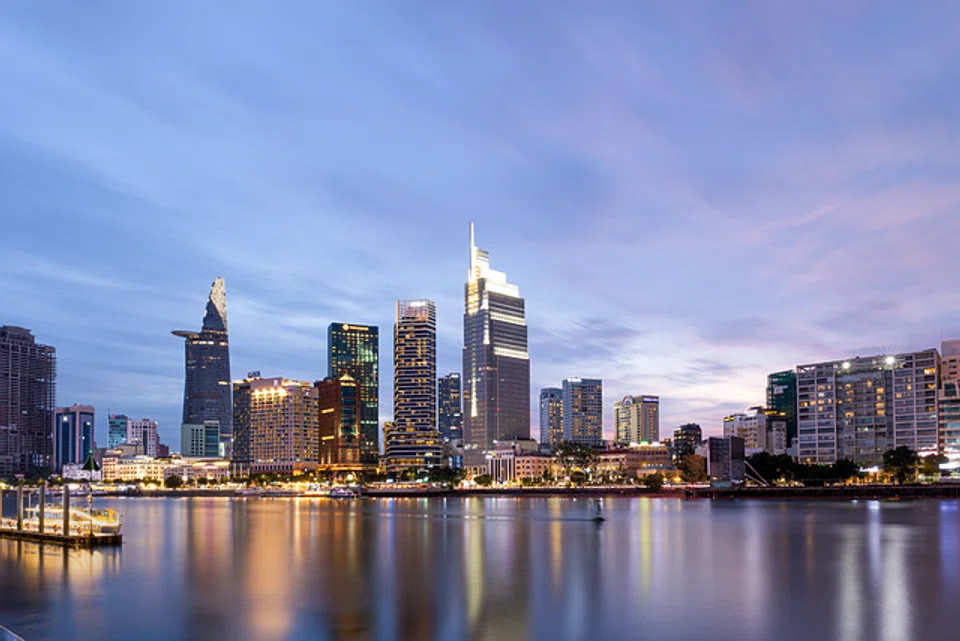
[HO CHI MINH CITY] Vietnam’s much-awaited upgrade to Secondary Emerging Market status by FTSE Russell may have sparked excitement among investors hunting the next growth story, but beneath the buzz lie a few roadblocks, from thin liquidity beyond a handful of blue chips to a scarcity of new listings.
Limited global broker access compounded by weak English-language disclosures and the absence of a central clearing counterparty (CCP) is another factor that could stand between Vietnam and the significant institutional inflows it hopes to attract.
“The issue is that outside the top 30 names, it’s difficult to put US$50 million (in each stock). There is no depth,” said Maybank Securities Thailand’s Pon Van Compernolle.
Vietnam’s stock market comprises roughly 1,600 stocks with much of its market cap concentrated in traditional “old-economy” sectors such as financials and real estate. Beyond the top-tier names, deep-pocketed funds may find the stock pickings far from rich.
“Liquidity is the biggest problem... you can really only buy banks in large volumes,” said Compernolle who is overseeing the setting up of Maybank’s private fund business targeting Asean equities.
By contrast, he noted, a fund could put money to work across 100 to 150 stocks in Thailand, where Compernolle previously managed Ross & Van Compernolle’s RVC Emerging Asia Fund, which focused on listed Asean equities.
Vietnam has also seen a dearth of new listings since the Covid-19 pandemic, with the recent initial public offerings (IPOs) wave predominantly involving brokerage firms – another dampener for investment opportunities.
“I would like to see more companies from non-financial sectors make IPOs in Vietnam,” said David Xu, chief investment officer of Aumento Capital Management. The Hong Kong-based fund manager has allocated 10 per cent of its US$100 million assets under management (AUM) to Vietnam.
Xu also cited insufficient English-language disclosure as a key barrier to expanding exposure in the market.
MSCI, a key benchmark provider and FTSE rival, has long pointed out the lack of English-language disclosure as one of the reasons Vietnam remains classified as a frontier market.
“The top 50 listed firms generally have management who can speak English and dedicated investor relations teams that do a good job communicating to the market. But apart from them, there needs to be improvement,” Xu said.
He added that few foreign brokers have a significant presence in Vietnam, limiting their ability to communicate with local brokers and companies, which further complicates research for offshore institutional investors.
FTSE also flagged the issue of limited access to global brokers for trading in Vietnam. The index provider has said Vietnam’s market upgrade to secondary emerging market indices effective September 2026 is still subject to an interim review in March next year “to determine whether sufficient progress has been made in enabling access to global brokers”.
Vietnam has introduced a framework allowing foreign investors to trade through brokerage firms that act as counterparties to guarantee settlements. The move aims to provide a short-term non-pre-funding solution, hence removing the earlier requirement for foreign investors to deposit full funds before placing buy orders.
“(The model) is good enough for now, given the current scale of foreign investors (participation) in the market,” Compernolle said. “But if you want it to be 10 times bigger, you need what every other market has.”
The international-standard CCP system – crucial for making non-prefunding effective and safe – is not expected to be operational until at least the first quarter of 2027.
This timeline is outlined in a decree and another road map released by the Vietnamese government in September, aimed at broadening access to its stock market through a series of reforms, including raising foreign ownership limits, upgrading clearing and settlement infrastructure, streamlining IPO procedures and ensuring equal treatment for foreign investors.
The good news is, Vietnam has strong domestic investor base.
Liquidity in Vietnam is shored up mainly by domestic retail investors, which account for about 80 to 90 per cent of the total market transaction value.
Christina McGuire, founder and chief investment officer of London-based Elephant Asset Management, sees this as a positive factor, though she advocates greater domestic institutional participation.
In contrast, foreign investors typically account for around 30 to 40 per cent of the total trading value on the Philippine stock exchange, which McGuire suggests could be a less favourable dynamic for the market.
“It’s always more dangerous when you have a massive foreign investor participation. As we’re now seeing in some of the other Asean markets, when the foreigners leave and there’s no domestic investor base, you’re in trouble,” she said.
The Philippine Stock Exchange Index has fallen by over 7.6 per cent so far this year, with net foreign outflows exceeding US$700 million. The Thailand SET Index has also dropped about 7 per cent, with net foreign sales of more than US$3 billion, indicated data from Bloomberg.
Although foreign investors have offloaded more than US$4 billion worth of Vietnamese equities over the same period – one of the largest net outflows in Asia – the benchmark VN-Index has remained resilient, climbing about 30 per cent year to date to become Asean’s best-performing market.
“Liquidity in a market of this size is so incredibly important. If liquidity goes out, you lose everything,” McGuire added.
Thailand, classified by FTSE as an advanced emerging market, has recorded an average daily trading value of about US$1.3 billion year to date, the highest in South-east Asia.
Vietnam follows closely with a trading value above US$1 billion, on par with advanced market Singapore and ahead of emerging peers such as Indonesia and Malaysia.
Meanwhile, the Philippines equity market remained small and illiquid compared to other countries in the Asean-6, with average daily turnover significantly lower at about US$100 million.
When will global capital arrive?
Tung Dang, economist at Dragon Capital, Vietnam’s oldest fund manager, estimated that Vietnam’s weight in the FTSE emerging-market indices could range from 0.3 to 0.5 per cent, leading to passive inflows of at least US$500 million to US$600 million.
Meanwhile, active fund inflows is projected between US$2.5 billion and US$7.5 billion, with some potentially arriving before Vietnam’s official upgrade in 2026.
“Given Vietnam’s growth narrative, some active investors might indeed overweight Vietnam relative to its tiny index weight,” Dang said.
“(They might see) it as an underappreciated opportunity, which could push active inflows toward the higher end of the band,” he added.
Some funds are actively seeking opportunities. From Oct 13 to 16, Elephant Asset Management, with US$300 million in AUM, and Aumento Capital Management were among 20 global fund managers – collectively representing more than US$1 trillion in total assets – that participated in a site tour in Vietnam. Organised by Maybank Securities Vietnam, the tour aimed to connect investors with local companies following the market upgrade announcement.
Asset managers said, however, that they will start buying only if the valuations and risk-return profiles of specific companies are justified.
“Now the cycle is a little bit against Vietnam by just being very pricey in the regional context. But that will sort itself out,” McGuire noted.
Compernolle echoed this view, noting that all the positive news over the past few years had already been priced in, as the VN-Index hit record-highs by mid-October. This led to relatively elevated valuations and a reluctance among foreign investors to buy.
After an extended rally, the benchmark VN-Index plummeted by 5.47 per cent on Monday (Oct 20), marking the second-biggest percentage fall this year. Foreign investors turned net buyers the following day, snapping up about US$92 million worth of shares on Tuesday – the largest single-day net buying value this year.
Compernolle referred to the FTSE upgrade as a validation to foreign investors that Vietnam is open for business and capital market. He added: “Our next eyes will be looking at how long would it take for Vietnam to get to MSCI’s emerging market (classification).”
TRENDING NOW

DBS remains analysts’ pick ahead of Q3 earnings after Singapore banks’ share slump

Singapore identifies 7 firms responsible for haze fires, notices issued urging action: Grace Fu

Good Class Bungalow market activity picks up pace on ‘realistic’ pricing

High Court rules against Julius Baer’s Singapore trust arm in US$50 million family trust dispute

