Asean Business logo
SPONSORED BYUOB logo

Malaysia Airlines’ parent expands MRO business amid travel boom

Move underscores the need to avoid reliance on a single revenue source and stabilise revenue streams


Tan Ai Leng
Published Mon, May 20, 2024 · 05:00 AM
    • Malaysia Aviation Group managing director Izham Ismail says the biggest lesson learnt from Covid-19 pandemic is “never put all your eggs in one basket.”
    • Malaysia Aviation Group has returned to the black for the first time in a decade, thanks to strong traffic in the premium segment and improved yields in the airline segment.
    • Malaysia Airlines is ranked 16th in the world's best airlines for 2023; it is aiming to become among the top 10 airline companies globally by 2030.
    • Malaysia Aviation Group managing director Izham Ismail says the biggest lesson learnt from Covid-19 pandemic is “never put all your eggs in one basket.” MALAYSIA AVIATION GROUP
    • Malaysia Aviation Group has returned to the black for the first time in a decade, thanks to strong traffic in the premium segment and improved yields in the airline segment. MALAYSIA AVIATION GROUP
    • Malaysia Airlines is ranked 16th in the world's best airlines for 2023; it is aiming to become among the top 10 airline companies globally by 2030. MALAYSIA AVIATION GROUP

    [KUALA LUMPUR] Malaysia Aviation Group (MAG), the parent company of national carrier Malaysia Airlines, aims to increase the revenue contribution from its maintenance, repair and operations (MRO) business by two-thirds within six years, as it diversifies into non-airline sectors to capitalise on the post-pandemic surge in air travel.

    MAG’s managing director Izham Ismail said the move underscored the need to avoid reliance on a single revenue source and to stabilise revenue streams.

    “One of the important lessons we have learnt from the Covid-19 pandemic – never put all your eggs in one basket,” he told The Business Times in an interview in Kuala Lumpur.


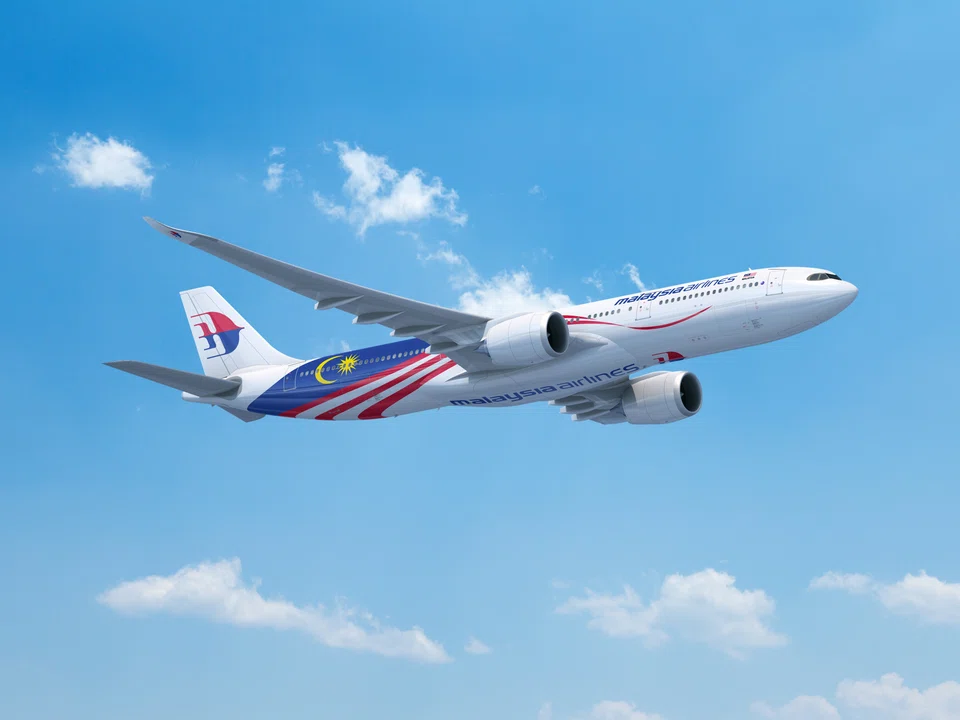
    Malaysia Aviation Group has returned to the black for the first time in a decade, thanks to strong traffic in the premium segment and improved yields in the airline segment. PHOTO: MAG

    The aviation company – which also manages and operates Firefly, MASwings and Amal – may be emboldened to diversify based on its latest financial results.

    The airline group returned to the black for the first time in a decade, earning RM766 million (S$219 million) in 2023, reversing from a RM344 million net loss a year earlier.

    Izham attributed the good performance to strong traffic in the premium segment, active capacity management, and increased yields in the airline segment. He noted that the MRO segment contributed significantly, accounting for 18 per cent of group revenue in 2023.

    Raising MRO revenue goals

    As things stand, the group is not far off its MRO goals.

    “As we speak now, the revenue contribution of MRO stands at 22 per cent. We are targeting to increase its contribution to 30 per cent by 2030,” Izham said.

    To achieve the target, MAG restructured its aviation services last year, enabling its MRO arm MAB Engineering Services to focus on enhancing third-party MRO operations alongside catering to internal fleet maintenance needs.

    In a significant move towards bolstering its MRO capabilities, MAB Engineering Services secured a long-term lease for Hangar 4 at Sultan Abdul Aziz Shah Airport, enhancing its capacity to service both narrow-body and wide-body aircraft.

    With an extensive portfolio of regulatory certifications and decades of MRO expertise, MAG is poised to capitalise on the burgeoning demand for aircraft maintenance and retrofitting services in the Asia-Pacific region, said Izham.

    He noted that against the backdrop of projections indicating a substantial increase in aircraft demand in the Asia-Pacific, MAG is strategically positioned to harness this growth trajectory with advantages such as location, well-developed infrastructure and skilled workforce.

    Figures from market research company Mordor Intelligence indicated that the size of the MRO market in Asia-Pacific is estimated to reach US$17 billion in 2024. It is expected to grow at a compound annual growth rate of 5.7 per cent to reach US$22.6 billion by 2029.

    The Asia-Pacific region is expected to be the largest market for aviation MRO services, driven by factors such as a rapidly expanding aviation industry, increasing aircraft fleet sizes, and rising passenger traffic in emerging markets such as China and India.

    From airline pilot to MD

    Well known by colleagues as Captain Izham, the 63-year-old was once a pilot who broke the world’s aviation records for the longest flights and the fastest round-the-world flight in 1997.

    Back then, he flew Malaysia’s Airlines’ first Boeing 777-200 eastward from Seattle in the US to Kuala Lumpur and back. This set a new world record by a commercial airliner with a total flight time of nearly 42 hours over a distance of 37,500 km.

    With the same determination but wearing a different hat, Izham took over as CEO in December 2017, after two predecessors left the company about a year after taking up the hot seat. He made a few bold moves to disrupt the system and reset the path for MAG.

    “Even though this is my 18th role throughout my 40 years of journey in the company, I still felt lost in the first month when I took over the company – the RM25.7 billion liability in the balance sheet, demotivated employees and other problems. It took me some time to set the priorities and strategies to transform the company,” he said.

    He noted that it was an arduous but necessary journey for MAG, which has been restructured multiple times, including undergoing a scheme of arrangement, to bring down the company’s liability to RM9.8 billion.

    Another pivotal aspect of the turnaround strategy was the repositioning of all airlines to cater to premium customers starting June 2019, thereby distancing itself from the low-cost carrier segment.

    “For the past two decades, we lost sight of who our customers are and didn’t properly land our strategy, and were competing with low-cost carriers which were not our target market,” he added.

    Admitting that MAG has lost ground to rivals in the premium travel space, namely Singapore Airlines and Qatar Airways, Izham said the airline decided to take a different approach to attract and regain customers’ confidence. It did this by offering various fare products that cater to the different needs of travellers.

    This way, MAG carved a niche between budget and premium carriers, catering to a diverse clientele while maintaining competitiveness. However, the growth momentum was hampered by the pandemic in 2020.

    Despite the setbacks, Izham saw an opportunity and decided to take a bold move by capitalising on international routes during the pandemic period – a decision that salvaged the financially-strapped airline.

    “We enjoyed a higher yield during that time as most of the airlines focused on domestic routes. The decision to go international also helped us generate strong cash flow, and we have maintained a robust cash position since October 2021 until today,” he remarked.

    Creating “natural hedge”

    Going international also helped bring in sales in US dollars, which stood around 52 per cent of the airline’s revenue, forming a “natural hedge” for MAG as most of the airline expenses are in foreign currencies.

    Currently, 90 per cent of MAG’s flights are to international destinations, while the remaining are domestic or South-east Asian destinations. Other than direct flights, MAG also collaborates with other airline companies through code sharing or partnerships.

    Additionally, strategic initiatives such as balance sheet restructuring and fleet modernisation further fortified MAG’s financial position and operational efficiency.

    Izham described 2024 as the “year of credibility” with the company staying profitable, countering the notion that the current recovery is merely a post-pandemic anomaly.

    Malaysia Airlines is ranked 16th in the world’s best airlines for 2023; it is aiming to become one of the top 10 airline companies globally by 2030. PHOTO: MAG

    He has set ambitious goals. As the 77-year-old airline maintains its premium business model, the objective is for it to rank among the top five carriers in Asia Pacific and the top 10 globally by 2030.

    “This will not be a walk in the park,” he said, noting that there will be a bumpy journey ahead with various challenges such as geopolitical tensions, fuel price changes and interest rate hikes.

    Skytrax ranked Malaysia Airlines 16th in the world’s best airlines for 2023 and certified it as a four-star airline.

    In its rating analysis, the London-based international air transport rating organisation said improvements were seen in Malaysia Airlines’ fleet and product offerings.

    “Once a five-star airline, Malaysia Airlines could achieve this top rating again if better consistency can be provided,” said Skytrax.