Malaysia Airlines’ sudden flight cancellations throw travel sector into disarray
Aviation analyst expects a million passengers to be affected, and for the airlines in the Malaysia Aviation Group to lose hundreds of millions of ringgit

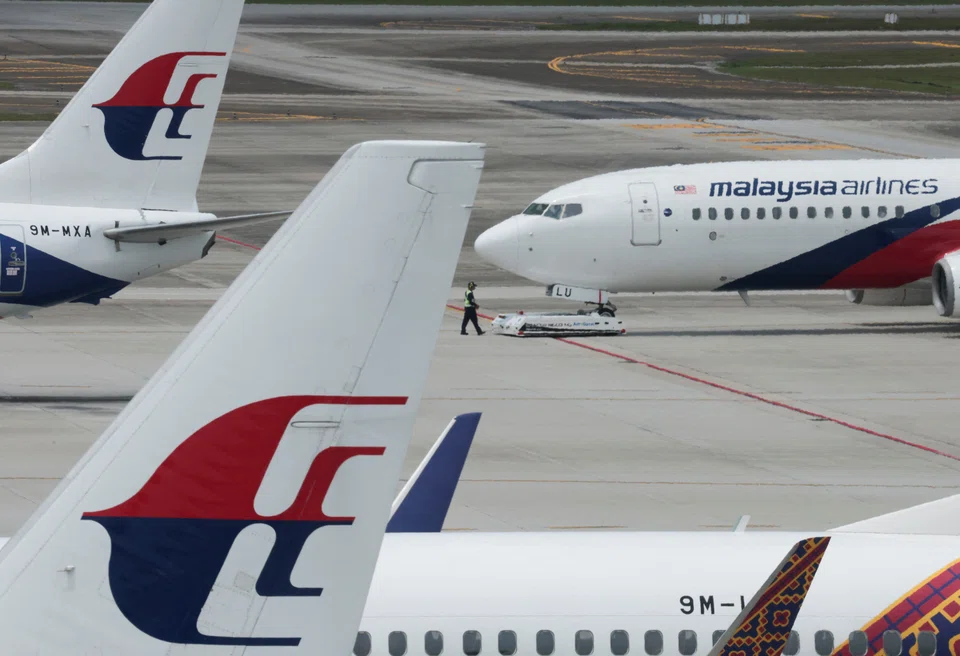
[KUALA LUMPUR] Delays in aircraft deliveries and a shortage of spare parts and labour have come together to force Malaysia Aviation Group (MAG), the parent company of Malaysia Airlines, to cut back on its flights – which has given a headache to other players in the country’s travel sector.
Travel agents, for example, are scrambling to make alternative travel plans for their clients following the sudden decision by MAG – which also operates low-cost carrier Firefly and Muslim pilgrimage-service provider Amal – to cut back on flights until the end of the year.
Mint Leong, president of Malaysian Inbound Tourism Association, told The Business Times: “While the costs are not substantial, the work involved in coordinating logistics and accommodations is significant.”
On top of that, it has to be done on short notice, she added, calling it “a headache to re-plan everything”.
A case in point: Sunflower Holidays, of which she is managing director, is to host 4,000 delegates coming to Kuala Lumpur for the World Chinese Entrepreneur Conference from Sep 9 to 12 – making for a lot of rescheduling of arrival and departure flights.
Shukor Yusof, founder of Singapore-based aviation advisory firm Endau Analytics, estimated that these cuts could affect around a million passengers, which could add up to losses in the hundreds of millions of ringgit.
“This means MAG will end its financial year deep in the red, despite having been cash-positive for much of this year,” he said in a recent post on LinkedIn.
Worsening flight delays
The situation has deteriorated quickly.
Peter Pan, chairman of the Kuala Lumpur Tourist Guides’ Association, noted that flight delays grew significantly worse in recent months, including those involving airlines operated by MAG.
“While delays exceeding three hours were once uncommon, we are now seeing delays of over five hours. This severely affects tourists’ travel plans and transportation arrangements,” he said.
He said a recent flight to East Malaysia was pushed from 11 am to 5 pm; its passengers were blind-sided by the airline’s notification of the delay a mere half hour before they were supposed to board.
Despite Malaysia’s Transport Minister Anthony Loke’s assurance this week that passengers will receive full refunds for flights delayed by more than five hours, concerns persist about the additional costs of forgoing pre-arranged transportation and accommodation.
Short-term pain
A week ago (Aug 24), following disruptions across all three MAG airlines in August, MAG announced a 20 per cent reduction in its network capacity across the airlines this year, stemming from a shortage of planes, parts and manpower.
The group said the reduction would affect domestic flights and routes in South-east Asia, North Asia, New Zealand, Greater China, South Asia and the Middle East.
MAG managing director Izham Ismail said the cuts aim to ensure the long-term reliability of the fleet and improve customer experience.
He noted that the global shortage of parts have delayed the delivery of MAG’s new aircraft orders; this in turn affected its fleet planning.
MAG was supposed to receive 17 new aircraft under a fleet modernisation programme. Of the 13 Boeing 737-9 aircraft contractually agreed on for delivery by 2024, only four arrived. And of the four Airbus A330 neo jets to be delivered, only three are expected by year’s end.
Izham said: “We apologise and understand the frustration this has brought to our customers, and wish to assure everyone that our team is working diligently to provide affected customers with compensation options, which include flight reallocations and full refunds without penalty charges.”
MAG has urged passengers to use the “My Booking” feature in the airline’s website for faster service and to check their flight status, because the Global Contact Centre has been experiencing increased traffic.
The flight reductions and technical issues, including three recent incidents in which outbound Malaysia Airlines flights had to return to Kuala Lumpur International Airport, have ignited public outrage.
Frustrated consumers have turned to social media to complain about how difficult it has been to get refunds, and travel agencies are warning clients about the increasing risk of flight cancellations.
One travel agent who did not wish to be named said: “We do not discourage customers from booking with these airlines, but we do warn them about the increased likelihood of flight cancellations, and the need to consider alternatives if such incidents occur.”
Huge setback
The latest events are a big setback for Malaysia Airlines, given its troubled past: It has languished under more than a decade of hefty losses, and weathered back-to-back tragedies in 2014 – the disappearance of Flight MH370 and the downing of Flight MH17 over eastern Ukraine.
Even MAG’s triumphant return to profitability in 2023 – its first in a decade – lost some of its shine. Profit for the year came in at RM766 million (S$231 million) profit, reversing a RM344 million net loss the year before.
Pan said that while the temporary flight cuts may frustrate tourists, many agree that safety is the priority. However, he warned that it will take time for MAG to regain the market confidence it built up in recent years.
Despite these setbacks, tourism industry players remain hopeful that Malaysia’s appeal as a tourist destination will remain unaffected.
Leong of Malaysian Inbound Tourism Association said: “Consumers are price-sensitive. If MAG could offer better value packages, such as discounted airfare or additional perks, customers would likely give the airline another chance.”