



Malaysia to break ground on Southern Agropolis in January, unlocking ‘plug-and-play’ food hub for JS-SEZ
Farmers from the region are expected to move into the site by Q3 2026, with commercial production slated to begin in 2027

[KUALA LUMPUR] A new agricultural powerhouse is rising in Malaysia’s southern frontier. Southern Agropolis, the flagship agrifood hub of the Johor-Singapore Special Economic Zone (JS-SEZ), is scheduled to commence infrastructure development in January 2026.
The project marks one of Johor’s most ambitious plans to industrialise food production for both the Malaysia and Singapore markets.
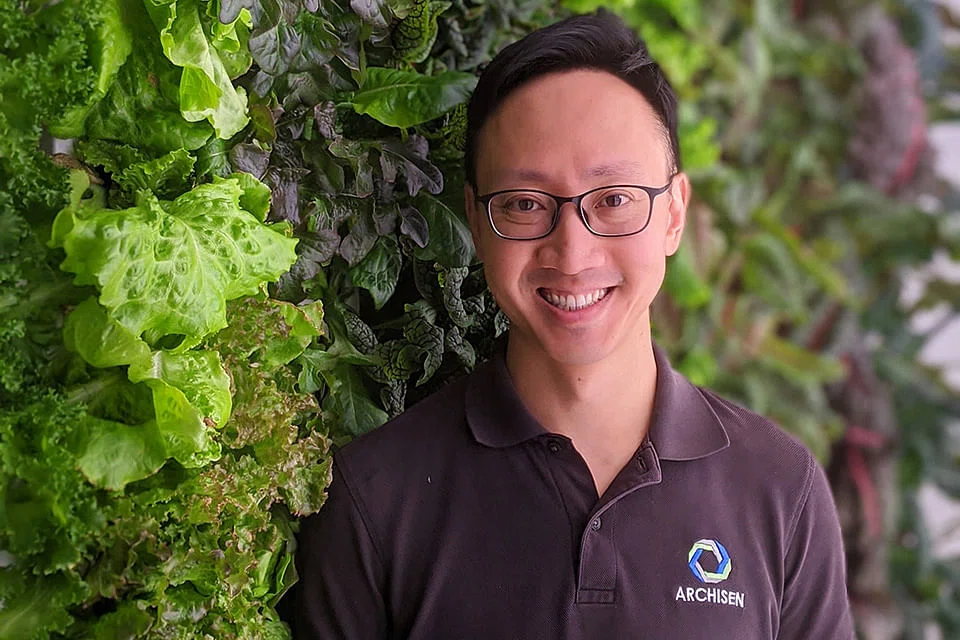
To live up to its “plug-and-play” farming ecosystem, Southern Agropolis is designed to let agri-entrepreneurs, or “agripreneurs”, bypass the heavy upfront costs of land preparation, cold rooms, logistics and processing, said Vincent Wei, co-founder and chief executive officer of Archisen, a Singapore-based technology and farm operator.
Southern Agropolis is a joint venture between Archisen and Southern Catalyst (Socat), a company wholly owned by Malaysia’s Ministry of Finance Incorporated. Socat is the master developer of a 1,190-hectare (ha) site in Sedenak, within which the 80.9-ha project is located.
The critical first phase will focus on establishing roads, electricity, water supply and sewage systems for the development.
By the third quarter of 2026, farmers from Malaysia, Singapore and other regions are expected to move to the site, with commercial production slated to begin in 2027, Wei told The Business Times in an interview.
With ready-to-farm plots, built-in cold storage, logistics and secondary food processing facilities, Southern Agropolis will enable agripreneurs to kick-start their farming journey with minimum hassle and maximum efficiency.
To add financial muscle, Socat and Archisen in October signed separate memorandums of understanding with CGS International Securities Malaysia as a strategic financial partner.
Socat and Archisen are working on initiatives valued at RM500 million (S$157.7 million), while CGS International is preparing to mobilise up to RM1 billion in agriculture-related investments through its network of private equity and debt partners.
The investments will be across the full value chain, from farming, food processing and logistics to the development of a regional inventory hub.
Wei noted that there is growing interest in modern farming among young people, driven by technology and social purpose.
“Young people today want to work with technology and contribute meaningfully to society, whether through food resilience or sustainability... This is not just farming. It is the future of farming,” he said.
Southern Agropolis could reshape how farms are built, financed and operated, fundamentally changing how fresh food flows across one of South-east Asia’s most important borders, he added.
The project’s location is strategic – Sedenak is one of the nine flagship zones of the JS-SEZ. The site is about a 50-minute drive from the Johor-Singapore Causeway and just 10 minutes from Ibrahim Technopolis, another key development by state-owned enterprise Johor Corporation.
While Sedenak is widely known as a popular location for data centres, the zone is now adding food security to its list of strategic priorities. Southern Agropolis is at the heart of this push, designed to anchor cross-border food production and innovation between Malaysia and Singapore.
Tasked to design, build and operate the hub’s high-tech farming solutions, Archisen will leverage its expertise in controlled-environment agriculture, automation and data analytics to enhance food production and resilience for both countries.
Modular plots, shared services
The 80.9-ha site will be subdivided into modular 2-ha plots that can be combined to suit different farming scales, said Wei.
About 60.7 ha, or 75 per cent of the land, will be dedicated to primary farming activities such as growing vegetables and mushrooms, and rearing seafood.
The remaining 20.2 ha will house shared facilities including cold storage, warehousing, logistics and secondary food processing for ready-to-eat products, dried goods and packaged foods.
Farmers will be offered 25-year leases with an option to extend for another 25 years. This structure is aimed to give operators a sufficient runway for recovering investments in infrastructure and technology, as well as realising long-term gains.
A basic land lease will be charged, similar to the practice for conventional farmland, while optional add-on fees will apply to the shared services, including offtake arrangements, Wei said. He added that the rental rate has not yet been determined.
Beyond primary farming, Southern Agropolis is intended to be a hub for collaboration, bringing together farms, food processors and research institutions, he said.
This ecosystem will actively foster partnerships with universities and research agencies from both Malaysia and Singapore. The goal is to support co-innovation in crop science, automation and sustainable food production under real-world conditions, moving beyond theoretical laboratory settings.
Why Sedenak?
The larger, 1,190-ha mixed-use development in which Southern Agropolis sits lies directly along the North-South Expressway, Wei noted.
In addition to its proximity to the Johor-Singapore Causeway, the site is a 40-minute drive from Senai International Airport and adjacent to an existing KTM railway line that could eventually support freight movement.
“When the JS-SEZ was announced... two areas were identified for food security – Desaru and Sedenak,” he said.
“There is already strategic intent by both governments for these zones to focus on agriculture, while (the) other areas focus on manufacturing and logistics.”
He added that farmers and agrifood companies outside Singapore and Malaysia – such as those from China, South Korea and Japan – are welcome to apply for plots in the development, particularly those seeking direct access to the Singapore and Malaysia consumer markets as well as regional export routes.
Food security strategy
Southern Agropolis is also aligned with Singapore’s evolving food security strategy.
The Singapore Food Agency recently introduced a four-pillar framework that replaces its earlier “30 by 30” target with more targeted local production goals, while also placing greater emphasis on diversified overseas sourcing and global partnerships.
Recent food supply agreements, including one with Vietnam on rice, underscore the rising importance of regional supply chains.
“If what we are doing here can become a catalyst for deeper food partnerships between Singapore and Malaysia, that will be very meaningful,” Wei said.
He noted that food clusters like this are already common in Europe, where farmers work together, share resources, lower production costs and benefit collectively. “We believe this model can scale across Malaysia and the region.”
Southern Agropolis also builds on Archisen’s foothold in Johor through an earlier joint venture with fellow agrifood player FarmByte, which is under Johor Coporation.
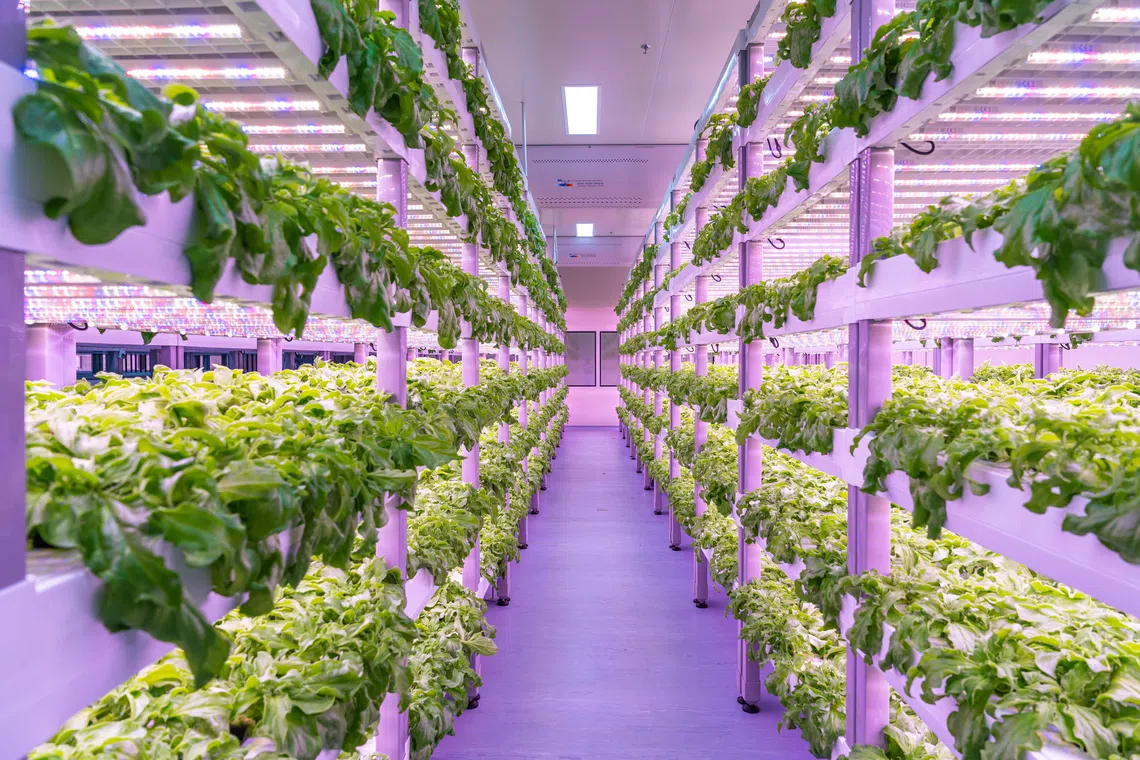
The 50,000-square-foot high-tech vertical farm in Nusajaya Industrial Park was launched in July. It is designed to produce about 300 tonnes of leafy vegetables annually for both the Singapore and Malaysia markets.
The facility is currently in a test planting phase. It uses advanced controlled-environment agriculture technology to enable pesticide-free, year-round production. Full commercial production is expected to begin in early 2026.
TRENDING NOW

Once staunchly pro-China, Malaysian Chinese businesses are now distancing themselves from Beijing

Looking beyond looming CEO succession, should UOB potentially pursue a transformative merger?

Could stablecoins be the future of money?

Grab CEO’s wife Chloe Tong on life with Anthony Tan and finding her purpose

