Malaysia central bank keeps interest rates unchanged at 3%
Tan Ai Leng
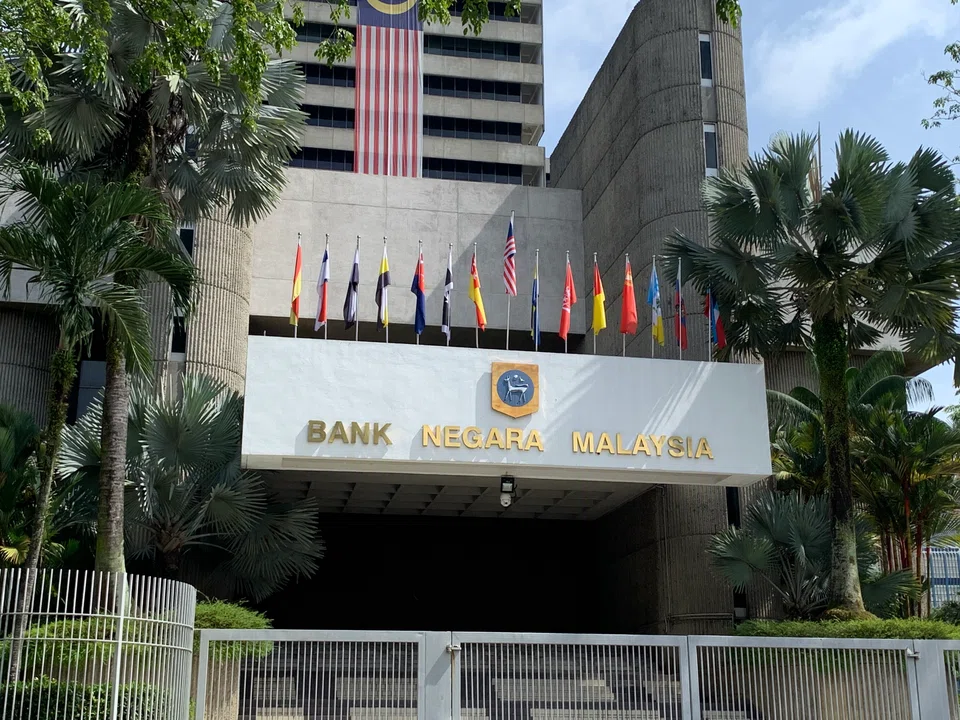
[KUALA LUMPUR] Malaysia’s central bank kept its benchmark interest rate unchanged at 3 per cent on Wednesday (Jan 24), maintaining the key rate for a fourth consecutive meeting.
The decision was widely expected, with all 28 economists in a recent Reuters poll saying they did not expect a change to the overnight policy rate (OPR) at the end of Bank Negara’s first monetary policy meeting of the year.
Bank Negara said in a release that the decision was made in view of steady economic growth, supported by a recovery in exports and more resilient domestic expenditure.
The central bank added, however, that risks from weaker external demand and lower production are still present.
Borrowing costs were last adjusted in May 2023, when the OPR went up by 25 basis points to the current level. Economists and analysts have said that they expect Bank Negara to keep rates steady until at least the end of 2025.
“At the current OPR level, the monetary policy stance remains supportive of the economy and is consistent with the current assessment of the inflation and growth prospects,” said Bank Negara.
OCBC senior Asean economist Lavanya Venkateswaran is cautiously optimistic on Malaysia’s domestic growth prospects and expects inflation to be manageable this year.
Bank Muamalat chief economist Mohd Afzanizam Abdul Rashid expects 2024 to remain a challenging year for Malaysia as the US rate cuts will only kick in later this year.
“This will continue to dictate the foreign capital flows which seem to favour countries that can offer higher interest rates,” he told The Business Times.
Brian Tan, Barclays senior regional economist, said the central bank’s tone in its latest statement indicated that policy rate is close to, or already at, the point of neutrality.
Malaysia’s inflation growth stood at 1.5 per cent year on year (yoy) in December, the lowest since February 2021. Its full year inflation increased 2.5 per cent yoy, below the government’s estimate of 3 to 4 per cent.
The central bank expects inflation to remain modest in 2024, broadly reflecting stable cost and demand conditions, but it notes that changes to domestic policy on subsidies as well as commodity prices will affect inflation.
Last week, Malaysia’s Department of Statistics projected gross domestic product (GDP) growth to reach 3.8 per cent in 2023 – a shade lower than the central bank’s forecast of 4 per cent. Bank Negara will release its fourth quarter and full-year GDP figures on Feb 16.
Bank Negara said the Q4 advance estimates for GDP affirmed that overall growth for 2023 expanded within expectations.
For 2024, the central bank expects the growth momentum to improve, underpinned by increased exports and strong domestic spending, and supported by continued employment and wage growth.
“The growth outlook remains subject to downside risks stemming from weaker-than-expected external demand and larger declines in commodity production,” added Bank Negara.
Ringgit depreciation has been one of the concerns for Malaysians, but Bank Negara emphasised that ringgit movements are primarily driven by external factors and “not reflective of the current domestic economic performance and prospects”.
MIDF Research said the ringgit is in a good position to strengthen in 2024, as the domestic economy stays on an upbeat momentum coupled with the hawkish pivot of the Fed and other major central banks.
MIDF expects the ringgit to average RM4.38 per US dollar and reach RM4.20 by end-2024. The ringgit was trading at RM4.73 at 5 pm on Wednesday. Last year, the country’s currency depreciated 4 per cent against the greenback.