Malaysia denies ex-PM Najib’s house arrest bid ahead of key 1MDB verdict
The high court says the ‘addendum order’ document exists but rules the order is not legally enforceable
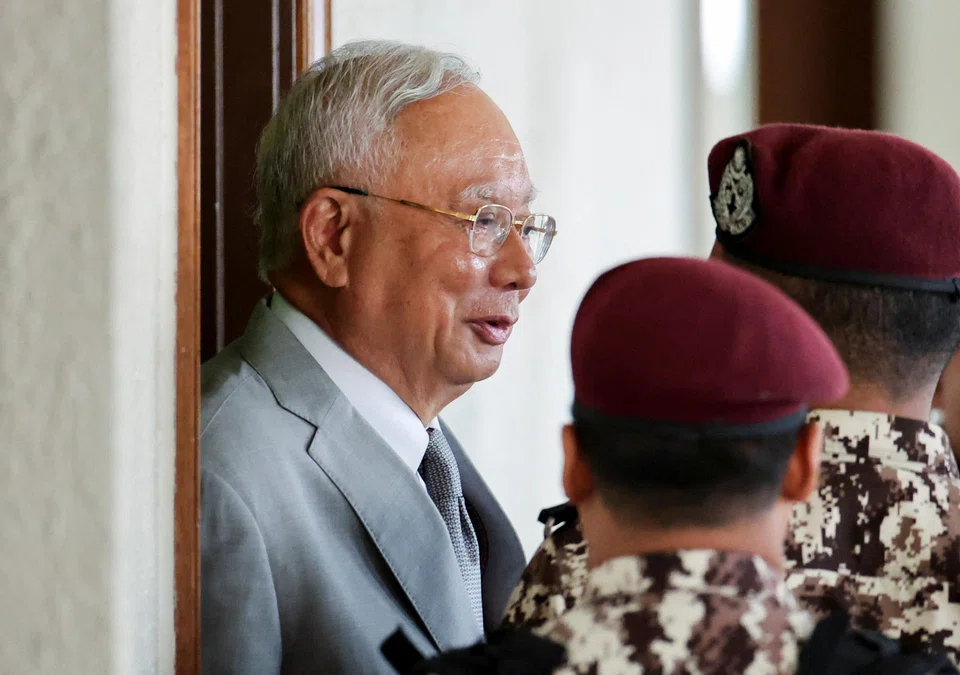
[KUALA LUMPUR] A Malaysian court denied on Monday (Dec 22) a bid by jailed former prime minister Najib Razak to serve the remainder of his sentence at home, in the first of two key rulings the ex-premier faces this week over his role in the multibillion-US-dollar 1MDB scandal.
Najib, who has been imprisoned since 2022, had his 12-year jail sentence halved last year by a pardons board chaired by the country’s former king.
But he insists the monarch also issued an “addendum order” that converts his sentence to house arrest, and he has been seeking to compel the government to confirm the document’s existence and enforce its contents.
Government officials, including members of the pardons board, for months denied knowledge of its existence, though the former king’s office and a federal lawyer this year confirmed the royal document had been issued.
The king plays a largely ceremonial role in Malaysia but can pardon convicted people as one of the discretionary powers granted to him by the federal constitution.
The Kuala Lumpur High Court on Monday said the existence of the document was not in dispute, but the order was not legally enforceable as it was not made with the consultation of the country’s pardons board, as required under the constitution.
While Malaysia’s rulers are allowed to issue pardons according to their discretion, their powers are not without limits, Judge Alice Loke said.
“The addendum order was not deliberated nor decided at the pardons board meeting... Consequently, it is not a valid order,” she said.
Najib will appeal the ruling, his lawyer Muhammad Shafee Abdullah told reporters after the verdict, adding that the decision risked diluting the power of Malaysia’s rulers to grant clemency.
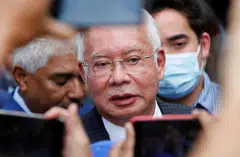
Najib faces additional jail time
Monday’s decision comes four days before the court reaches a verdict in Najib’s biggest trial related to the scandal at 1MDB, the state fund he co-founded in 2009.
US investigators say at least US$4.5 billion was misappropriated from 1MDB by the fund’s high-level officials and their associates. More than US$1 billion allegedly flowed into bank accounts owned by Najib.
He was found guilty of graft and money laundering in 2020 after receiving funds from a 1MDB unit. Two years later, he became the first Malaysian prime minister to go to prison after losing all his appeals.
Voted out in 2018, Najib last year apologised for mishandling the scandal during his time in office, but he has consistently denied wrongdoing, saying he was misled about the source of the funds by fugitive financier Jho Low and other 1MDB officials.
On Dec 26, the court will decide whether to convict Najib of four additional charges of corruption and 21 counts of money laundering involving the illegal transfer of about 2.2 billion ringgit (S$695.6 million) from 1MDB.
If found guilty, he could face a maximum of 20 years’ imprisonment on each charge, as well as a fine of up to five times the value of the alleged misappropriations.
Anwar tested
Both court verdicts are being closely watched amid growing tensions within current premier Anwar Ibrahim’s ruling coalition over the treatment of Najib, who remains a popular figure within his own party, the United Malays National Organisation (Umno).
Umno – which champions the rights of the country’s majority ethnic Malays – campaigned against Anwar, but joined his coalition in government following a 2022 election that resulted in a hung parliament.
Umno youth leader Akmal Saleh called on the party on Monday to withdraw from the government, saying the decision not to allow house arrest for Najib reduced the powers of the Malay rulers.
The party, he said, was also offended by social media posts by some members of Anwar’s coalition celebrating the court decision.
“Better for us to be a dignified opposition then be insulted by these ignorant parties,” he said in a post on Facebook.
Anwar, who came to power on an anti-corruption platform, also faces pressure about his commitment to reform as prosecutors dropped several charges against Najib. This month, prosecutors also abandoned an appeal against the acquittal of Najib’s wife, Rosmah Mansor, in a separate graft case.
Anwar has said he does not interfere in court cases, though the country’s attorneys-general are appointed by the prime minister and their independence has often been questioned.
“It’s a test of the prosecution, it’s a test of the judiciary, it’s a test of political will,” University of Nottingham Asia political analyst Bridget Welsh said. REUTERS
Decoding Asia newsletter: your guide to navigating Asia in a new global order. Sign up here to get Decoding Asia newsletter. Delivered to your inbox. Free.
Share with us your feedback on BT's products and services