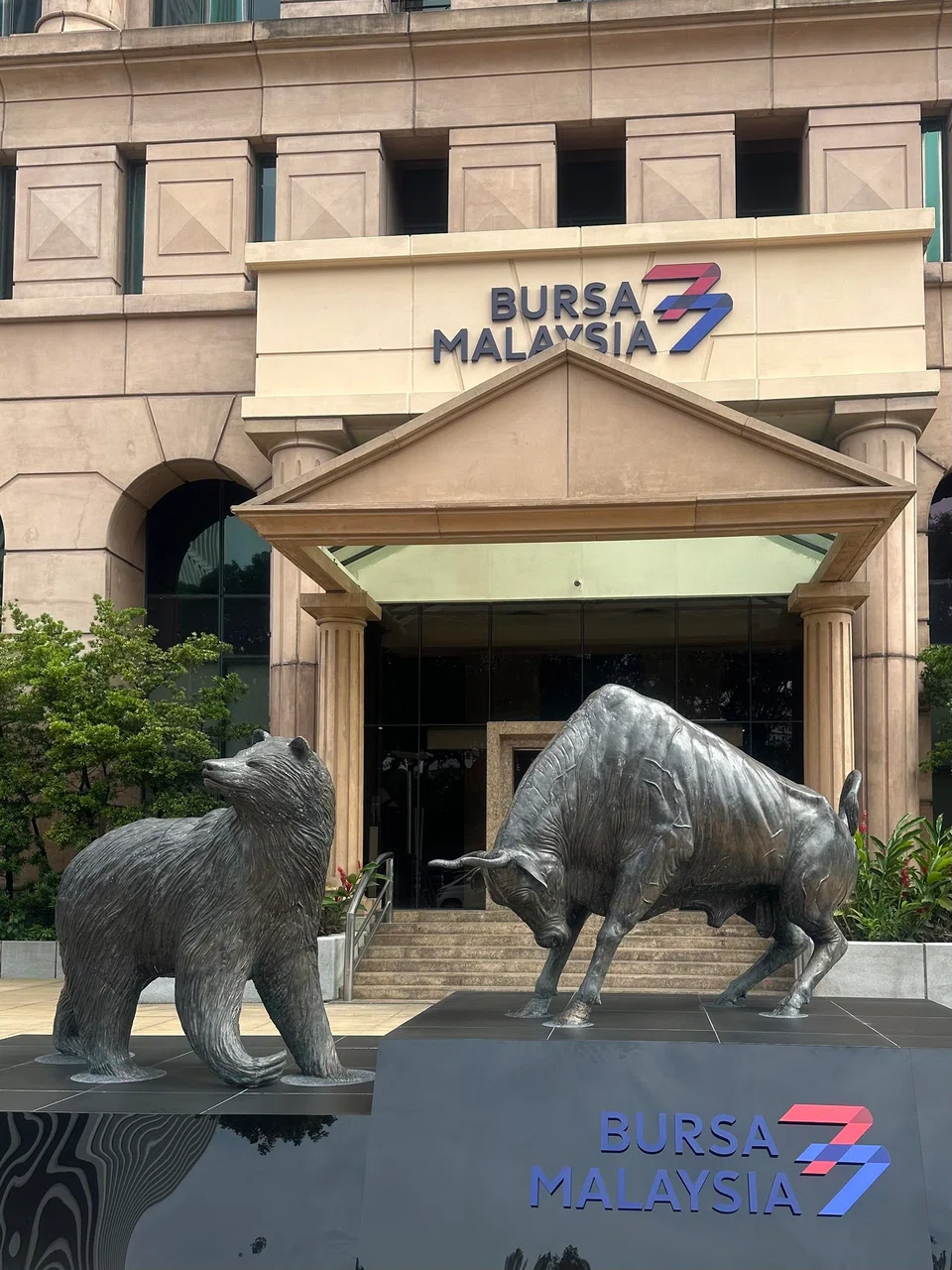
Malaysia equities in 2026: Five themes to watch, from infrastructure to IPOs
Analysts say the year ahead could mark a turning point after a subdued 2025

[KUALA LUMPUR] Malaysia’s equity bulls are stepping into 2026 with a familiar wish list: bigger infrastructure cheques, a faster green-energy build-out, a firm ringgit and a livelier initial public offering (IPO) calendar.
However, they are ushering in the new year with one eye firmly on external shocks, from trade flare-ups to China spillovers.
With reforms and project roll-outs likely to speed up ahead of a potential 2027 election, investors are watching for a steadier stream of infrastructure awards, as well as funding calls.
This could represent a tailwind for construction, building materials and selected industrials, and a boost to Malaysia’s broader capital-market story, say analysts.
Analysts told The Business Times the year ahead could mark a turning point for Malaysian equities, following a subdued 2025 when tariff fears cut short a brief artificial intelligence (AI)-led rally but failed to derail broader market resilience.
Isaac Lim, chief market strategist at Moomoo South-east Asia, expects the rollout of the 13th Malaysia Plan (13MP), Budget 2026 and outcomes from the Asean Summit to galvanise the country’s investment landscape.
Ramone Mikgail Kok, head of investment research and advisory at HLB Private Bank, forecasts rising foreign direct investment (FDI), digital investments and sustainability policies to drive long-term transformation, with Johor-Singapore Special Economic Zone (JS-SEZ) and the New Industrial Master Plan (NIMP) 2030 in focus.
Johor led Malaysia’s investment surge in the first nine months of 2025, attracting RM91.1 billion (S$28.8 billion) of the country’s total RM285.2 billion. This was powered by the JS-SEZ and its expanding manufacturing and digital ecosystem, according to official data.
Lim said the green transition is another structural driver. Malaysia’s carbon tax, due next year, will raise compliance pressure on energy-intensive industries.
Meanwhile, Neoh Jia Man, portfolio manager at Tradeview Capital, expects Budget 2026 support for large-scale solar and the electric-vehicle ecosystem to lift demand for renewables, carbon-capture solutions as well as environmental, social, and governance-linked financing, including green sukuk.
Neoh is also upbeat on domestically oriented sectors, particularly consumer, finance and utilities.
“Lower raw material costs from a stronger ringgit and government cash transfers should support consumption, while banks’ dividend yields and heavyweight index representation may continue to draw institutional flows,” he added.
Key trends
Moomoo’s Lim and HLB’s Kok flagged five themes for 2026:
- Infrastructure and construction: Malaysia is heading into an infrastructure upcycle, with 13MP spending and FDI supporting 5 per cent annual growth. Big-ticket projects could lift construction activity, benefiting material suppliers and property markets in Johor and Greater Kuala Lumpur.
- Green transition: The 2026 carbon tax and Budget 2026 measures underpin demand for renewables, carbon capture and green technology. Potential beneficiaries span utilities, palm oil and green materials, alongside green sukuk issuance.
- Tourism rebound: Visit Malaysia 2026 targets RM329 billion in receipts, supporting tourism, retail and business events. Higher arrivals and steady domestic spending could lift airlines, hotels and hospitality-focused real estate investment trusts (Reits).
- Digital economy: 2026 is pivotal for Malaysia’s push to become an “AI nation” by 2030, with spillovers into fintech, digital payments and the data-centre ecosystem. Risks remain, including tariff uncertainty for semiconductors.
- Trade diversification: Malaysia is positioning as a “China+1” hub for electronics, medical devices, and petrochemicals, helped by policy upgrades and incentives such as Asean Business Entity (ABE) status and Forest City Special Financial Zone. This could benefit logistics, industrial developers and regional banks.
China, AI and ringgit
Tradeview Capital’s Neoh views the recent stabilisation of US-China trade tensions as temporary, warning that renewed friction could disrupt global supply chains.
“Furthermore, accelerating price declines in China’s property sector pose risks to regional demand and commodity markets,” he added.
Neoh also maintains that investor concerns about an AI valuation bubble are valid, suggesting the risk-reward profile is skewed to the downside if AI sentiment reverses.
He noted that a stronger ringgit will pressure exporters while benefiting importers.
As at Dec 17, the ringgit traded at 4.0852 against the greenback. This represents an appreciation of nearly 8.7 per cent for the Malaysian currency since the start of the year, when it stood at 4.4728 per US dollar.
The weak and the strong
The benchmark index FTSE Bursa Malaysia Kuala Lumpur Composite Index (FBM KLCI) is set to end 2025 broadly flat, lagging regional peers lifted by the global AI surge.
The index fell to a low of 1,400.59 on Apr 9 – the day Washington imposed a 24 per cent reciprocal tariff on Malaysian exports – before rebounding to close at 1,641.44 on Dec 17, about 0.5 per cent higher than its level at the start of the year.
Tradeview’s Neoh said the FBM KLCI’s lacklustre 2025 performance lags regional peers and fails to reflect broader market weakness – as it consists of only 30 constituents – especially the double-digit declines seen in many small-cap counters.
From a macro perspective, he noted that Malaysia’s economy has largely recovered from its post-pandemic slowdown, with reaccelerating GDP growth, easing inflation and low unemployment, though its export dependence leaves it exposed to external shocks.
Risks, however, remain pronounced. Neoh warned that the recent stabilisation in US-China trade tensions may prove temporary, while an unwinding of stretched AI valuations or renewed stress in China’s property sector could spill over into regional demand.
Kok described 2025 as a year of consolidation, with Malaysian equities providing downside protection despite lagging global markets.
Expectations of US Federal Reserve interest rate cuts, a softer US dollar and improving domestic investment visibility are underpinning cautious optimism for 2026, he added.
On sector performance, Neoh maintains a constructive view on domestically oriented consumer, banking and utilities stocks, noting that utilities benefit from defensive profiles and energy transition policy support.
Conversely, he flags vulnerabilities in export-reliant industrial and tech stocks due to currency appreciation and trade uncertainty. Margin pressures are emerging in private healthcare from tighter insurance claims.
HLB’s Kok adds that oversupply hurts the glove sector, while rising capacity squeezes petrochemical margins. Traditional automotive, gaming and brewery segments also face competition and regulatory risks.
IPO buzz
Bursa Malaysia is expected to end 2025 with 60 new listings – up from 55 last year – which will add nearly RM30 billion in market capitalisation.
A Deloitte report in November highlighted Malaysia as South-east Asia's IPO outperformer, leading the region with 48 listings that raised US$1.1 billion in the first 10.5 months of 2025.
While Singapore led in funds raised, Malaysia’s consistent volume and sector diversity, supported by government measures, underscore strong investor confidence.
This momentum is anticipated to continue into 2026 with up to 60 listings, though analysts caution about market absorption limits.
Sentiment remains constructive for 2026, though the market is now more selective, said HLB’s Kok.
While smaller ACE Market IPOs with sensible pricing may succeed, mid-sized main market listings face higher scrutiny due to recent underperforming debuts and periods of foreign selling and volatility, he added.
“At a global level, investor sentiment has clearly shifted towards near-term credibility and cash-flow visibility over highly ambitious growth narratives,” said Lim from Moomoo.
Healthcare, green energy, advanced manufacturing and digital-economy plays aligned with national priorities are likely to dominate the pipeline, while valuations disconnected from fundamentals may struggle to gain traction, Lim added.
TRENDING NOW
Incidence of civil servants buying property near unannounced MRT stations ‘a concern’, but may not establish misconduct: PSD
Grab CEO’s wife Chloe Tong on life with Anthony Tan and finding her purpose
Income Insurance appoints former Manulife Singapore top man as new CEO
HDB reviewing ‘jumbo’ flat scheme after Telok Blangah unit listed for sale at S$2.18m