



Malaysia hosts, Asean hopes, but now comes the hard part
Bloc faces a tricky balancing act ahead – boosting ties with China without pushing the US, a key export market, too far away


[KUALA LUMPUR] Malaysia stepped into the spotlight this week as it hosted a flurry of high-stakes diplomatic engagements, with Prime Minister Anwar Ibrahim leading regional efforts to future-proof Asean amid rising global headwinds.
The 46th Asean Summit in Kuala Lumpur came at a tense moment, amid rising global rivalries, growing protectionism and mounting pressure on the bloc to finally act on long-stalled integration plans, all while trying to stay neutral between global superpowers.
Held alongside the Asean-Gulf Cooperation Council (GCC) and the inaugural Asean-GCC-China summits, the two-day gathering was a bid to put Asean back on the global map – this time with a long-term game plan rooted in pragmatism.
Anwar set the tone at the summit’s opening: “The very foundations of Asean are being tested... From the Myanmar crisis to growing protectionism, we must act together, on our own terms.”
Observers say Malaysia’s chairmanship has re-energised Asean’s often-fragmented diplomacy, offering a rare show of unity and purpose.
“This marks a shift for Asean, which is often perceived as a loose organisation where consensus is hard to achieve,” Dr Liew Wui Chern, a policy analyst and lecturer at Universiti Tunku Abdul Rahman, told The Business Times.
“It demonstrates a growing realisation among members of the need for unity amid external uncertainties and a stronger global voice,” he added.
All 10 member states jointly called for a ceasefire in Myanmar and made progress in long-stalled negotiations for a Code of Conduct in the South China Sea. That level of agreement, Dr Liew noted, is typically years in the making.
Unity on paper – action to come
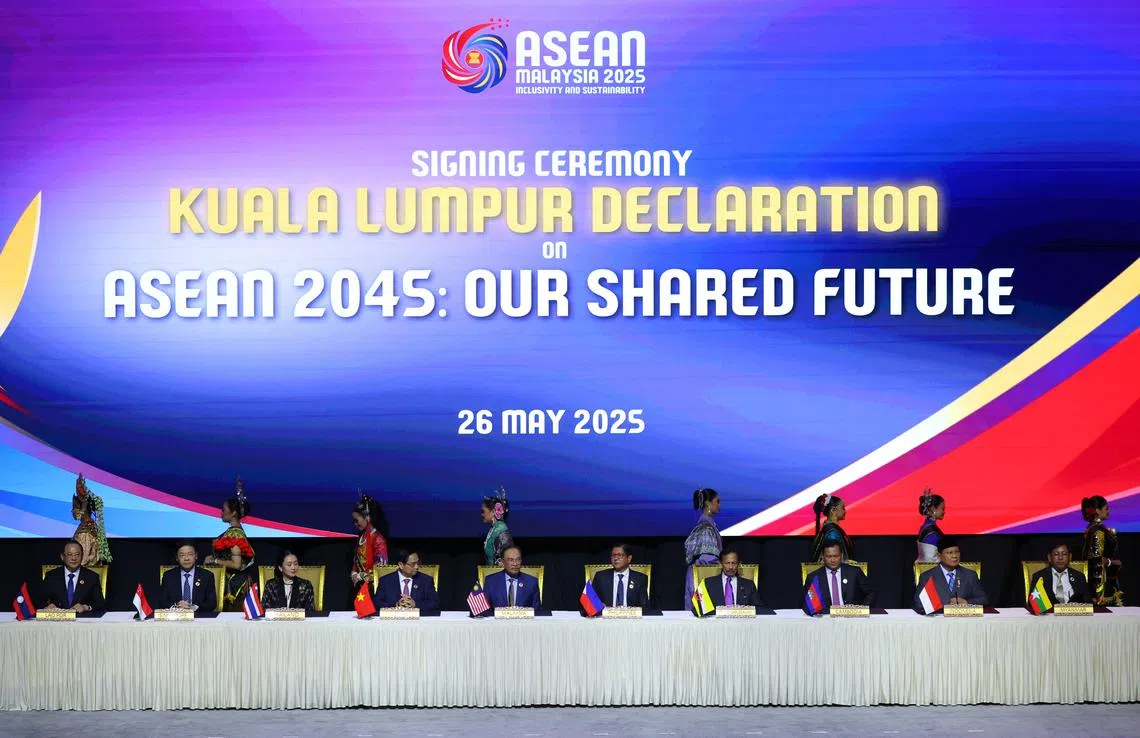
At the heart of the summit was the adoption of the Kuala Lumpur Declaration, a foundational blueprint that launches Asean’s Community Vision 2045 – a 20-year plan to make the bloc a more assertive global player and one of the world’s top four economies by mid-century.
The roadmap focuses on political stability, greener growth, better infrastructure, and tighter digital ties – plus a long-overdue push to turn big-picture plans into action.
Asean Business Advisory Council chairman Nazir Razak said Malaysia has demonstrated tremendous leadership this year – a time when Asean truly needs it.
During a panel discussion at the Asean Business Forum 2025, he highlighted the strong sense of camaraderie among leaders. “The prime minister has cultivated robust bilateral relationships with fellow leaders, and this has been reflected in his chairmanship,” he said.
Nazir said the momentum showed up even at the economic ministers’ level and stressed that turning plans into action will be the real test for Asean, which hasn’t always nailed execution.
Business leaders and policymakers have been eager to reaffirm key priorities, especially with recent US tensions in play, he remarked.
Laying the groundwork
The summit also saw the endorsement of a five-year action plan aimed at removing regulatory bottlenecks to cross-border trade, improving the mobility of goods, services and talent and attracting more foreign investment, particularly in sectors such as agriculture, mining and manufacturing.
Malaysia, Singapore and Vietnam advanced this ambition further with a tripartite agreement to explore cross-border renewable energy trade.
The proposed project involves transmitting offshore wind power from Vietnam to Peninsular Malaysia and Singapore via subsea and overland grids, marking an early win for the Asean Power Grid vision.
“These efforts are part of our broader goal to create a more resilient and sustainable energy supply for the region,” said Singapore’s Prime Minister Lawrence Wong in his social media posting.
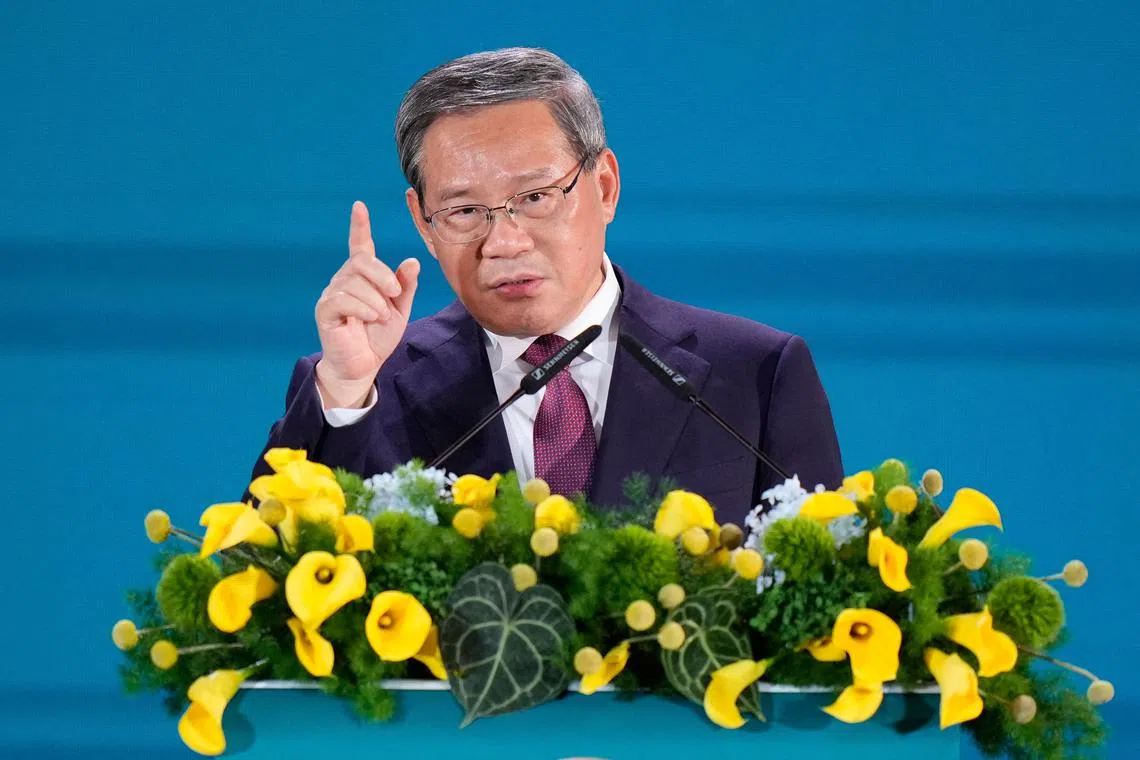
Beyond internal goals, Malaysia also used the summit to position Asean as an attractive partner to external players. At the inaugural Asean-GCC-China Summit, Chinese Premier Li Qiang called for stronger trilateral ties, noting that China, the GCC and Asean collectively represent a quarter of global gross domestic product (GDP).
“By fully connecting our markets, we will unleash powerful development potential,” he said.
Talks are also set to begin on a potential Asean-GCC free trade agreement – a move likely to attract investment into logistics, petrochemicals and halal supply chains.
Still, some observers tempered expectations.
“I don’t expect the summit to result in any significant near-term economic impact for member countries, as most of the discussions were focused on political strategy rather than direct policy outcomes,” said Nazmi Idrus, head of economics (equity research) at CGS International.
But the summits held this week have sent a clear signal to the US “that Asean has a choice to work with other economic blocs and to negotiate with other countries”, he remarked.
One bloc, many deals
That signal comes amid growing unease over recent US tariff threats, which have disrupted regional supply chains and forced Asean states into difficult balancing acts.
While Asean has reached internal consensus on collective negotiation with the US, an Asean-wide deal is unlikely, said Dr Oh Ei Sun, a senior fellow at the Singapore Institute of International Affairs.
“In reality, individual Asean countries are separately – and not so discreetly – racing to secure bilateral trade deals with the US, some even offering to reduce their tariffs on American goods to zero in hopes of securing better terms,” he said.
Dr Oh argued that Malaysia’s chairmanship, while symbolically important, is unlikely to reverse entrenched dynamics within a single year. “Expecting Kuala Lumpur to unify Asean on trade is like fishing in a tree – it’s just not realistic,” he said.
Road to October
As Asean looks ahead to its next 47th Asean Summit in October, some issues remain.
Questions remain over the full membership of Timor-Leste despite Malaysia and Indonesia’s offer to assist in meeting accession requirements. While the country holds observer status, its full integration may still be years away, said observers.
Some speculate that Kuala Lumpur may host a historic Asean-US-China trilateral dialogue, though the prospects of US President Donald Trump attending remain slim.
Balancing acts
Asean faces a tricky balancing act ahead – strengthening ties with China without pushing the US, a key export market, too far away.
Speaking at the Asean Business Forum 2025, OCBC chief economist Selena Ling said while the US remains an important market, the region is fundamentally part of the same economic sphere as China. “There is no decoupling between China and Asean; if anything, multinational corporations are increasingly adopting a strategy of producing in the US for the US market, in China for the Chinese market, and in Asean for the rest of the world,” she added.
Still, Ling noted, Asean must tread carefully. “While deepening ties with China is important, Asean cannot afford to antagonise the US. This highlights the need for a balanced approach in navigating these complex economic relationships,” she said.
For Malaysia, it was a test of whether quiet diplomacy still works in a region facing louder challenges – an answer that may only emerge in the months ahead.
TRENDING NOW

Britain’s mansion tax shows the difficulty of targeting wealth

Once staunchly pro-China, Malaysian Chinese businesses are now distancing themselves from Beijing

The only common thing in S-E Asia is that we all eat rice: Cisco’s Asean president

Singapore data centre operator DayOne opts for US IPO at likely US$20 billion valuation

