Malaysia may hike interest rate if high inflation persists: central bank
 Add BT as a preferred source
Tan Ai Leng

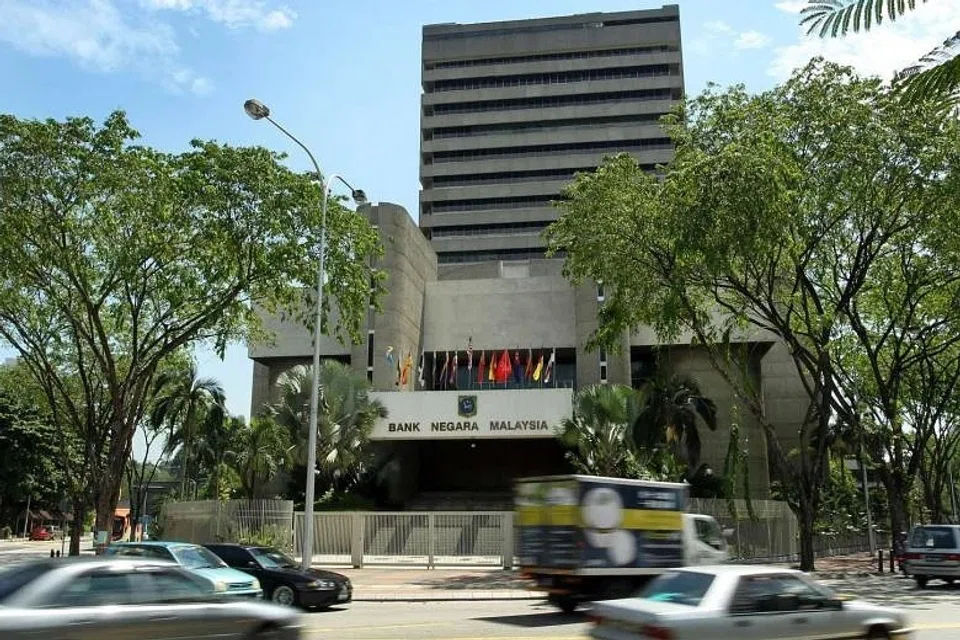
[KUALA LUMPUR] Malaysia’s central bank said on Wednesday (Mar 29) that it may consider adjusting its benchmark interest rate, with inflation expected to moderate but stay elevated for the rest of this year.
Bank Negara paused the rate hike at its last two meetings in January and March to have more time to assess the impact of four consecutive hikes of 100 basis points in 2022.
The overnight policy rate (OPR) has stayed at 2.75 per cent, which Bank Negara governor Nor Shamsiah Mohd Yunus said is still below the pre-pandemic level of between 3 per cent and 3.25 per cent in 2019.
Many economists in Malaysia expect the central bank raise the OPR by 25 basis points at the next monetary policy committee (MPC) meeting, to be held in May or July, in view of the economic performance and stubborn core inflation.
Nor Shamsiah stressed that the monetary policy is “not on any pre-set path”, but rather there is a “delicate balancing move” to ensure price stability to ensure sustainable economic growth.
“It’s important for us not to overshoot or undershoot (on the rate adjustments). The MPC remains vigilant to cost factors and continues to assess the evolving condition,” she told reporters after the release of Bank Negara’s annual report for 2022.
In the report, the central bank projected that headline and core inflation will average at between 2.8 per cent and 3.8 per cent this year. Last year, headline and core inflation were 3.3 per cent and 3 per cent respectively.
Higher commodity prices, the government’s fuel subsidy rationalisation and changes on price control policy will affect the price changes, said the governor.
On the economic outlook, Bank Negara projected that firm domestic demand will see gross domestic product expand by between 4 per cent and 5 per cent in 2023, in line with earlier estimates by the Ministry of Finance.

Malaysia’s economy grew by 8.7 per cent in 2022, exceeding official forecasts of 6.5 per cent to 7 per cent.
Commenting on the ringgit, Nor Shamsiah said that the currency strengthened towards the end of 2022 mainly on signs that the US Federal Reserve might slow the pace of its policy tightening. This improvement continued into January this year as the anticipated reopening of China’s economy that month added to the positive sentiment on the ringgit.
“However, the rebound in the US dollar since February led to a weaker ringgit as global investors revised their expectations for a higher terminal Federal Funds Rate,” she added.
Between September 2022 and March 2023, the one-month exchange rate of the ringgit against the US dollar increased to 5.3 per cent. While this implied higher volatility, the central bank said that this remained largely in line with regional trends and was well below the highest level of 15 per cent in 2015.
On the whole, Nor Shamsiah said that Malaysia’s banks remain well-capitalised, adding that recent volatility in the global banking sector has had minimal impact on the country’s financial markets.
Strict capital and liquidity rules and regular stress tests indicated that Malaysian banks were well-placed to withstand severe economic and financial market crises, she pointed out. “Our banks are resilient and we do not expect what we see in other countries to happen here,” she said, referring to turmoil in the global banking sector that has seen a string of bank failures in Europe and the United States.
Decoding Asia newsletter: your guide to navigating Asia in a new global order. Sign up here to get Decoding Asia newsletter. Delivered to your inbox. Free.
Copyright SPH Media. All rights reserved.