



Malaysia minister braces for backlash over fuel subsidy revamp
 Add BT as a preferred source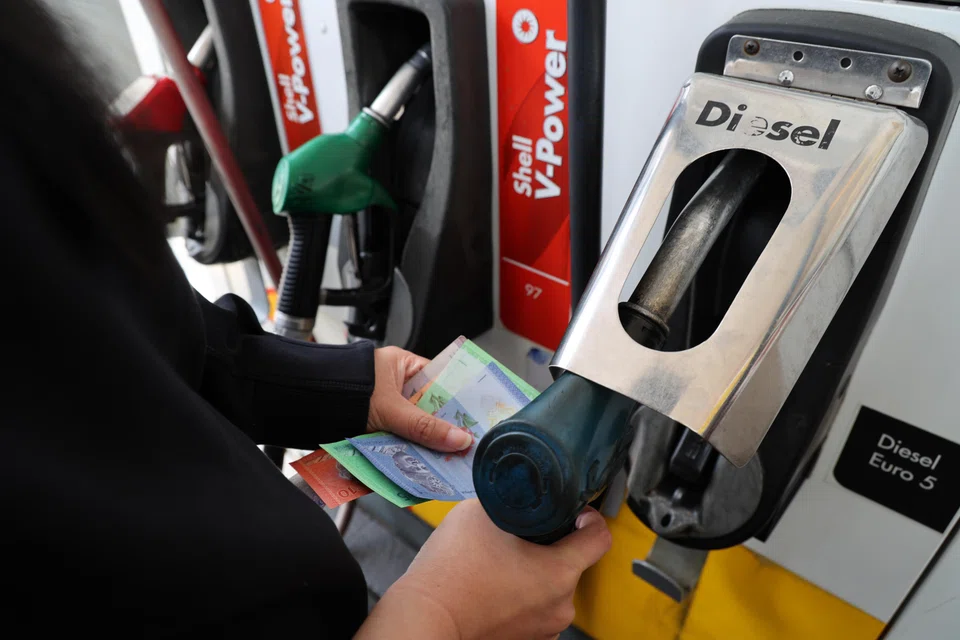
MALAYSIA’S government is bracing for a public backlash as it commits to rolling back petrol subsidies in mid-2025, a politically sensitive and long-delayed pledge that’s key to convincing investors that it is serious about fiscal reform.
The government is mulling a two-tier price system for the country’s most widely used fuel, so that the wealthiest 15 per cent pay the market rate for RON95 petrol while the rest enjoy the current subsidised price, Economy Minister Rafizi Ramli said on Saturday (Oct 19). That’s expected to save the government RM8 billion (S$2.4 billion) a year – though it could also trigger second-round price hikes and lead to a surge in inflation, he said.
“We are prepared for the choppy waters ahead,” Rafizi said in an interview on Bloomberg Television’s Insight with Haslinda Amin, to be broadcast at 11 am Hong Kong time on Monday. While the government has spent time readying the masses and explaining their reasoning for the subsidy reforms, “it’s a once-in-a-generation decision that affects everyone’s lives”.
It’s a plan years in the making, and how Malaysia navigates it will be crucial for Prime Minister Anwar Ibrahim as he looks to lift investor confidence while avoiding the fate of his three direct predecessors, each of whom lasted less than two years in office. Anwar needs to balance the interests of various political parties that make up his coalition government.
Rolling back diesel subsidies in June was followed by the ruling coalition’s loss in a by-election. While it rebounded in two subsequent polls, the stakes are higher with RON95 – Malaysians are so reliant on private transportation that vehicles outnumber the population.
“My hope, and our responsibility in the government, is to make sure that we manage this properly so that it is sustainable,” Rafizi said, a day after Anwar unveiled a record spending plan to boost the economy.
Inflation is the government’s biggest concern, according to Rafizi, even though only a fraction of the population will be subjected to higher RON95 prices.
“It is the nature of the Malaysian economy that, at any sign of a fuel price hike, you will start seeing everything else go up,” said the 47-year-old, who is a qualified chartered accountant. “Our simulation is that if there is a price hike, we have to go through at least a 12-month cycle before the inflation basically stabilises again to around 2 per cent.”
The government expects the inflation rate to average within the range of 2 to 3.5 per cent next year, from 1.5 to 2.5 per cent in 2024. The 3.5 per cent estimate is a “worst-case scenario” which Rafizi hopes can be avoided if the nation sticks to a two-tier pricing system for RON95.
Another option is to float RON95 prices like it did with diesel in June, and provide cash handouts to the needy to cushion the impact of higher costs, Rafizi said. But such aid may not reach everyone, given that just 60 per cent of Malaysia’s workforce are in the formal sector, he added.
Regardless of the mechanism, Anwar can ill afford to delay such a move, which the government had initially planned to implement this year. Higher public wages and retirement charges led him to unveil Malaysia’s largest annual budget on Friday, and he’s counting on subsidy cuts as well as a wider tax base to further narrow the fiscal deficit to 3.8 per cent of gross domestic product next year, from 4.3 per cent in 2024. The government has pledged to reduce the budget shortfall to 3 per cent of GDP in the medium term.
Rebuilding fiscal health is key for Malaysia to retain emerging South-east Asia’s highest credit score, and keep investors’ faith as Anwar looks to propel it into a global artificial intelligence hub.
A broad-based consumption levy could go a long way towards boosting Malaysia’s fiscal strength. Before the goods and services tax was scrapped in 2018, it made up about 20 per cent of revenue, or 3.3 per cent of GDP, according to Lavanya Venkateswaran, an economist at OCBC in Singapore.
Rafizi said the government’s focus though will be on subsidy reforms and optimising spending before they can consider bringing back a consumption tax. Previous Malaysian administrations have struggled to boost tax collection rates, among the lowest in South-east Asia.
After a revolving door of leaders since 2018, the current government has reason to be cautious.
“We don’t want to be a one-hit-wonder boy band,” Rafizi said.
Other highlights from the interview:
- Malaysia expects to sign a deal with Singapore on their special economic zone in Johor state by December, with the first batch of investors expected to come in the first half of 2025. The government has set aside an initial RM5 billion for an infrastructure facility fund it can quickly tap into for upgrading works in the zone.
- Malaysia aims to grow the economy by at least 5 per cent annually for the next few years, even as it expects a range of within 4.5 to 5.5 per cent in 2025.
- Rafizi hopes the ringgit can reach 3.8 versus the US dollar if Malaysia is able to maintain strong growth in the next four to five quarters. The currency, the best performer across emerging markets this year, closed around 4.3 per US dollar on Friday. BLOOMBERG
Decoding Asia newsletter: your guide to navigating Asia in a new global order. Sign up here to get Decoding Asia newsletter. Delivered to your inbox. Free.
Share with us your feedback on BT's products and services
TRENDING NOW

Knight Frank Singapore CEO Galven Tan resigns after 2.5 years at helm
ABSD deadline extended to up to 7 years for developers of large en bloc sites to encourage reuse of land
15-month wait-out curb lifted for private property owners buying HDB resale flats
Philippines’ income upgrade hides grim reality for most Filipinos

