Asean Business logo
SPONSORED BYUOB logo

Malaysia raises key policy rate to 3% as domestic growth prospects stay ‘resilient’

Tan Ai Leng
Published Wed, May 3, 2023 · 06:15 AM
    • Malaysia's central bank says the current monetary policy stance is “slightly accommodative and remains supportive of the economy”.
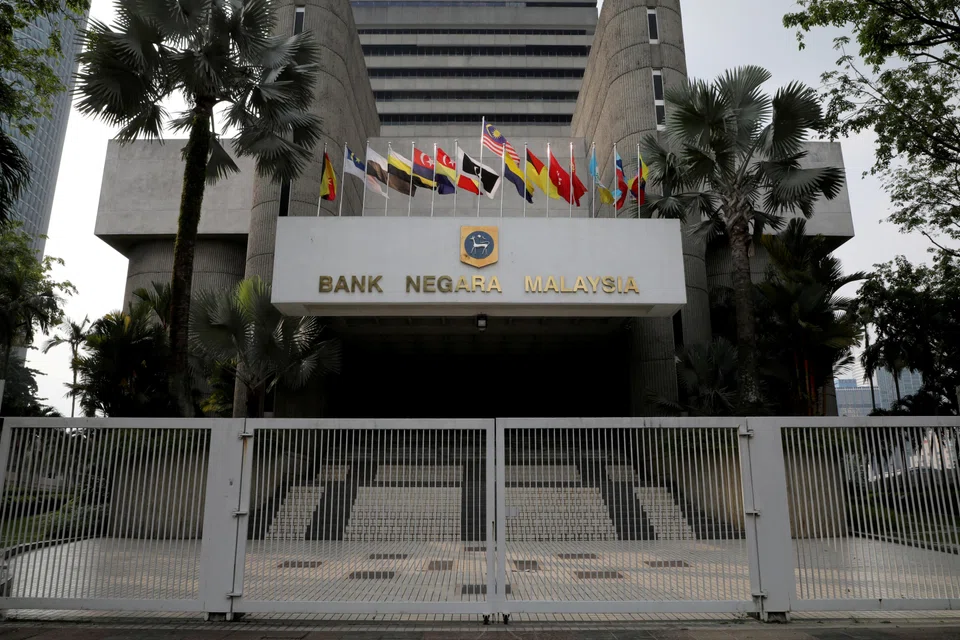
    • Malaysia's central bank says the current monetary policy stance is “slightly accommodative and remains supportive of the economy”. PHOTO: REUTERS

    [KUALA LUMPUR] Malaysia’s central bank raised its overnight policy rate (OPR) by 25 basis points to 3 per cent on Wednesday (May 3), in the first hike since November, surprising economists who had mostly anticipated a continued pause by Bank Negara.

    After this unexpected tightening, however, economists expect the central bank to keep policy accommodative for the rest of this year.

    After the Monetary Policy Committee (MPC) paused rate hikes in its January and March meetings, 21 out of 25 economists surveyed in a Reuters poll had thought the central bank would keep the interest rate unchanged at 2.75 per cent in May.


    “The market was expecting Bank Negara to hike the rate but not so soon, as we are seeing a moderating inflation rate and the economy doesn’t show any signs of overheating,” said Wong Chin Yoong, an economics professor at the University Tunku Abdul Rahman Malaysia.

    But in a statement on Wednesday, Bank Negara said that with domestic growth prospects remaining resilient, it was “timely to further normalise the degree of monetary accommodation”. It has also withdrawn the monetary stimulus that promoted the post-pandemic economic recovery.

    “In light of the continued strength of the Malaysian economy, the MPC also recognises the need to ensure that the stance of monetary policy is appropriate to prevent the risk of future financial imbalances,” said the central bank.

    The current monetary policy stance is “slightly accommodative and remains supportive of the economy”, it added.

    Accommodation ahead

    Economists expect this relatively loose stance to continue. Prof Wong noted that the unexpected rate hike has brought the OPR back to its pre-pandemic level. This is a comfortable level for Bank Negara to recalibrate and prepare for a future interest-rate reduction if a global recession happens, he told The Business Times.

    Even after the hike, monetary policy remains accommodative to facilitate economic growth and will not have a severe impact on businesses, he added.

    MIDF Research said the policy rate normalisation is needed to avert risks that could destabilise the economic outlook, given persistently high inflation and a further rise in household debt.

    With the interest rate back to pre-pandemic levels, MIDF Research expects Bank Negara to shift to a wait-and-see approach in monitoring major central banks’ movements.

    Barclays senior regional economist Brian Tan said Wednesday’s decision might be signalling that the country’s economy is still holding up, and is thus still able to absorb this further hike.

    Bank Negara will announce Malaysia’s gross domestic product (GDP) figures next Friday.

    Even if growth is better than expected, MIDF said it believes the central bank may not raise the interest rate. Instead, it might stabilise the macroeconomic condition through normalising its Statutory Reserve Requirement to 3 per cent this year, from 2 per cent since March 2020.

    In contrast, Barclays’ Tan highlighted that Bank Negara’s policy statement described policy as “slightly accommodative” which may suggest “the door is still open” to another rate hike.

    “Bank Negara has only just returned the policy rate to 2019’s level, but other central banks in emerging Asia are already above pre-pandemic levels,” he said in a report on Wednesday. If another rate hike happens, he expects it to be in September or November, after the release of second-quarter GDP data.

    Slowing growth, high inflation

    In its statement, the central bank said it anticipates Malaysia’s economy to continue expanding, driven by resilient domestic demand and strong labour market conditions, as well as the rebound of China’s economy.

    But exports may moderate, with global growth slowing due to elevated cost pressures and higher interest rates. The global outlook “remains subject to downside risks, mainly from an escalation of geopolitical tensions, higher than anticipated inflation out-turns and a sharp tightening in financial market conditions including from further stress in the banking sector”, it said.

    In a note on Wednesday, Oxford Economics senior economist Alex Holmes said he similarly expects the downturn in exports to drag on, as growth in advanced economies slows “due to the lagged impacts of monetary policy and tightening financial conditions after recent banking sector stress”.

    Malaysia’s GDP growth moderated to 7 per cent in the fourth quarter last year, from 14.2 per cent in the previous quarter, due to declining exports.

    Holmes said he believes Malaysia could experience weaker growth in the coming quarters, from weakening global growth.

    “We forecast GDP to grow just 2 per cent this year, less than half the government’s estimate of 4.5 per cent,” he added, noting that the boost from China’s reopening to Malaysia’s economy may be “small and short lived”.

    Malaysia’s headline inflation continued to trend lower as costs moderated, though core inflation has persisted above historical averages amid firm demand conditions.

    In March, the country’s inflation rate eased to 3.4 per cent from 3.7 per cent in the previous month. Core inflation – which excludes volatile items and those with government-administered prices – slowed to 3.8 per cent, down from 3.9 per cent in February.

    Bank Negara expects both headline and core inflation to moderate over the course of 2023, averaging between 2.8 per cent and 3.8 per cent.

    “The balance of risk to the inflation outlook is tilted to the upside and remains highly subject to any changes to domestic policy including on subsidies and price controls, financial market developments, as well as global commodity prices,” it said.