



Malaysia to refresh appeal of Iskandar southern growth corridor to Singapore

MALAYSIA’s southern growth corridor Iskandar Malaysia, which was once bustling but post mid-2010s turned tired, is set to be re-energised. The new administration led by Prime Minister Anwar Ibrahim is considering jumpstarting derailed connectivity plans – among others – to woo more investments from across the Causeway, said a key minister.
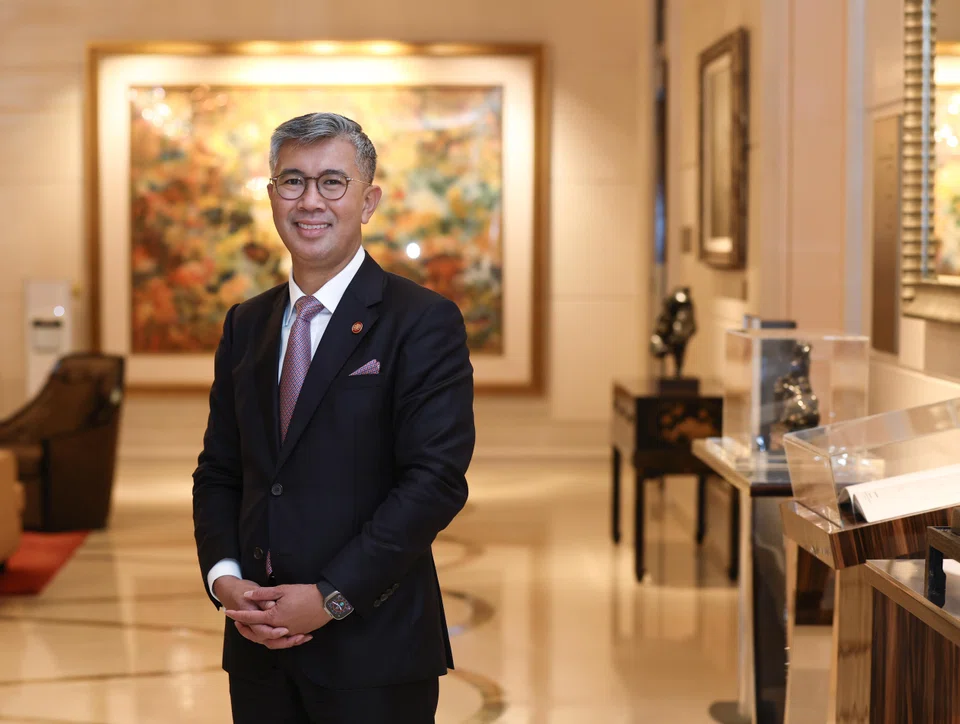
“The Johor side is in the midst of proposing an ‘economic corridor’ between Iskandar Malaysia and Singapore to stimulate the synergies for businesses in Singapore to have part of their operations in Iskandar – you can call it sort of ‘twinning’ – and this is targeted at certain sectors,” said Tengku Zafrul Aziz, Malaysia’s newly-appointed Minister of International Trade and Industry (Miti).
The key sectors that Malaysia aims to draw more “high-value investments” from Singapore to revitalise the southern tip’s growth agenda range from electrical and engineering, chemicals and chemical products, fabricated metal products, machinery and equipment and transport equipment to services, Zafrul told The Business Times in a recent interview.
This is in line with positioning Malaysia as an “alternative supply chain hub in Asia”, said Zafrul, who has also been recently appointed to the board of Iskandar Regional Development Authority – a statutory body under the federal government whose key task is to plan policies and strategies and promote and facilitate investments in the southern corridor.
One key aspect is to improve connectivity. This includes, for example, a ferry service that links Puteri Harbour International Terminal to Singapore, said Zafrul. The Puteri Harbour ferry terminal is located in the south-west of the state, within a 10-minute drive to tourist attractions such as Legoland Malaysia. It is also a 30-minute drive to Johor Baru town centre.
Johor Chief Minister Onn Hafiz Ghazi said recently the terminal is a key international entry point and that the state is exploring ways to enable transportation for this ferry terminal to Singapore. Even so, the plan to link Puteri Harbour to Singapore is not new but instead has been bandied about for years.
“These are the low hanging fruits – trade and investments to drive growth. We realise that it’s key that Singapore is part of the Iskandar Malaysia plan,” Zafrul said.
“I can’t share too much now because we are still at the concept stage. Some of the ideas are not new and it’s about how to refresh the ideas and make it more relevant to today’s situation. We should just get on with it... we already have the infrastructure,” he admitted.
Noteworthy is that Onn Hafiz was part of the delegation led by Anwar recently in his first official visit to Singapore as Malaysia’s Prime Minister.
The connectivity between Johor Baru or Iskandar Malaysia and Singapore relates mainly to the physical transportation connectivity of people and ground transport.
“The congestion problem is dire,” remarked Sulaiman Saheh, research director of real estate consultancy Rahim & Co International. He was referring to the hundreds of thousands of commuters who travel daily between Johor and Singapore, which is also one of the world’s busiest land crossings.
“One can take up to two to three hours to cross the Causeway, and that’s one-way. For Singaporeans to realise their dream of, say, sending their children to an internationally-renowned college or university at a much cheaper tuition fee, or have a business meeting at their manufacturing facility or satellite office in Johor Baru, and having to be on the road for three to five hours a day, is an inconvenience.
“This discourages to some degree the movement of investments to Iskandar Malaysia, which has seen a plateau since its hype in the mid-2010s,” he added.
Since its incorporation in 2006 until June 2022, Iskandar Malaysia has recorded total investments of RM367.8 billion (S$114 billion). Of that amount, RM148.1 billion constituted foreign investments. For the same period, Singapore was the second top investor in Iskandar Malaysia with an investment value of RM25.3 billion.
For the period of January to June 2022, Iskandar Malaysia registered RM13.2 billion in committed investments, whereby RM5.9 billion had been realised, according to data provided by Miti.
Following Miti’s recent investment mission to Singapore, Malaysia drew an additional RM13 billion of committed foreign direct investment from three investors – Sea Ltd, the parent company of e-commerce platform Shopee; UK-based data centre development and operation company Yondr Group; and Singapore-based alternative protein company Inseact. These investments are largely focused in Johor.
Previndran Singhe, managing director and chief executive of Zerin Properties, a Malaysia-based real estate services company, said the expansion of various industries will drive demand for real estate play with healthcare, wellness, education, tourism and leisure, workers’ accommodation and agro-based industries becoming key beneficiaries.
“The intentions stated are commendable and well-supported but then again are not really ‘brand new’,” said Sulaiman when asked to comment on Malaysia’s goal to revitalise Iskandar Malaysia.
“The key now is implementation. Plans are only as good as their actual execution, and this is where it gets tricky,” Sulaiman added. “Under the new government, we hope that a comprehensive strategy with an executable plan will be formulated. The challenge is to make financial sense and be sustainable, as well as to maintain focus with the ultimate beneficiaries in mind.”
TRENDING NOW

Higher rates, weaker spending: Is the Philippines entering stagflation?

Ex-Nvidia CEO misled top lawyer on affair with Chinese businesswoman, sources say

‘I’ll be buying more’: Singapore investors pour into Nvidia shares on Jensen Huang’s exit

Nvidia approaches Arm CEO Haas as employees seek Huang's return, reports say

