



Malaysia renews 10-year energy plan, targeting savings of around US$21.5 billion
The country is the fastest-growing data centre hub in South-east Asia
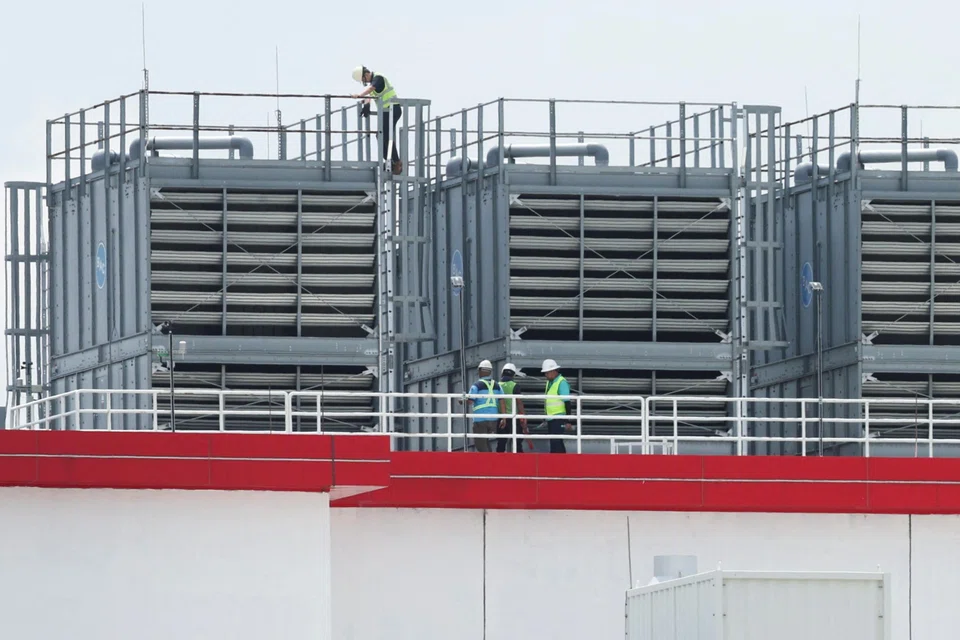
[KUALA LUMPUR] Malaysia on Tuesday (Aug 11) renewed a 10-year action plan to improve energy efficiency, targeting savings of around US$21.5 billion.
The renewed National Energy Efficiency Action Plan will run until 2035 and aims to reduce energy demand by 11.6 per cent, according to a statement from the energy transition and water transformation ministry.
This would lead to cumulative energy savings of 815,382 terajoules compared to business-as-usual projections, equivalent to a reduction of 26.1 million metric tonnes of CO2-equivalent emissions, the statement said.
The first action plan, which ran between 2016 and 2025, delivered electricity savings of 60,886 gigawatt-hours or approximately RM16.1 billion (US$3.9 billion), exceeding its target of 52,233 gigawatt-hours, Economy Minister Akmal Nasir said at the launch of the plan. This was equivalent to an estimated reduction of 35.6 million tonnes of CO2-equivalent, he added.
Malaysia has been pushing companies and investors to focus on energy sustainability, with demand for power expected to rise substantially amid a boom in artificial intelligence infrastructure.
The country is the fastest-growing data-centre hub in South-east Asia, attracting billions of dollars in investments from major global tech firms including Amazon and Microsoft.



'%3e%3cpath%20d='M12.1475%2025.5262C13.7713%2025.4295%2014.94%2023.913%2014.94%2021.8832C14.94%2019.5359%2013.474%2018.093%2011.5917%2018.093C11.3745%2018.093%2010.9582%2018.093%2010.8393%2018.1413V25.2086L11.8891%2025.5745C11.8891%2025.5745%2012.207%2025.5262%2012.1475%2025.5262ZM11.4934%2017.6281C13.2567%2017.6281%2014.3843%2016.4292%2014.3843%2014.4501C14.3843%2012.372%2013.275%2011.2973%2011.4339%2011.2973H10.8393V17.6305H11.4934V17.6281ZM6.66078%2025.6482L7.39265%2025.5492C8.02617%2025.4502%208.26403%2025.3053%208.26403%2025.1097V11.6149C8.26403%2011.4193%208.1451%2011.3709%207.23484%2011.249L6.68137%2011.173L6.6219%2010.7588H11.9508C15.7153%2010.7588%2017.0624%2012.0797%2017.0624%2014.1578C17.0624%2015.9666%2015.7748%2017.1909%2013.4969%2017.6305V17.7041C16.111%2017.948%2017.6571%2019.5382%2017.6571%2021.7636C17.6571%2024.3318%2015.8937%2026.0417%2012.1109%2026.0417H6.60132L6.66078%2025.6482Z'%20fill='%232B2B2B'/%3e%3cpath%20d='M20.6287%2025.6505L21.5596%2025.5515C22.1725%2025.4779%2022.4104%2025.3076%2022.4104%2025.112V11.249H21.9346C20.073%2011.3479%2018.982%2013.0095%2018.408%2014.6227L18.1907%2015.5018H17.6555L18.1701%2010.7588H29.3837L29.6421%2015.4787H29.1664L28.9491%2014.6227C28.3728%2012.8645%2027.3047%2011.2743%2025.5002%2011.249H24.9856V25.1856C24.9856%2025.3812%2025.1251%2025.4548%2025.9965%2025.5515L26.7695%2025.6505L26.829%2026.0417H20.5693L20.6287%2025.6505Z'%20fill='%232B2B2B'/%3e%3c/g%3e%3cdefs%3e%3cclipPath%20id='clip0_5242_21648'%3e%3crect%20width='24'%20height='16.8'%20fill='white'%20transform='translate(6%2010)'/%3e%3c/clipPath%3e%3c/defs%3e%3c/svg%3e)
In 2023, Malaysia passed a law requiring the biggest energy consumers to implement power-saving measures, as part of its pledge to reduce greenhouse gas emissions by 45 per cent across the economy by 2030, and to reach net-zero emissions by 2050. REUTERS
Decoding Asia newsletter: your guide to navigating Asia in a new global order. Sign up here to get Decoding Asia newsletter. Delivered to your inbox. Free.
Share with us your feedback on BT's products and services






