Malaysia to seek talks over US tariffs, rules out retaliation: trade ministry
As it braces for a 24% US tariff on exports, the South-east Asian country is opting to pursue dialogue and cooperation in high-tech sectors such as semiconductors and aerospace

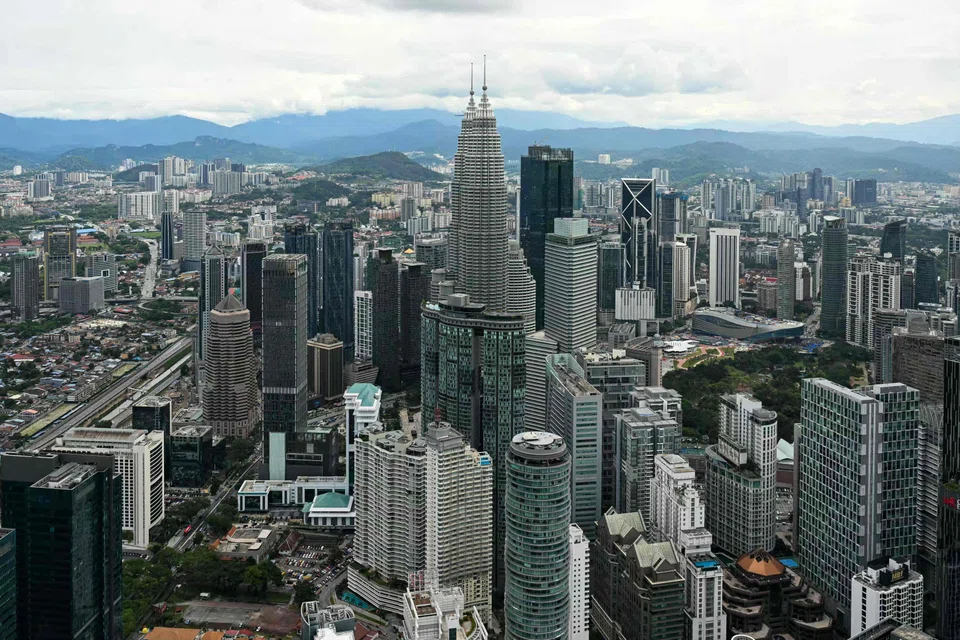
[KUALA LUMPUR] Malaysia will seek diplomatic solutions, prioritising dialogue with the US authorities on its tariff policies, and will not consider retaliatory tariffs for now, said the Ministry of Investment, Trade and Industry (Miti) on Thursday (Apr 3).
The country will be hit with a 24 per cent tariff on exports to the US starting Apr 9, under Washington’s latest trade measures against nations with large trade surpluses.
While taking the tariffs “seriously”, Malaysia will not impose retaliatory measures, the ministry said in a statement, adding that it is in talks with US officials to find “solutions that uphold the spirit of free and fair trade”.
The South-east Asian country plans to leverage existing platforms, such as the US-Malaysia Trade and Investment Framework Agreement, and push for a Technology Safeguards Agreement to deepen cooperation in semiconductors, aerospace and the digital economy.
According to the US Bureau of Economic Analysis, Malaysia recorded a trade surplus of US$24.8 billion with the US in 2024, ranking 15th among the countries that America has the largest trade deficits with.
Despite the trade deficit in goods, the US maintains a trade surplus in services with Malaysia, underscoring strong bilateral economic ties that support jobs and growth in both economies, Miti said.
“It must be highlighted that the trade deficit with the US is also due to many US firms that have been operating in Malaysia for decades, benefiting from the country’s well-established industrial ecosystem, particularly in the electrical and electronics sector,” it added.
In addition, Malaysia’s National Geoeconomic Command Centre will assess the impact of the tariff and formulate a comprehensive, multi-pronged mitigation strategy.
At the regional level, Malaysia will soon convene the first meeting of the Asean Geoeconomic Task Force – established at the Asean Economic Ministers’ Retreat in February – to address the issue.
Miti said that despite the tariff hike, Malaysia’s economic fundamentals remain strong, providing the country with a solid foundation to navigate these challenges.
Exports exposed
MIDF Research has warned that the latest US tariffs pose a risk to Malaysia’s export and production outlook. With the US accounting for 13 per cent of Malaysia’s exports in 2024, a 10 per cent decline in shipments to the country could shave 1.3 percentage points off total exports.
The hit could be deeper – up to 5.8 percentage points – if regional demand also weakens, MIDF said in a note.
While a sharp global contraction is unlikely, the firm cautions that the broader impact on global trade could be more significant, given the intensifying “trade war 2.0” involving multiple economies.
Some winners
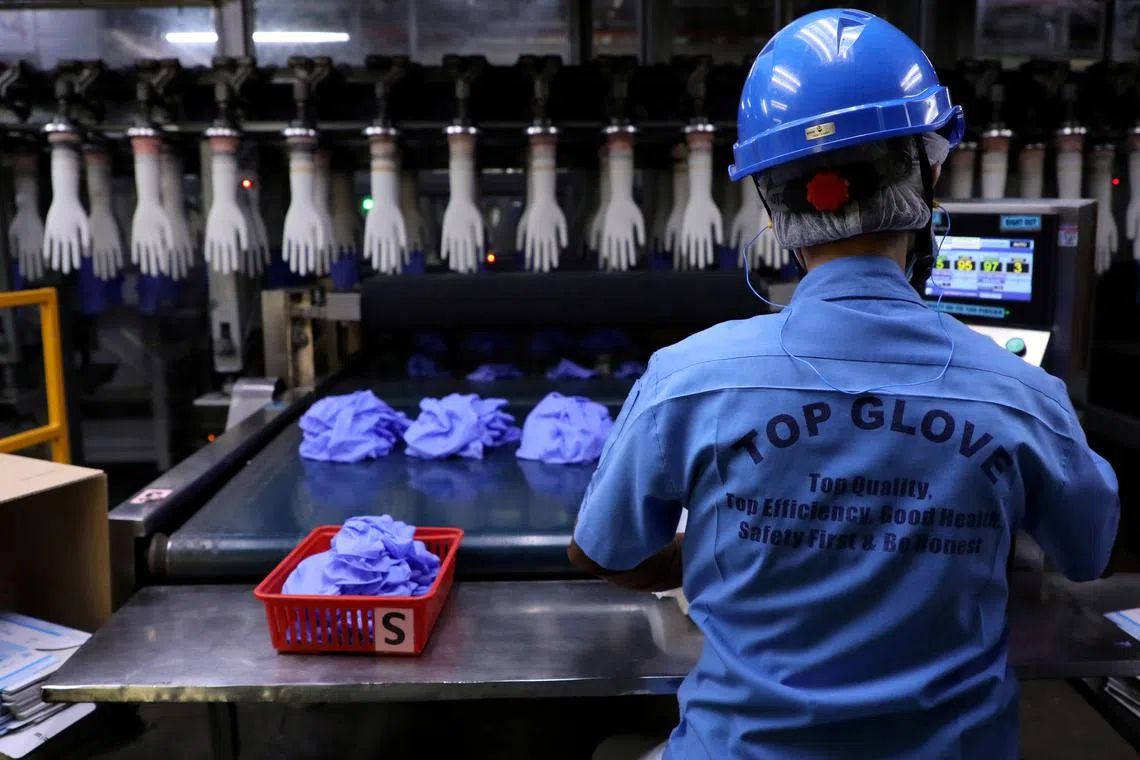
Malaysia’s stock market slipped on Thursday, mirroring broader losses across Asia after Washington’s tariff move.
The ringgit edged up to 4.443 against the US dollar, 0.2 per cent firmer from the day before. The benchmark KLCI closed at 1,518.91, down 0.5 per cent, with more than 2.5 billion shares traded. Market breadth was negative, with 548 losers outpacing 357 gainers.
MIDF warned of continued volatility, noting that the KLCI could retest the key 1,500 level – and possibly slide to its year’s low of 1,480, if that support breaks.
Glove stocks rallied as Malaysia’s tariff position appeared more favourable than China’s and Thailand’s. Despite facing a 24 per cent tariff, the sector emerged as an unexpected winner, buoyed by steeper duties imposed on key competitors.
Kossan was among the top gainers, climbing nearly 10 per cent to close at RM1.80. Top Glove, one of the most actively traded stocks, rose 4 sen to 84.5 sen, with 57.8 million shares traded.
Hong Leong Investment bank analysts Chan Jit Hoong and Felicia Ling expect Malaysia to gain US market share in higher-margin nitrile gloves, though it may lose some ground in lower-margin latex gloves in non-US markets.
“Since glove makers’ share prices have fallen 40 per cent to 50 per cent year to date, the sector’s risk-reward profile is now skewed to the upside,” they wrote in a note.
Chip relief
The performance of semiconductor stocks were mixed despite the exemptions from US tariffs, as analysts warned that this relief may be short-lived.
“It seems like only a matter of time before semiconductor exports are slapped with tariffs,” OCBC wrote in a Thursday report, noting that semiconductor exports account for around a third of Malaysia’s total exports to the US.
OCBC slightly revised Malaysia’s gross domestic product growth forecast for 2025 down to 4.3 per cent from 4.5 per cent, noting that a more substantial hit would come if the US were to impose tariffs on semiconductor imports.