Malaysia set to declare Johor’s Forest City a duty-free zone to revitalise struggling project
However, sceptics doubt the move will inject new life into the mega development, citing the lack of specific details

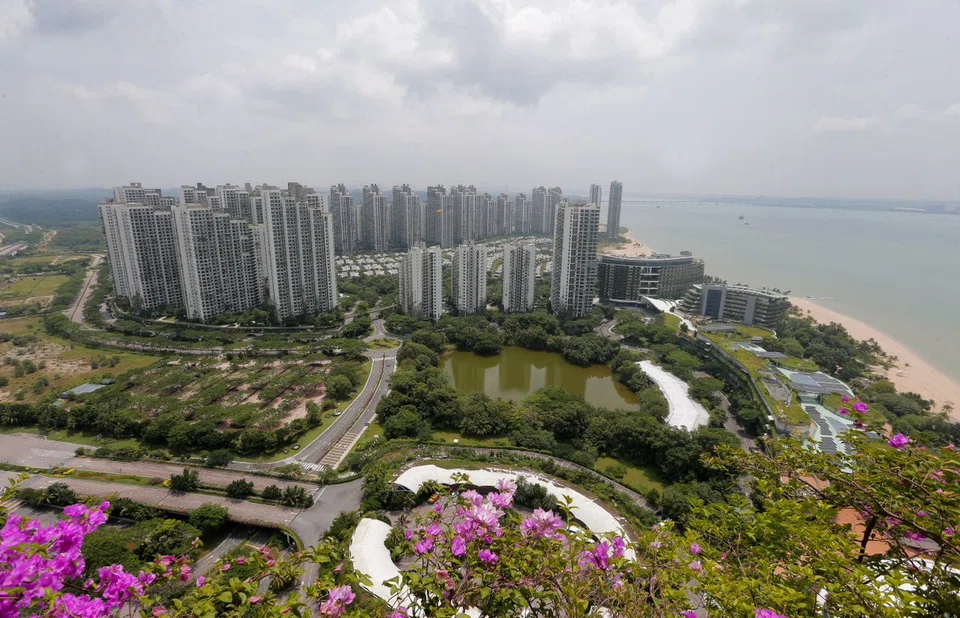
[KUALA LUMPUR] Malaysia’s Lower House approved five Bills on Wednesday (Jul 17) to designate about 311 hectares (ha) of Forest City in Johor as a duty-free zone, as the country aims to revitalise the beleaguered mega development, attract investments and boost economic growth.
Deputy Finance Minister Lim Hui Ying tabled the amendments for their second and third readings during a parliamentary session on Wednesday to implement special tax provisions for the designated area, Pulau Satu.
The proposed legislation, which is currently pending Senate approval, follows Prime Minister Anwar Ibrahim’s announcement in 2023 to establish Forest City as a special financial zone.
Once approved, the legislation will allow the project to join other duty-free islands such as Labuan, Langkawi and Pangkor; existing law and regulations related to these special zones will be applied to Forest City as well. For instance, visitors will be required to stay on the island for at least two days to qualify for duty-free products.
Market observers believe this initiative is part of a larger plan to rejuvenate the struggling mega project, often labelled a “ghost city”, and stimulate economic growth in the area.
The US$100 billion Forest City project, a joint venture between China-based Country Garden and the Malaysian government-backed Esplanade Danga 88, has faced numerous challenges since its inception a decade ago.
Malaysia’s king, Sultan Ibrahim Iskandar, in December last year expressed support for reviving the Kuala Lumpur-Singapore high-speed rail project, and to route it through Forest City to boost the development’s prospects.
More catalysts needed for a reboot
Market observers commend the government’s efforts to revitalise the mega project, but are sceptical of the outcome due to the lack of specific details provided.
One primary concern is how the new legislation will enhance Forest City’s appeal, given that tourists can already access duty-free products at the existing shopping complex in the development.
Jeffrey Lai, president of the Johor Bahru Chinese Chamber of Commerce and Industry, envisions two potential paths for the duty-free island – it could either become a premier duty-free shopping destination similar to Hainan island or evolve into a free trade and financial centre akin to Labuan.
“Either option could benefit Forest City and Johor, if implemented strategically,” he told The Business Times. “To encourage longer stays and increased spending in Forest City, it needs additional attractions and amenities, perhaps drawing inspiration from Sentosa Island’s development model,” he added.
Samuel Tan, a Johor Bahru-based veteran property consultant, is optimistic that the duty-free initiative will help shift people’s negative perception of the mega project.
“This could be a prelude to more goodies coming to Forest City as a special financial zone. We expect there will be more incentives, such as tax incentives for companies in high-value sectors as well as the hiring of knowledge workers,” he pointed out.
Wong Chin Yoong, economics professor at the Universiti Tunku Abdul Rahman, said a duty-free status can be an advantage, but this will not be an impetus for the revival of a struggling development.
To ensure business sustainability, he noted that a healthy ecosystem is needed to regain investors’ confidence in Forest City.
“The precondition is that there is something worthwhile for visitors to go there, like those popular islands for tourism, which in turn becomes an attraction for businesses to set up operations there,” he noted.
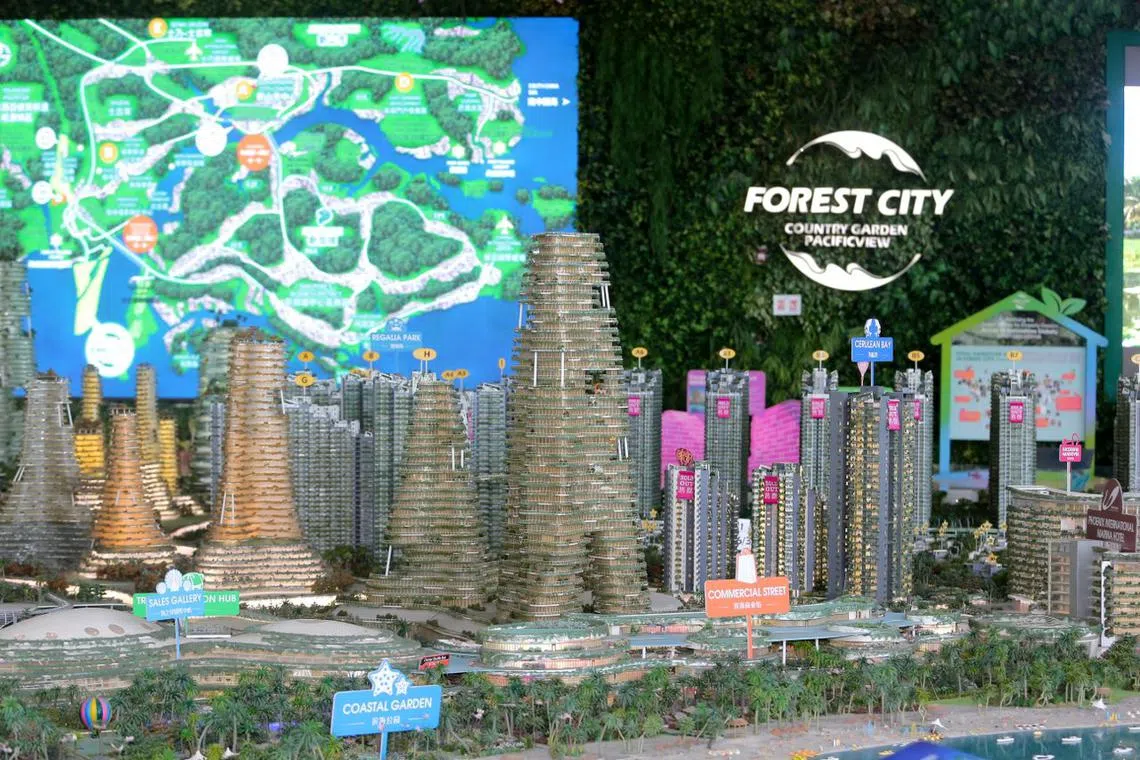
Once marketed as an idyllic haven with pristine beaches and wildlife, Forest City is an ambitious development that aims to accommodate 700,000 residents across four reclaimed islands spanning 2,830 ha by 2035.
However, eight years into development, Forest City has fallen short of its initial US$100 billion vision. To date, Country Garden has invested RM20 billion (S$5.8 billion) in the project. With construction ongoing, the current population stands at less than 10,000 – around 1 per cent of its target.