



Malaysia to set up special committee to probe corporate crime, chaired by attorney-general
The report will be made public
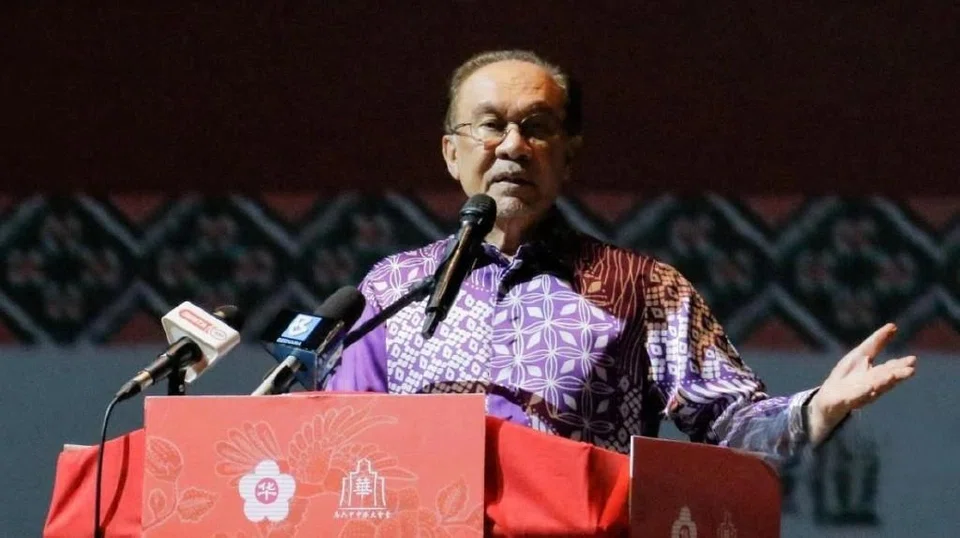
MALAYSIA will establish a special committee to investigate allegations that a network of businessmen colluded with anti-graft agency officials to oust company executives, and that body will publish a report within three months, Prime Minister Anwar Ibrahim said.
The committee will be chaired by the attorney-general and include the Malaysian Anti-Corruption Commission, the Royal Malaysia Police, the central bank and other agencies, Anwar said in parliament in Kuala Lumpur on Tuesday (Oct 20).
The committee will be given a period of three months to conduct an investigation and prepare a full report on corporate crime, he said.
“I asked that the report be made public,” Anwar said. “This will show nothing is being protected.”
Anwar’s announcement revives discussion of a topic that had gone largely silent for months. It comes after his party and coalition performed poorly in two state elections this year, putting pressure on him to bolster his anti-corruption credentials ahead of a general election that must be held by February 2028.
Allegations of a so-called corporate mafia colluding with anti-graft agency officials emerged in a Bloomberg News report in February, which the anti-graft agency, known as the MACC, denied.
The report — along with another article focused on shareholdings of the agency’s former chief commissioner, Azam Baki — led to protests in the country and calls for the establishment of a Royal Commission of Inquiry to investigate the allegations. Azam also denied wrongdoing.
In March, Anwar’s cabinet ordered law enforcement agencies, including the MACC, to probe allegations involving the businessmen and the anti-graft agency.
Home Minister Saifuddin Nasution Ismail said in June that police had so far found no evidence of MACC involvement based on interviews with 58 people.

The government also ordered a probe into Azam’s shareholdings. The investigation was carried out by a three-person team of senior public servants led by the attorney-general.
Findings were reported to the cabinet, and the chief secretary to the government was asked in March to take next steps, but the report itself wasn’t made public and no next steps have been announced.
Communications Minister Fahmi Fadzil said in April that Malaysia’s government would make any findings freely available once both investigations are completed, saying it was a “commitment from the cabinet, specifically from the prime minister.”
Malaysia’s King, Sultan Ibrahim Iskandar, also said in April that he would choose a new anti-graft chief. Azam retired in May when his term ended without being renewed. A former judge, Abdul Halim Aman, was appointed as his replacement.
The Democratic Action Party, a key group in Anwar’s ruling coalition, has led the calls for the establishment of a Royal Commission.
Four lawmakers have quit Anwar’s own party, most recently party treasurer Lee Chean Chung earlier this month. Lee said the government hadn’t demonstrated a serious commitment to setting up an inquiry on the corporate mafia issue.
Former Anwar cabinet ministers Rafizi Ramli and Nik Nazmi Nik Ahmad vacated their seats in 2025 and went on to form their own party, Bersama, while longtime MP Wong Chen joined them in August.
In his comments in parliament on Tuesday, Anwar said enforcement activities against corporate crime have increased under his administration. He also noted such crimes existed long before his government came to power. BLOOMBERG
Decoding Asia newsletter: your guide to navigating Asia in a new global order. Sign up here to get Decoding Asia newsletter. Delivered to your inbox. Free.
Share with us your feedback on BT's products and services
TRENDING NOW

GCash parent Mynt rises in market debut after South-east Asia’s top 2026 IPO

In the age of AI, what is a university education for?
Singapore to use ‘every legal and regulatory lever’ against companies linked to haze: Shanmugam

‘IPOs are not the only vehicle’: KKR heads for record exits even as firms stay private for longer

