



Malaysia state funds brace for cascade of Russia-Ukraine risks
 Add BT as a preferred source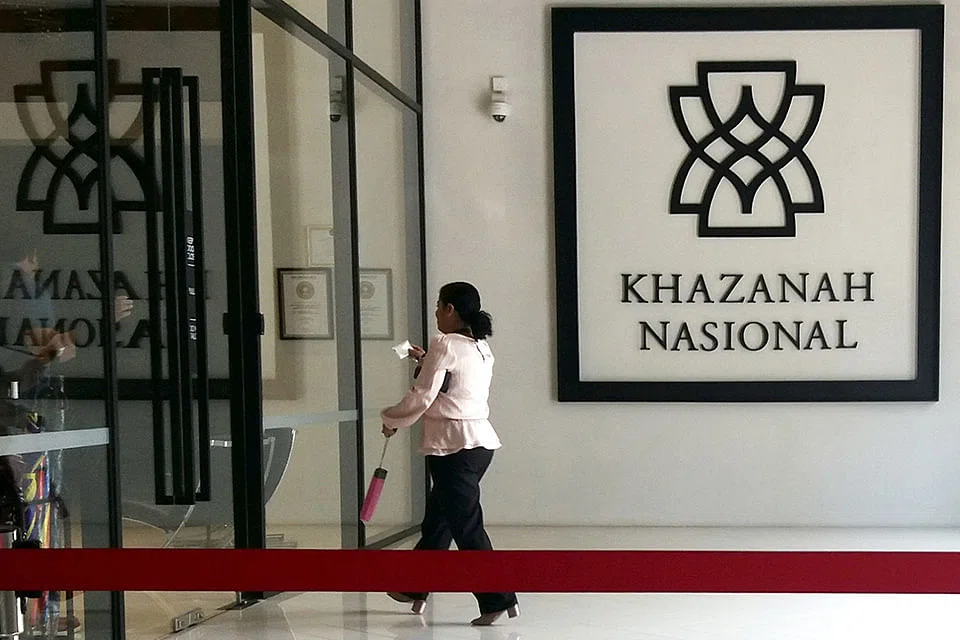
DeeperDive is a beta AI feature. Refer to full articles for the facts.
[KUALA LUMPUR] Malaysia's largest state-owned funds have no investments in Russia and Ukraine but expect the still-evolving crisis to exert an indirect impact on their performances.
"Our exposure to Europe is actually quite small but something like this goes beyond a local incident. It goes beyond Europe," Amirul Feisal Wan Zahir, managing director of the sovereign wealth fund Khazanah Nasional, told reporters on Wednesday (Mar 2).
"And that is something we're assessing, but it would be a more general market impact." South-east Asia's state-owned funds have so far been shielded from the crisis that has roiled global markets, with Singapore's Temasek Holdings saying its exposure to Russia and Ukraine is "insignificant."
A gauge of Malaysian palm oil stocks rose to its highest since September 2014 on Wednesday, while shares of Hibiscus Petroleum and the US-listed Indonesia Energy surged about 20 per cent and 184 per cent each last month.
Still, Khazanah is studying the impact on the economy and commodity prices, as well as possible shortages, as markets face waves of volatility following Russia's widening assault on Ukraine.
The fund's net asset value grew 9 per cent to RM86 billion (S$27.8 billion) in 2021 year-on-year, Amirul Feisal said.
Navigate Asia in
a new global order
Get the insights delivered to your inbox.
"The retaliation in the form of sanctions, which has implications on commodity prices, we see fuel prices going up. That will lead to governments looking at their policies, whether monetary or fiscal, and how that impacts trade," he said. "In that kind of volatile environment, it would have an impact."
Malaysia's Employees Provident Fund (EPF), the nation's largest pension fund, said increased volatility offered opportunities for markets.
"We can make money when markets go up or down because we have a long investment horizon," chief executive officer Amir Hamzah Azizan said. "When markets go down, and we want to take the opportunity to buy good long term assets, we secure that.
The key is to understand what the long-term ramifications are and make sure we have the agility to move our portfolio." The EPF posted a 6 per cent year-on-year gain in its total gross investment income to RM67.1 billion in 2021 amid a broad recovery in equity markets and other asset classes.
The fund has no direct exposure to assets in Russia and Ukraine, Amir Hamzah said, while announcing a 6.1 per cent dividend on conventional savings and 5.65 per cent for shariah ones. BLOOMBERG
Decoding Asia newsletter: your guide to navigating Asia in a new global order. Sign up here to get Decoding Asia newsletter. Delivered to your inbox. Free.
Share with us your feedback on BT's products and services
TRENDING NOW

China pips the US if Asean is forced to choose, but analysts warn against reading it like a sports result

Beijing’s calculated silence on the Iran war

Shelving S$5 billion office redevelopment plan proved ‘wise’ as geopolitical risks mount: OCBC chairman
Vietnam formalises new state leadership, redefining ‘four pillars’ power balance

