Asean Business logo
SPONSORED BYUOB logo

Malaysia tourism hit by fuel shock; tour prices may jump 50%

Cancellations, rising diesel costs and weak demand leave industry players facing mounting pressure

Summarise
Tan Ai Leng
Published Mon, Mar 30, 2026 · 09:03 PM
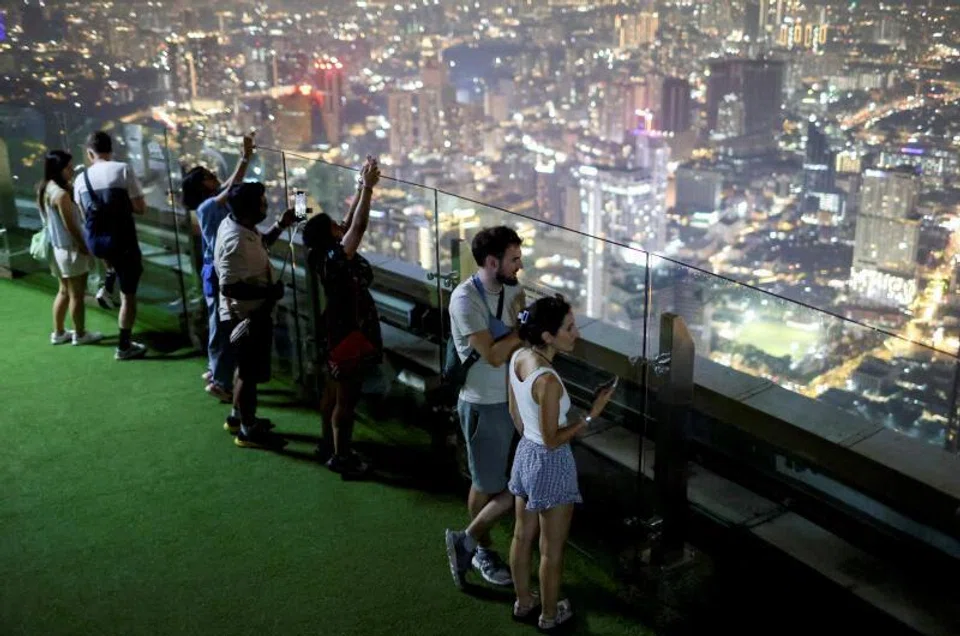
    • Visitors at the KL Tower. Industry observers say inbound trip cancellations have surged to approximately 5,000 in the past month.
    • Visitors at the KL Tower. Industry observers say inbound trip cancellations have surged to approximately 5,000 in the past month. PHOTO: REUTERS

    [KUALA LUMPUR] Malaysia’s tourism sector is bracing for a sharp jump in travel costs, with tour package prices expected to climb as much as 50 per cent as surging fuel prices ripple through transport and operating expenses.

    Malaysian Inbound Tourism Association (MITA) president Mint Leong said the increase comes as the Middle East conflict disrupts travel flows and drives up global energy prices, compounding pressure on an industry already facing cancellations and weaker demand.

    “If the situation (in West Asia) persists, tour package prices could rise by 30 to 50 per cent,” she told The Business Times.

    Higher diesel costs

    The higher diesel costs and flight disruptions are feeding through quickly into tour pricing, she said, adding that many industry players are being forced to absorb losses on existing bookings.

    She noted that the tourism sector felt the impact from early March, almost as soon as the Iran war broke out.

    An estimated 2,800 tour packages were cancelled in the first week of the conflict.

    “Over the past month, cancellations have risen to about 5,000, driven by flight disruptions and safety concerns among travellers,” she added, attributing much of the disruption to flight cancellations in key Middle Eastern transit hubs; Dubai, Abu Dhabi, Doha and Muscat are critical gateways linking Europe, the Americas, Africa and Russia to Asia.

    Leong added: “Operators focused on Middle Eastern tourists are struggling as flights from some countries have been grounded.” She added that operators are now pivoting to markets such as India and China, even as travellers weigh rising costs.

    Beyond cancellations, the sharp rise in diesel prices is emerging as a key pressure point, given that transport operators rely heavily on diesel, and so are facing surging operating costs.

    Leong said renting a tour bus previously cost between RM1,040 (S$333.70) and RM1,205 a day when diesel cost RM3.04 a litre. The cost has now risen to between RM1,900 and RM2,200 – a nearly 83 per cent increase, with Malaysia’s diesel prices now at RM5.52 a litre.

    “Prices could climb further if fuel costs continue to track global oil prices,” she added.

    The spike is squeezing margins across the tourism value chain, from transport providers to hotels and F&B operators. Because tour packages are typically contracted months in advance at fixed prices, operators are unable to pass on the higher costs.

    “Customers signed their contracts long ago. Since trips cannot be cancelled last minute, operators have to absorb the additional costs and fulfil these packages at a loss,” she said.

    Tourist buses, vans and ferries have been excluded from the national diesel subsidy since 2024, leaving those operators particularly exposed to price volatility.

    MITA has already revised transport pricing in response to the increase, but warned that without government intervention, parts of the tourism transport segment could be forced to shut down.

    The association, which has around 1,000 members, has reached out several times to the Ministry of Tourism, Arts and Culture. A meeting is expected with Tourism Minister Tiong King Sing on Tuesday (Mar 31).

    In the meantime, operators are exploring alternative strategies to mitigate disruptions, including rerouting travellers through China and tapping into regional demand.

    “We are coordinating with regional airlines, including Chinese carriers, to position China as a key gateway for travellers entering Malaysia,” Leong said.

    In 2025, Malaysia welcomed 42.2 million visitors, 11.2 per cent more than the year before. Tourism receipts came in at RM110.6 billion.

    Building on this momentum, the country hopes to clock 47 million foreign arrivals and a record RM147.1 billion in receipts for the Visit Malaysia 2026 campaign.

    Cash flow strain builds

    Industry groups say the combined impact of rising costs and falling demand is beginning to strain cash flow.

    Malaysian Association of Tour and Travel Agents president Nigel Wong said tourism players are facing a looming cash crunch as inbound travellers delay or cancel trips.

    “Costs continue to rise, and stakeholders across the board, from travel agencies and transport providers to hotels and F&B operators, are struggling with pricing volatility,” he said.

    He noted that when tourists delay or alter their itineraries, it creates a significant shortfall in short-term revenue.

    Malaysia’s tourism sector relies heavily on advance bookings from long-haul travellers, particularly from Europe, North America and the Middle East, said Wong.

    However, geopolitical tensions and higher airfares have led to postponements, leaving gaps in expected revenue, he added.

    Policy gaps and structural strains

    The crisis is also exposing longer-term structural challenges within the industry.

    Malaysia Budget and Business Hotel Association president Sri Ganesh Michiel warned that longstanding issues, including regulatory gaps in short-stay accommodation, are compounding the pressure on traditional operators.

    He said unregulated short-stay providers have slashed prices to as low as RM70 a night in Kuala Lumpur, undercutting budget hotels, which are already struggling with weaker demand.

    “We simply cannot compete at that level without sacrificing service quality, which ultimately damages the country’s reputation,” he said.

    Sri Ganesh, who is also president of the Malaysian Tourism Federation, added that the downturn in sentiment could have lasting effects.

    “The positive momentum built since the pandemic has been derailed. Historically, it takes years to rebuild travel confidence,” he said, citing the 2002 Bali bombings as an example.