Malaysian agency eyes pilot scheme to fast-track clearance for aviation parts in JS-SEZ
This is part of efforts to prevent execution delays of projects in the economic zone
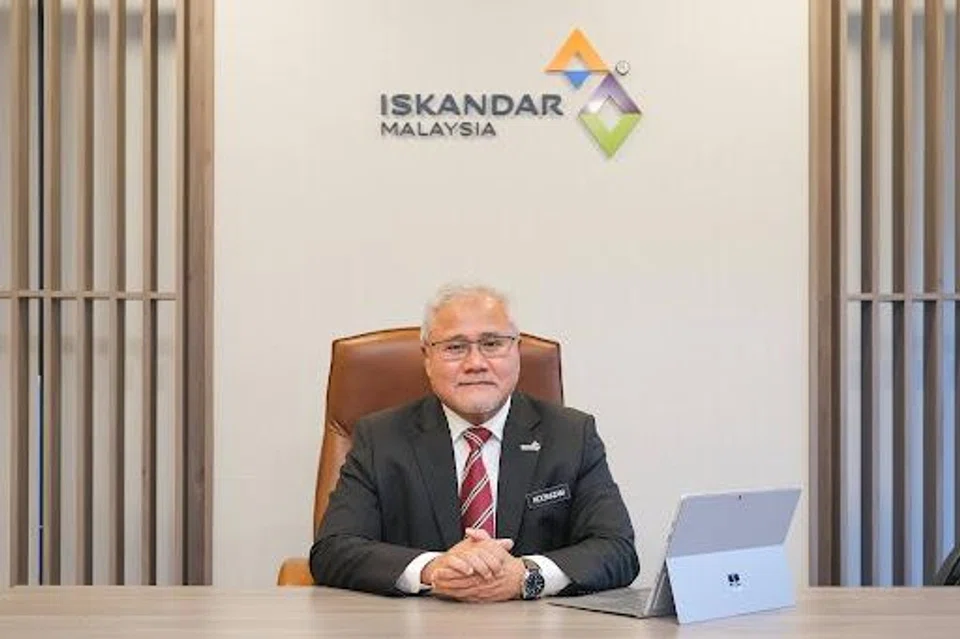
[JOHOR BAHRU] The Iskandar Regional Development Authority (Irda) is looking at targeted measures to speed up the movement of goods under the Johor-Singapore Special Economic Zone (JS-SEZ), including a possible pilot scheme to fast-track clearance for selected categories such as aviation parts, its chief executive Mohd Noorazam Osman told The Business Times.
He said that the pilot could start small, before being expanded.
Investor appetite has been strongest in advanced manufacturing, including the electrical and electronics segment, as well as chemicals and chemical products, Noorazam remarked. He added that healthcare – particularly medical devices – is another fast-moving sector.
But the bigger test for the JS-SEZ now is delivery – how quickly investor interest translates into operating projects, and whether infrastructure readiness and facilitation can keep pace.
It was reported earlier that Johor is seeking to move several projects from approval to operations, including Rianlon’s polymer additives manufacturing base in the state; EcoCeres’ sustainable aviation fuel plant in Tanjung Langsat; and Thomson Medical Group’s proposed RM18 billion (S$5.8 billion) Johor Bay development, anchored by a private hospital.
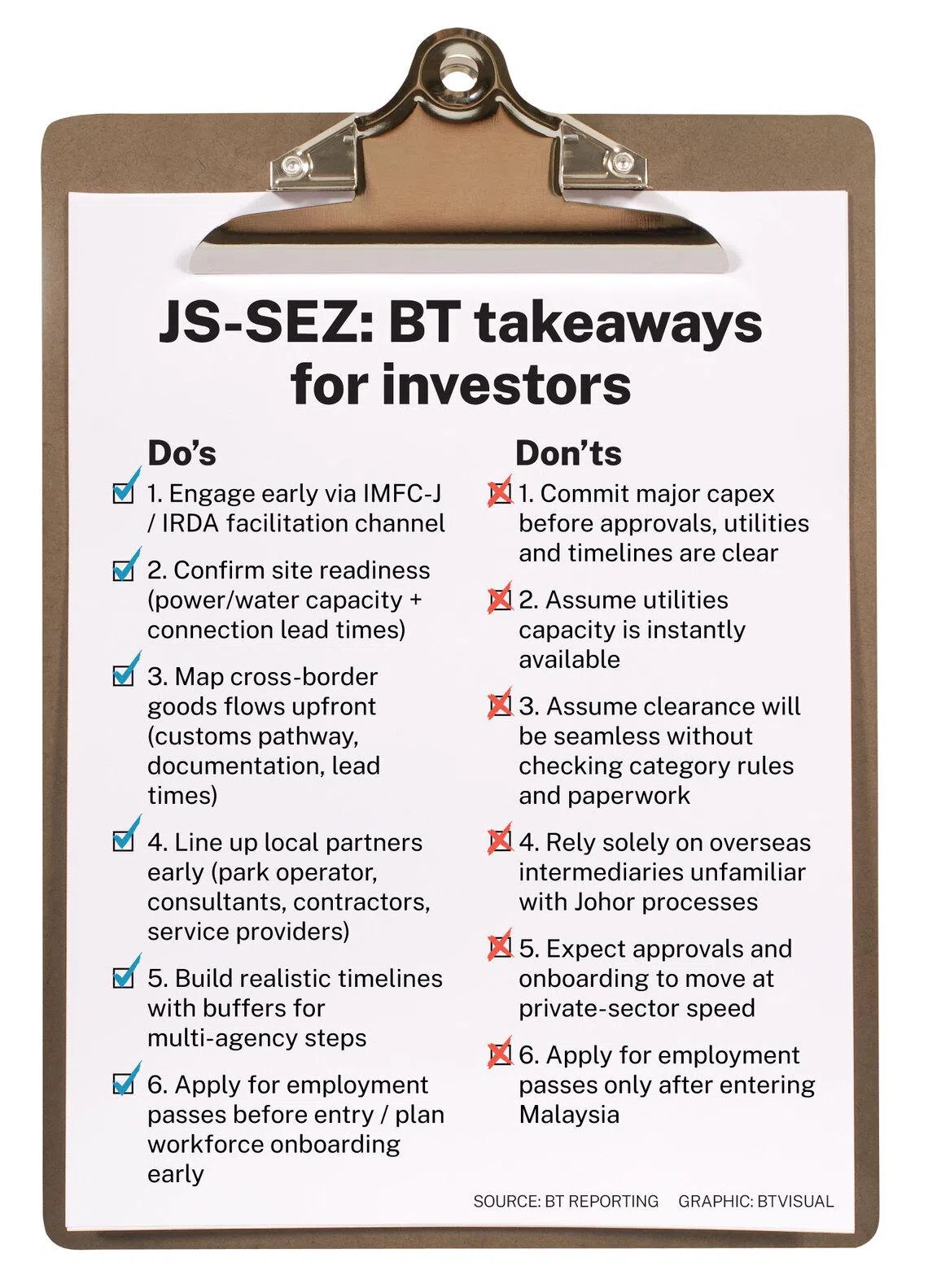
Noorazam said that execution delays are not always driven by approvals, but by site readiness and how well investors navigate local processes. In the cases that Irda has facilitated so far, approvals have generally not been a major constraint for planned industrial parks with utilities in place. Irda also flags environmental suitability issues early.
More avoidable delays, he suggested, occur when companies rely on overseas intermediaries that are unfamiliar with the way things work on the ground in Johor. “Sometimes they engage intermediaries lacking the necessary expertise,” he said.
To improve investor experience, Irda is also working towards publishing a reference list of professional service providers – including lawyers, consultants and architects – by this year. The aim is to help investors access the right information early, and avoid the missteps that slow projects down.
As an example, he cited cases where foreign investors attempted to apply for employment passes after entering Malaysia – a sequence that creates unnecessary delays because applications should be done before entry.

To reduce such friction, Noorazam said, Irda’s facilitation platform is being strengthened through Invest Malaysia Facilitation Centre Johor (IMFC-J), a “single-window” mechanism aimed at helping investors navigate approvals and resolve issues more quickly.
IMFC-J, which is located in Forest City, began operations in February 2025, about a month after the JS-SEZ agreement was signed, he said. Over the past year, it has received more than 1,000 inquiries and tracked about 100 potential investments valued at more than RM70 billion, though not all have been approved yet.
Noorazam added that the priority for 2026 is execution: moving projects from approval to build-out faster by steering investors to the right local channels early and reducing avoidable friction.
Beyond facilitation, Irda is reviewing targeted policy tweaks – including faster clearance pilots for selected goods – to better fit cross-border supply chains linked to Singapore.
Ultimately, Noorazam noted, the JS-SEZ should not be seen as a Johor-only play. While the zone has its own boundaries, the broader opportunity is to build a corridor effect, where spillover industries and supporting supply chains can grow beyond the immediate footprint of the SEZ.
“When you have an economic zone corridor, you should not look just within the SEZ,” he said, adding that the potential benefits will extend to small and medium-sized enterprises as the ecosystem deepens.
Separately, Irda acknowledged that “dispersal” planning around Bukit Chagar will be critical as operations of the Johor Bahru-Singapore Rapid Transit System Link begin. This is to prevent bottlenecks and keep the city’s productivity intact.
Private-sector engagement is also picking up. The Singapore Logistics Association and Singapore Manufacturing Federation led a two-day business mission to Johor Bahru from Jan 14 to 15, bringing more than 40 industry leaders to explore collaboration opportunities under the JS-SEZ, including site visits across industrial parks and the Port of Tanjung Pelepas.
Lee Ker Ching, a Singapore-based supply chain, procurement and operations practitioner, expects the streamlined customs and logistics process to reduce delays and costs.
Noorazam noted that execution will hinge on infrastructure readiness and talent supply keeping pace with investor timelines.
Decoding Asia newsletter: your guide to navigating Asia in a new global order. Sign up here to get Decoding Asia newsletter. Delivered to your inbox. Free.
Share with us your feedback on BT's products and services