Malaysian businesses hope new government will boost investor confidence
Tan Ai Leng
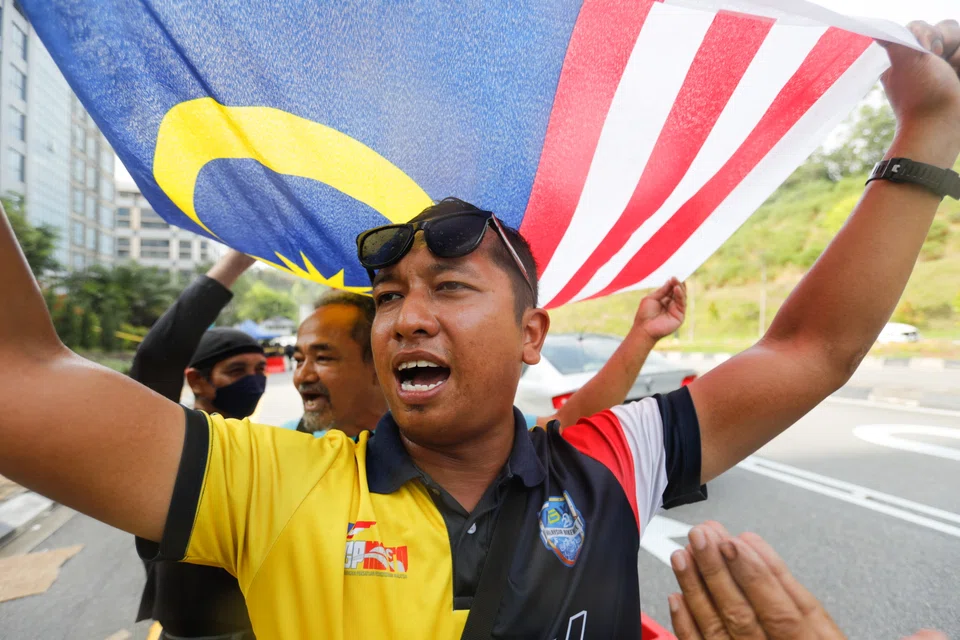
WITH Malaysia’s post-election political deadlock finally resolved, businesses are optimistic that the forming of a unity government will improve market sentiment and boost foreign investment.
Koong Lin Loong, chairman of the finance and planning committee in The Associated Chinese Chambers of Commerce and Industry of Malaysia, said he felt relieved when he heard the confirmation that Pakatan Harapan (PH) chairman Anwar Ibrahim had been appointed as prime minister.
“Firstly, we are seeing the forming of a more stable government as the King stressed the federal government will be inclusive of all races, religions and regions. Secondly, Anwar has experience in running the government – I believe he will be able to lead the country,” he told The Business Times.
From 1982 to 1998, Anwar held various cabinet positions – including finance minister and deputy prime minister – in the BN administration under then-PM Mahathir Mohamad
In the Nov 19 polls, Anwar’s PH coalition won the most seats, but not a majority. After days of political negotiations, the 75-year-old veteran politician was sworn in at the palace, to the cheers of crowds. The long-ruling Barisan Nasional (BN) coalition and the East Malaysia bloc – Gabungan Parti Sarawak, Warisan Party and Gabungan Rakyat Sabah – agreed to form a unity government with PH.
Ronnie Tan, an analyst at Mercury Securities, hoped that this decision would boost investor confidence. He noted that market sentiment had been quite weak since parliament was dissolved in October, and deteriorated after the election resulted in a hung parliament.
“We can see the investors’ sentiment swinging following political developments, like how the market rebounded on Thursday (Nov 24) after seeing more clarity – but before this, the market was in downtrend for three consecutive days,” he said.
That day, the country’s benchmark FTSE Bursa Malaysia Kuala Lumpur Composite Index (KLCI) surged 58 points or 4 per cent to 1,501.88 points, the strongest in two months. A day later on Friday, the KLCI closed 1 per cent lower at 1,486.54 points on profit taking after Thursday’s rally, with a turnover of 4.4 billion shares worth RM2.75 billion (S$840 million).
However, Malaysia needs more catalysts to attract foreign investors, said Tan. He noted that most foreign buyers are focused on tech-related stocks, such as tech solutions or automation companies, tapping Malaysia’s robust electrical and electronic sector.
Allan Sim, executive director of land and industrial solutions at Knight Frank, similarly observed that multinational companies looking to expand in Malaysia halted these plans after the dissolution of parliament.
As the unity government has yet to form its cabinet, Sim said investors will continue to “wait and see” as they need to reassess the country’s situation to decide whether to review their investment plans.
“One good thing is they are still considering Malaysia as their first choice – for the country’s resources and good infrastructure,” he said, adding that good governance and policies will help attract them.
While he does not see much interest in residential investment properties, he noted that multinational companies looking to expand their presence in South-east Asia are still eyeing industrial properties in Malaysia. For instance, early this year, e-commerce platform Shopee’s logistics arm Shopee Express Malaysia entered a 15-year lease to set up a distribution centre in Selangor.
While upbeat about the improved political clarity, Koong noted that Malaysia still faces challenges on its path to recovery, such as global supply disruptions, a brain drain and inflationary pressures. Coupled with concerns over a recession next year, this has caused business owners and investors – local and foreign alike – to put their expansion plans on hold, he added.
“Small and medium enterprises will be affected the most, if investors and big companies stop expanding or scaling down their operations,” he said, adding that some investors have turned to Singapore, Vietnam or Indonesia for the past two years due to Malaysia’s political uncertainties.
On the currency front, the ringgit continued to extend its gains last Friday, appreciating to a three-month high against the US dollar at RM4.47, up 0.4 per cent from RM4.49 a day earlier.
MUFG Bank senior currency analyst Jeff Ng said that Anwar’s appointment may have helped to reduce domestic uncertainty and boosted the ringgit. “We see supportive factors from the country’s current account surplus and the central bank’s rate hikes,” he said, noting that downside risks are lower commodity prices and a global recession.
With some potential US dollar rebound in the near term due to interest rate hikes, Ng forecasts that the ringgit will stay at RM4.55 to the US dollar at the end of this year, then strengthen to RM4.50 in the first quarter next year.
The formation of a new government also has implications for policy. In a Nov 25 note, UOB Economics and Markets Research expects more “pro-growth though populist” measures in view of the challenging outlook in 2023.
The research firm noted that because PH did not secure a simple majority, there are still uncertainties about whether the unity government will be able to introduce key reforms to tackle fiscal weakness, such as the reintroduction of the goods and services tax (GST), a new carbon tax, and more targeted subsidies.
Koong shared the same view, noting that it is crucial for the new government to expand its tax pool to replenish the government coffers, so that it can roll out policies with positive spillover effects on the economy.
Identifying income inequality and inflationary pressures as fundamental problems, he said that handouts would not be enough to solve these. “A relook at GST is inevitable as it is a more transparent tax system that could increase the government’s tax revenue.”
He noted a dependence on direct taxes – companies and individual income tax, as well as petroleum tax – which contribute around 54 per cent of total tax revenue. “Indirect tax is less than 20 per cent of the total tax revenue, and this is not sustainable if the government can’t enlarge the tax pool.”