



Malaysian businesses struggle with costs as ringgit weakens against greenback
Tan Ai Leng
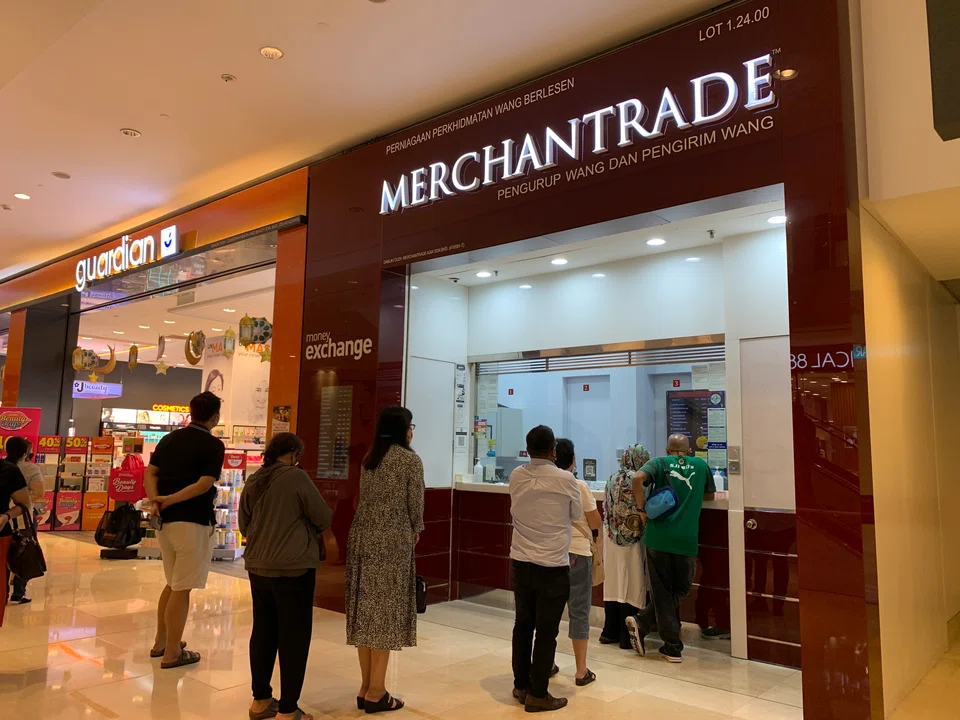
Even as economic activities in Malaysia have largely resumed, companies big and small - from manufacturers to homebuilders and restaurants - are feeling the pinch of soaring operating costs due to the weakening ringgit.
The ringgit has been trading lower against the US dollar since the start of this year as the hawkish stance by the US Federal Reserve boosted the greenback. On Tuesday evening (May 17), the ringgit strengthened slightly to RM4.39 to the dollar, from last Friday’s close of just under RM4.40. In the year-to-date, the ringgit has depreciated more than 5 per cent against the greenback.
The weakening ringgit has impacted the cost of construction in Malaysia due to escalating building material prices, said Bill Lee, president of the Building Materials Distributors Association.
“Prices of building materials such as steel, tiles and cement have increased since last year due to supply chain disruptions. The strong US dollar is making it worse as most of the materials are imported from overseas,” he said, adding that, on average, prices of such materials have gone up by at least 20 per cent in the past year.
Lee added that homebuyers will feel the impact as developers, who were quietly absorbing the cost hikes for months, have gradually passed on portions of the cost to their customers.
At one development in Rawang, located about 36km away from the Kuala Lumpur city centre, a new double-storey terrace house is currently priced at RM1.04 million (S$328,680), a 4 per cent increase compared to the price in January this year.
Lee said that it will take about 6 months or so before the price hike begins to moderate.
Malaysian Automotive Association president Aishah Ahmad said that new cars are becoming more expensive, especially imported models, due to the weaker ringgit.
Some car manufacturers with the capacity to absorb the higher costs will do so, in the hope that prices will moderate soon after the global supply normalises, she added.
Although some companies are struggling to balance their accounts, there are business owners out there who are enjoying the benefits of the depreciating ringgit.
Despite importing up to 40 per cent of its raw materials, Malaysian bus manufacturer Gemilang International is taking advantage of the exchange rate as the income received is mainly in foreign currency, including the US dollar.
Yik Wai Peng, executive director and chief financial officer of Gemilang International, said his firm has tried to control escalating costs, including locking in the price for major parts, and shifting to locally produced materials.
Korean restaurant chain MyeongDong Topokki’s CEO Vincent Lua said the company has been closely monitoring the ringgit conversion rate as several key ingredients it needs are imported from South Korea and paid for in US dollars.
“Whenever the rate is favourable, we convert our US dollars to ringgit. We have a sufficient amount of the greenback and this helps us to sustain our regular payments,” he said.
TRENDING NOW
32 companies, 6 individuals bag accolades at Singapore Corporate Awards 2026

He built the Vingroup empire. Now South-east Asia’s richest man is handing some key roles to his sons
URA to review guidelines on floor space to give developers more design flexibility: Chee Hong Tat
Chagee, Mixue and Luckin won the market. Sustaining their edge is the harder part

