



Malaysian economy to thrive in H2 on rising external demand, robust domestic spending: analysts
Wild cards include the US election, potential Trump presidency outcomes, prolonged high US interest rates and heightened geopolitical tensions

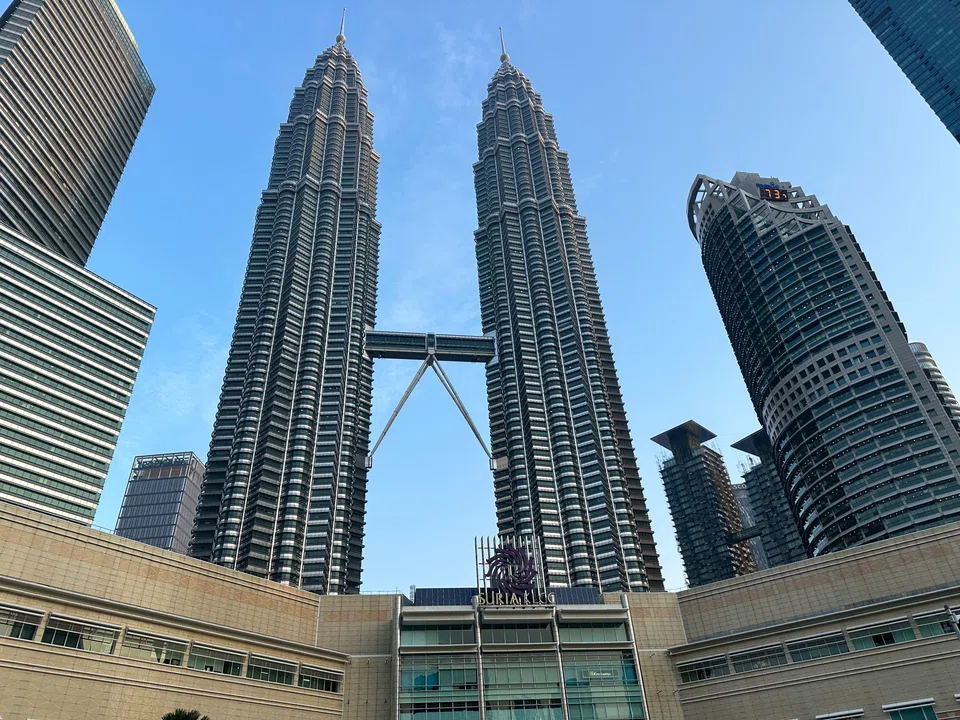
[KUALA LUMPUR] Malaysia’s economy is expected to grow steadily, fuelled by strong exports, manufacturing, tourism and resilient domestic spending backed by a stable job market, said analysts.
Economists believe Malaysia’s trade performance will be boosted by rising external demand, resilient growth prospects in major economies, higher commodity prices and a reacceleration in the global technology cycle.
In January to June, Malaysia’s year-on-year exports rose 3.9 per cent, imports gained 13.8 per cent and total trade was up 8.4 per cent.
During a recent outlook briefing, Maybank Group chief economist Suhaimi Ilias highlighted three key factors driving the country’s economic growth: continued realisation of approved investments, a recovery in external demand and resilient domestic spending underpinned by a stable job market.
“The private investment upcycle in both foreign direct investment (FDI) and domestic direct investment (DDI), reflects the ongoing realisation of the sustained momentum in robust approved investment since 2021,” he said.
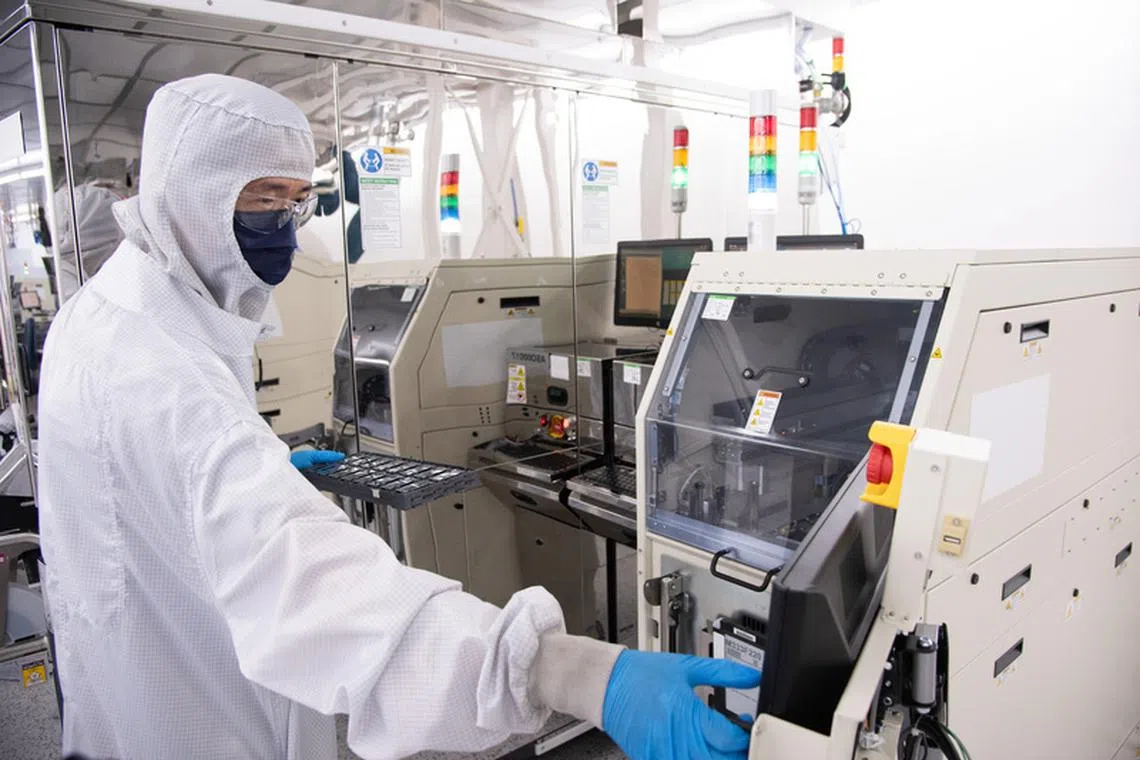
The key drivers are technology (particularly semiconductor manufacturing and data centres), real estate, renewable energy and logistic sectors.
Alexander Chia, head of regional equity research at RHB Investment Bank, noted that the upturn in the technology cycle is reflected in the increase in electrical and electronic product exports by regional economies and the expected rebound in global semiconductor sales.
MIDF Research predicts Malaysia’s export market will strengthen in the second half of 2024, driven by robust intermediate goods imports and rising external demand. If monthly exports average RM125 billion (S$37 billion), the growth rate could reach 5.2 per cent.
“Better recovery in China, growing demand in major countries, an upcycle of the tech sector and supportive global commodity prices will boost the rebound of Malaysia’s external trade performance,” said MIDF.
The International Monetary Fund (IMF) projects global economic growth will remain at 3.2 per cent in 2024 – the same pace as 2023. IMF also forecasts Malaysia’s economy to expand by 4.4 per cent this year.
MIDF and Maybank Investment Bank expect Malaysia’s gross domestic product to grow at a faster pace at 4.7 per cent this year, while RHB Investment Bank forecast the country’s economy to expand by 4.6 per cent.
The forecasts align with Bank Negara’s earlier projection of 4 to 5 per cent growth. On Aug 16, the central bank will announce its second-quarter GDP. An advance estimate by the Department of Statistics Malaysia indicated the economy will expand by 5.8 per cent, up from 4.2 per cent in the previous quarter.
Despite the optimistic outlook, Suhaimi warned that key “wild cards” for Malaysia’s macro outlook include the US election in November, potential outcomes of a Trump 2.0 presidency, prolonged high US interest rates and heightened geopolitical tensions – particularly the risk of a US-China-led global trade war if Trump wins.
If this happens, there is a high possibility that the US will impose tariffs of 60 per cent or higher on Chinese goods and a blanket 10 per cent tariff on imports from other countries, which could trigger a global trade war, said Suhaimi.
Equity market showing
Malaysia’s equity market had a strong performance in the first half of 2024, with several record highs, including surpassing a market capitalisation of RM2 trillion and the FBM KLCI breaching the psychological 1,600-point mark.
The 30-stock benchmark index started the year at 1,453.1 points and peaked at 1,629.18 points on May 23 – its highest since March 2021. MIDF Research attributed this positive momentum to foreign fund inflows.
The research firm noted that the lack of clarity on US rate cuts remains the biggest market uncertainty, leading investors to lock in gains, with drawdowns in markets such as the Nikkei, Dow Jones and other Asean markets.
The FBM KLCI was buoyed by foreign fund net inflows from the period of mid-April to mid-May, which boosted its performance for the second quarter of 2024. This resulted in a year-to-date increase of 9.3 per cent as at Jun 24, making it the fourth-best index among the indices tracked by MIDF.
MIDF maintains the FBM KLCI target at 1,750 points for this year, while Maybank Investment forecasts the index to reach 1,680 points by the end of 2024. RHB has revised its year-end target upward to 1,720 points from 1,600 points.
As at the Aug 6 closing, the FBM KLCI ended nearly 2.5 per cent higher, gaining 38 points to close at 1,574.
RHB’s Chia noted improvements in business and investor sentiment, a positive macroeconomic backdrop, increased liquidity and growing confidence in strong corporate earnings growth this year.
On the back of this, Maybank Investment Bank head of Asean equity research Wong Chew Hann recommends an equity portfolio of selective FDI-related and domestic consumption sectors, to be balanced with yield stocks.
“Rising FDI and DDI, energy transition, tourism recovery and overall higher economic activities will be positive for stocks in construction, renewable energy, aviation, gaming-casino and selective stocks in consumer and bank segments,” she said.
Wong highlighted that major developments in Johor, Penang and Sarawak will be key catalysts for Malaysia’s economy. Johor’s Johor-Singapore Special Economic Zone is expected to attract higher FDI and spur new infrastructure projects, while Penang – the country’s high-tech hub – will see further infrastructure development to support its growing tech ecosystem.
Sarawak, meanwhile, is emerging as the new economic powerhouse for Malaysia. Notable developments include Petros’ appointment as the state’s sole gas aggregator and the acquisition of a larger stake in Affin Bank.
Ringgit rally
Once regarded as the worst-performing currency in emerging Asia last year, the ringgit has emerged as a star performer over the past three months, thanks to increasing foreign fund inflow and Bank Negara’s intervention.
As at Aug 6, the ringgit traded nearly 3 per cent higher at RM3.375 against the Singapore dollar, compared with RM3.4778 on Jan 1.
Against the US dollar, the ringgit appreciated 2.5 per cent to RM4.474, compared with RM4.5892 in the beginning of the year.
OCBC’s foreign-exchange strategist Christopher Wong noted that the Federal Reserve’s dovish pivot is easing key factors that previously weakened the ringgit, such as yield differentials, a higher-for-longer interest rate narrative and a softer yuan.
Suhaimi cited a stable overnight policy rate at 3 per cent, anticipated US rate cuts, and actions by Bank Negara and the government to promote consistent forex inflows as factors easing pressure on the ringgit against the US dollar.
Maybank Investment Bank forecasts the ringgit to strengthen to RM4.60 against the dollar by end-2024, while MIDF Research predicts it will close at RM4.43.
TRENDING NOW

Ex-Nvidia CEO Jensen Huang carried a secret for more than a year. It led to his downfall

South-east Asia has lost Nvidia’s best salesman

Demand, tech capabilities position Apac and AI as Skyscanner’s next growth frontiers: CEO Bryan Batista

Jensen Huang discusses comeback as Nvidia CEO with allies: report

