Malaysian minister urges Asean to unite against MNCs dodging global minimum tax
This is key as the region eyes stability and sustainable growth in its pivot from export-led industrialisation to wooing foreign investment, he says

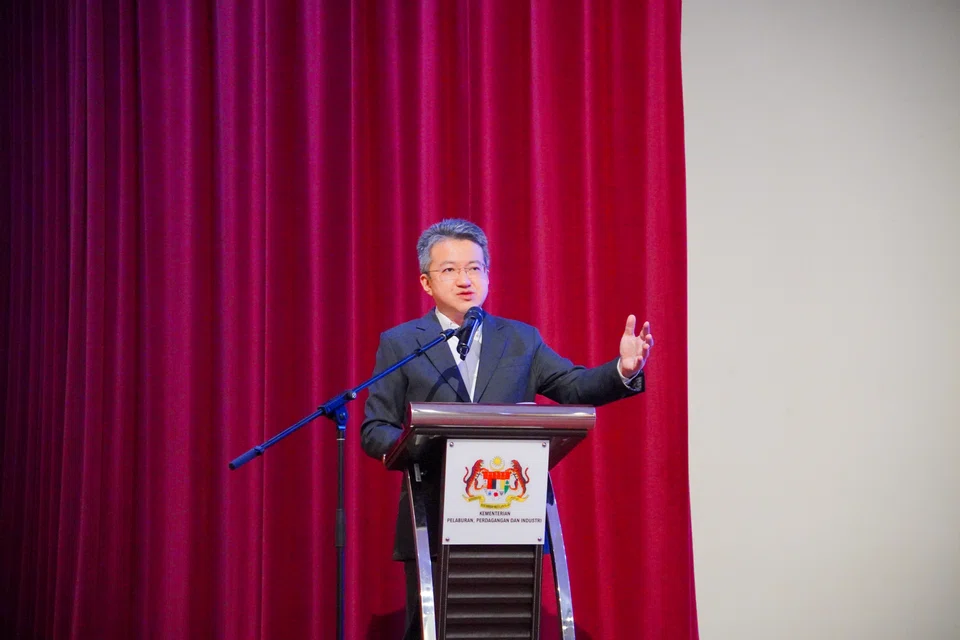
[KUALA LUMPUR] Malaysia Deputy Minister of Investment, Trade and Industry Liew Chin Tong has urged Asean member states to unite against attempts by multinationals (MNCs) to circumvent the global minimum tax rate.
He emphasised the importance of not allowing such MNCs to get around paying the tax, which now stands at a minimum effective rate of 15 per cent, and cautioned against a race for lower wages and tax incentives that could undermine the region’s economic stability.
Speaking at the Asean Economic Opinion Leaders Conference in Kuala Lumpur on Wednesday (Jan 8), he said: “The multinational companies are knocking on the door of each country’s treasury to ask for cash grants to circumvent the global minimum tax...
“We will have to stand together, and tell the MNCs that we need to collect these taxes for the greater good of our people and for Asean to emerge as a middle-class society.”
Emerging middle-class society
Liew highlighted the need for Asean to transition from being a mere production hub to a middle-class society that contributes significantly to consumer markets.
This change is crucial as the region aims to grow sustainably over the next two decades, as it moves away from the traditional export-led industrialisation model – which has historically suppressed wages – and towards attracting foreign investment with the promise of tax breaks.
The urgency of this collaboration among South-east Asian nations comes as countries such as Thailand and Vietnam have begun implementing global minimum tax measures targeting MNCs.
The minister envisions a future in which Asean, alongside South America and Africa, emerges as a significant consumer market, reducing its dependency on traditional markets such as the US and Europe. This diversification would contribute to global stability and safety.
“By fostering a balanced economic environment, Asean seeks to create high-quality jobs and enhance technological capabilities, ultimately leading to a more stable and prosperous society,” Liew said.
Resilient regional supply chain
Satvinder Singh, deputy secretary-general for the Asean Economic Community, echoed Liew’s remarks. He said that the region was on track to becoming the world’s fourth-largest economy by 2030, supported by strong trade and investment flows.
Investment inflows into Asean are now not solely driven by geopolitical tensions, he said. Instead, many MNCs are recognising opportunities in the region, and that its neutrality enhances its attractiveness for collaboration with various countries.
Singh highlighted the increase in intra-Asean trade and the effect of geopolitical shifts on trade dynamics, which have introduced volatility and disruptions.
However, he believes that the bloc’s supply chain is well-positioned to seize emerging opportunities, as global partners adapt their trade operations to capitalise on the region’s cost competitiveness.
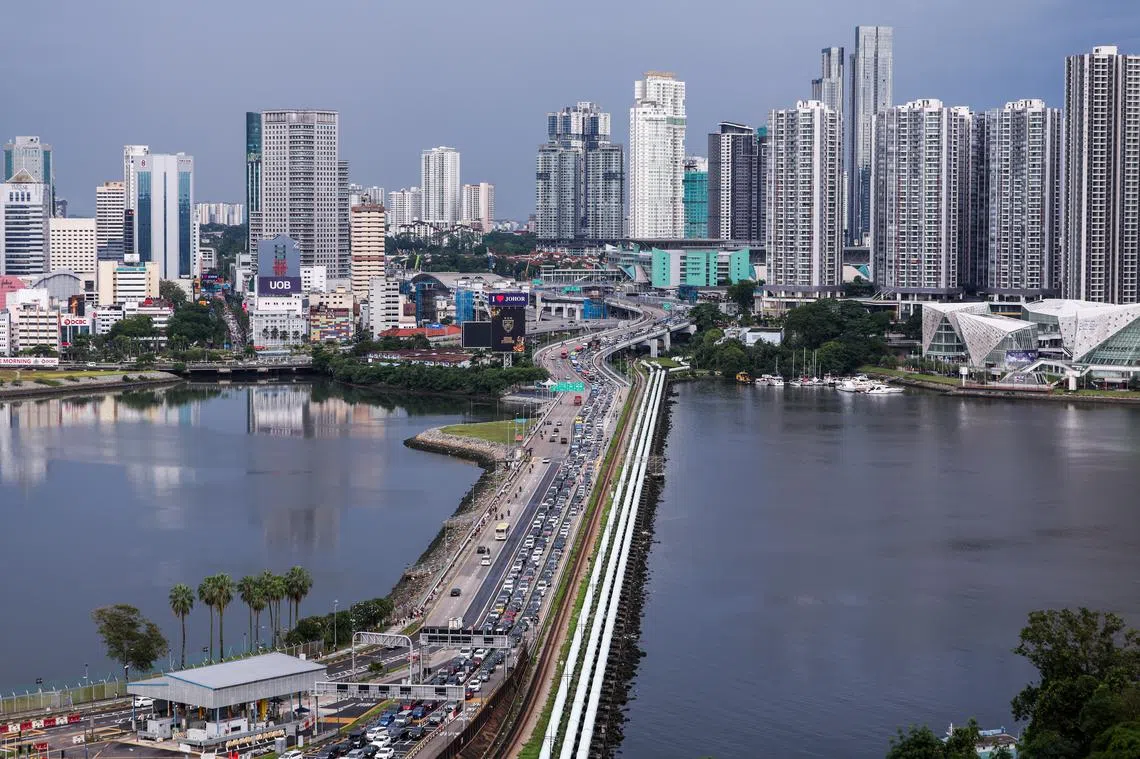
Liew noted that the Johor-Singapore Special Economic Zone is one of the region’s role models, under which two countries collaborate to leverage their strengths to attract investments.
Asean member states should see each other not as competitors, but complement each other to form a resilient regional supply chain, he said.
He added that the increasing regionwide joint investment projects or sub-regional cooperation will strengthen Asean’s supply chain.
Upskilling workforce and job creation
During a panel discussion on Asean’s aspiration to become a middle-class society, panellists discussed the critical need to upskill the workforce and create high-quality jobs to create a middle-class society in the region.
They said that the focus should extend beyond mere earnings and encourage discretionary spending, which is crucial for driving consumer market growth beyond one for basic needs.
Nick Khaw, head of research at Malaysia’s sovereign wealth fund Khazanah Nasional, noted that over the past decade, the technology sector, particularly in electrical and electronics, has been a key driver of economic growth in Asean.
However, in the last five years, the banking industry has taken the lead – especially in Indonesia, Singapore and Malaysia.
He added: “While the banking sector plays a vital role in development, we need more companies producing ‘real’ goods, rather than just financial products, to foster higher-paying job creation.”
Said Bank Negara assistant governor Fraziali Ismail on the contrasting perceptions of Malaysia’s economy between social media and reality: “Social media often portrays Malaysia negatively, but in terms of macroeconomic indicators, like exports and gross domestic product growth, we are performing well.”
He attributed the disparity in perception to low income levels, citing findings from a 2017 central bank study. It showed that workers in Malaysia earned around 40 per cent less than their counterparts in similar roles elsewhere.
This low income-to-GDP ratio contributes to stagnant wage growth in Malaysia, he said.
The total personal income earned by individuals in Malaysia represents about a third of the country’s overall GDP; the figure in other countries in the region is between 40 and 50 per cent, he noted.
He added: “This indicates that a larger share of income is going to capitalists rather than workers.”