Asean Business logo
SPONSORED BYUOB logo

Malaysian tycoon Vincent Tan’s sell-downs point to pruning rather than an exit plan

Recent share transfers fuel talk that the Berjaya conglomerate is entering a post-founder era

Summarise
Tan Ai Leng
Published Tue, Jun 16, 2026 · 07:26 PM
    • Vincent Tan, founder of Berjaya Group, has reduced his holdings in multiple companies within the group.
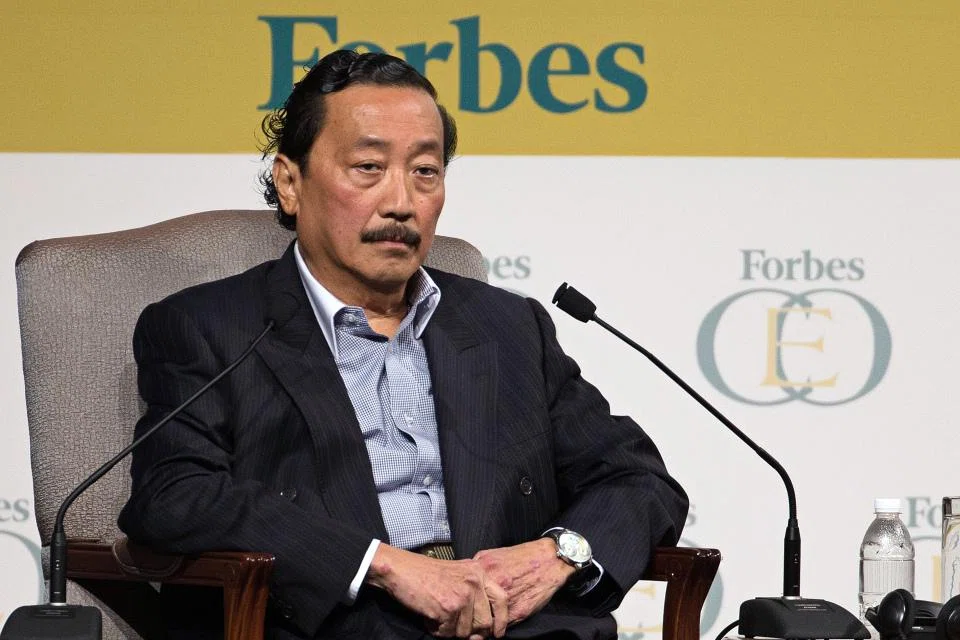
    • Vincent Tan, founder of Berjaya Group, has reduced his holdings in multiple companies within the group. PHOTO: BLOOMBERG

    [KUALA LUMPUR] Malaysian tycoon Vincent Tan – ranked 29th on Forbes’ 2026 list of Malaysia’s 50 richest with an estimated net worth of US$940 million – has sparked intense market curiosity following a series of stake reductions across several Berjaya-linked companies.

    The move has left investors questioning the future direction of one of Malaysia’s largest family-controlled business empires.

    The transactions involved companies such as Berjaya Corporation, Tan’s flagship company, along with Berjaya Food, Berjaya Property, Redtone Digital and 7-Eleven Malaysia.


    Investment vehicle Detik Ria, which he partly owns, emerged as a substantial shareholder in several of the affected companies.

    While neither Berjaya Corp nor Tan has publicly explained the rationale behind the transfers, analysts said the moves could offer clues about how the group is evolving. Here are five key takeaways:

    1. A true exit, or just a shift?

    At first glance, the filings may look like a straightforward disposal of shares by the founder. However, analysts believe the transactions are more likely to represent a restructuring of ownership rather than an attempt by Tan to cash out.

    Neoh Jia Man, portfolio manager at Tradeview Capital, said: “When viewed collectively, the recent share transactions (by Berjaya Corp and Tan) appear more like strategic portfolio repositioning than routine trading, given their scale and timing.”

    Vic Chuah, director and founding partner of Spartan Ives Advisory, also described the exercise as a strategic consolidation towards portfolio pruning, rather than a traditional exit plan.

    2. Who owns Detik Ria?

    The spotlight has turned to Detik Ria, which, prior to this, had long operated outside the spotlight of public markets.

    In May, Berjaya Corp and its listed subsidiary Berjaya Property sold stakes in five listed companies to the investment vehicle through a series of direct business transactions worth RM76.8 million (S$24.3 million).

    The transfers involved shares in Berjaya Property, Berjaya Food, Redtone Digital, 7-Eleven Malaysia and water and wastewater engineering company Salcon, in a move that expanded Detik Ria’s footprint in the broader Berjaya ecosystem.

    The May transactions were not isolated. Based on Bursa filings, Tan also disposed of a combined 461.7 million shares worth about RM115 million during the same period. These were shares in several Berjaya-linked companies, including Berjaya Corp, Berjaya Property and Berjaya Food.

    Bloomberg reported that these deals cut Tan’s direct stake in Berjaya Corp to 4.1 per cent and his deemed interest to about 11 per cent, down from a previous total interest of around 23 per cent.

    Following these transactions, he temporarily lost his "substantial shareholder" status in six companies as his indirect ownership through Berjaya Corp fell below 5 per cent.

    However, he acquired 60 million shares on Jun 8, increasing his direct shareholding in Berjaya Corp to just over 5.1 per cent, alongside an indirect interest of nearly 11 per cent.

    The transactions have raised questions over whether the group is undertaking a broader ownership restructuring – one that could gradually shift the Berjaya empire away from a founder-centric structure towards a more centralised holding model.

    Detik Ria is a privately held investment vehicle linked to several key figures in the Berjaya companies; these include Tan, members of his family and Johor princess, Aminah Sultan Ibrahim Ismail.

    The vehicle also holds a significant equity interest in Prudential Assurance Malaysia, representing a major portion of Tan’s high-value, unlisted insurance portfolio.

    Following a longstanding legal dispute, Detik Ria secured a RM1.5 billion windfall by selling a 19 per cent stake in Sri Han Suria – the holding company of Prudential Assurance Malaysia – back to UK-based Prudential.

    Beyond its private assets, Detik Ria has emerged as an institutional anchor for Berjaya’s listed entities on Bursa Malaysia.

    It holds a substantial 18.3 per cent direct stake in Berjaya Assets, which has expanded aggressively through open-market acquisitions, as well as an 8.1 per cent stake in Berjaya Food, the operator of Starbucks and Paris Baguette in Malaysia and the Philippines.

    3. Potential opportunities for investors?

    In light of recent equity movements, market observers anticipate that Tan will refocus on extracting value from his major private pillars, notably the telco and insurance ventures.

    Chuah, citing the upcoming U Mobile project as a primary focus, noting that the telco is spearheading Malaysia’s second 5G network under the national dual-network blueprint. The company is actively rolling out standalone 5G infrastructure, aiming for 90 per cent population coverage by mid-2027.

    Tradeview Capital’s Neoh urged investors to monitor potential merger and acquisition manoeuvres within the Berjaya ecosystem.

    “High-profile catalysts such as the potential U Mobile initial public offering and the reported 30 per cent Prudential Malaysia stake sale are bound to capture market attention,” he added.

    Given that advisers value Prudential Malaysia at more than RM20 billion, the transaction may represent a capital windfall capable of funding sweeping group restructurings or debt reduction.

    Neoh believes that the hand-off to the next-generation leadership will act as a structural catalyst, strengthening corporate governance and potentially rerating the group’s historically depressed valuations.

    4. A post-founder phase?

    From left: Vincent Tan, Chryseis Tan, Johor Princess Aminah Sultan Ibrahim Ismail and Nerine Tan at Cosway’s 46th anniversary celebrations in October 2025. PHOTO: COSWAY

    These latest manoeuvres may well be part of a broader leadership transition that has been unfolding for several years.

    Tan stepped down as chairman of Berjaya Corp in 2023, ending an era when he built the group into a conglomerate spanning retail, gaming, telcos, property and food and beverages.

    Since then, his family members have become increasingly involved in various businesses, and professional managers have stepped up to bigger operational responsibilities.

    Chuah described this as a “classic transition from founder to guardian” within Malaysian family-led conglomerates.

    “The ultimate goal is to secure a stable safety net for family inheritance. By bringing in professional CEOs and enforcing stricter capital allocation, the group is clearly aiming to reduce market volatility and ensure long-term stability,” he added.

    Neoh echoed this sentiment, noting that the group has moved towards a more institutionalised framework since 2023.

    “With family members assuming various leadership roles and ownership becoming more decentralised, the evidence suggests Berjaya is entering a post-founder phase,” he added.

    Chuah stressed that, from the point of view of minority shareholders, succession planning is far more than just a family matter. It is a critical driver of governance, continuity and long-term value.

    One of the concerns often associated with founder-led companies is key-man risk – under which strategy and relationships are overly dependent on a single individual.

    Analysts believe that a more institutionalised ownership and management structure could address these concerns.

    “For the average shareholder, this transition means reduced uncertainty and lower key-man risk, leading to greater financial stability in future,” said Chuah.

    5. Next-gen leaders

    Vincent Tan's eldest son Robin (above) holds multiple senior leadership roles in the Berjaya group of companies. PHOTO: BERJAYA PROPERTY

    If the recent share transfers are part of a broader evolution of the Berjaya empire, the transition has arguably been under way for years.

    Rather than grooming a single successor, Tan appears to have gradually positioned several family members in different parts of the conglomerate, while simultaneously bringing in professional managers to oversee day-to-day operations.

    At the group level, his eldest son Robin Tan remains one of the most influential figures in the Berjaya ecosystem.

    The 52-year-old former CEO of Berjaya Corp is now the executive chairman of Sports Toto and deputy chairman of Berjaya Property. He continues to play a key role in shaping the group’s broader strategic direction.

    His sister, Nerine Tan, 49, has solidified her standing as the group’s most senior executive.

    As the sole CEO of Berjaya Corp (after co-CEO Vivienne Cheng retired earlier this year), she now oversees the diversified conglomerate’s global operations and strategy, positioning her as the most prominent face of the next generation.

    Simultaneously, Chryseis Tan has steadily expanded her influence in the ecosystem.

    Holding board seats at Berjaya Corp, Berjaya Property, Berjaya Assets and Berjaya Food, the 37-year-old plays a pivotal role in the group’s hospitality, lifestyle and international property ventures, effectively bridging the gap between traditional assets and modern consumer brands.

    Meanwhile, Rayvin Tan, 46, recently returned to Berjaya Corp’s board as executive director after more than a decade away from the listed company’s boardroom.

    During that time, he continued to oversee the group’s operations in China and Hong Kong. He now chairs Berjaya’s Japan operations, reflecting the family’s growing involvement in the conglomerate’s regional expansion efforts.

    His other children who have assumed key roles in the operating companies linked to Tan, include his son Tan U-Ming, 40, who is co-CEO and executive director of 7-Eleven Malaysia.