
Malaysia’s balancing act: national pride and commercial realities
Can foreign investors save Malaysia’s waning icons, including KLIA?

EVERY now and then, Malaysia Inc faces a reckoning, balancing national pride against commercial pragmatism. This often involves deep reflection on how to revive struggling or underperforming assets, with a key consideration being whether to relinquish tightly held stakes in strategic icons to foreign investors.
This is a touchy subject and often turns into a political hot potato.
In the late 2000s, Proton, Malaysia’s national car company, was struggling due to ageing models and burgeoning competition. With no turnaround ideas left, Khazanah Nasional sold its stake to tycoon Syed Mokhtar Albukhary’s DRB-Hicom. However, Proton continued to struggle and, in 2017, a 49.9 per cent stake was sold to Chinese automaker Zhejiang Geely Holding Group.
The sale sparked intense debate. The loudest critic was former prime minister Mahathir Mohamad, the founder of Proton, who called the deal the “beginning of the great sell-out”. As it turned out, the alliance with Geely revitalised Proton with improved sales and new model launches, although it continues to face stiff competition.
About a decade ago, the complex interplay between national pride and economic reality resurfaced with another Khazanah-owned asset, Malaysia Airlines.
Despite many efforts, the debt-ridden national carrier spiralled downwards, with cumulative net losses of RM8.4 billion (S$2.4 billion) from 2001 to 2014. It was further plunged into chaos by the 2014 tragedies of flight MH370’s disappearance and flight MH17 being shot down.
Speculation arose about foreign airlines such as Air France-KLM, Japan Airlines and Qatar Airways acting as white knights, sparking heated debate on foreign ownership of Malaysia’s flag carrier, but nothing materialised.
In the end, Khazanah charted its own turnaround plan for the beleaguered airline. Last year, the airline’s parent company posted its first profit in nearly 10 years, thanks to a fleet refresh, and reinstated key market networks, leading to stronger yields and robust passenger traffic.
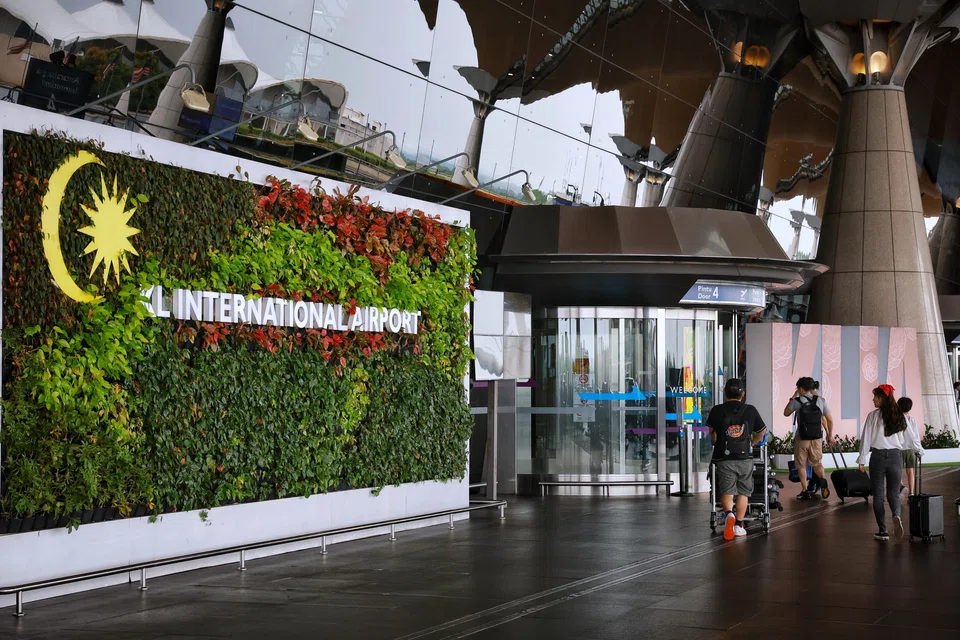
Since mid-June, attention has shifted to Kuala Lumpur International Airport (KLIA). Its operator, Malaysia Airports, is set to be taken private under a RM12.3 billion deal. This arrangement will see US-based investment fund Global Infrastructure Partners and Abu Dhabi Investment Authority, a sovereign wealth fund, acquiring a combined 30 per cent stake in Malaysia Airports.
The privatisation plan has faced criticism partly due to concerns that shares of the airport operator would be sold to foreign investors.
The reality is that KLIA, once a shining symbol of Malaysia’s aviation ambitions and celebrated as a state-of-the-art facility that could take on major airports including Singapore’s Changi Airport, has faced a dramatic fall from grace since its grand opening in 1998.
KLIA was ranked the second-best airport in the world in 2001, but has since slipped to 71st place in the Skytrax global rankings, no thanks to ageing infrastructure, poor design, leaking ceilings and long queues. It was ranked as the eighth-worst airport in Asia by Business Financing.
The latest deal, it is hoped, will help Malaysia’s international airport reclaim its status as a premier aviation hub and restore its former glory.
Indeed, as Malaysia navigates the challenges of keeping its strategic assets competitive while preserving national pride, the outcomes of these efforts will likely shape future approaches to managing state-owned enterprises.
While the pressing need for foreign expertise and capital could lead to a more pragmatic stance, striking the right balance between pride and practicality will remain a delicate act.