Malaysia’s construction stocks soar as sector rides data centre boom, trounce FBMKLCI
While private technology investments are driving near-term gains, country’s public infrastructure spending is expected to provide a longer-term anchor

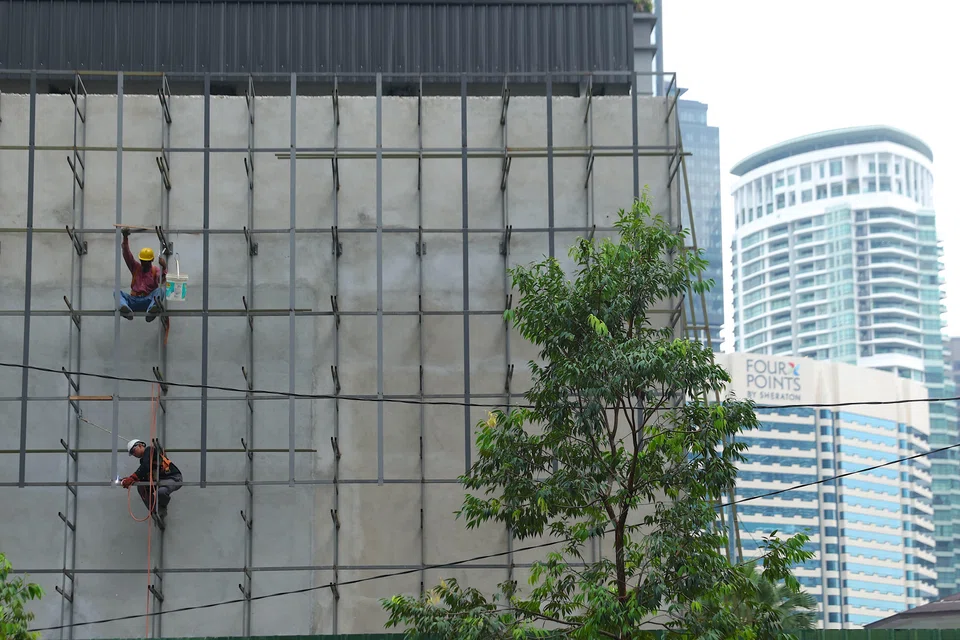
[KUALA LUMPUR] Malaysia’s construction stocks are on a tear this year, lifted by a wave of data sector investments and a growing pipeline of public infrastructure projects.
The Bursa Malaysia Construction Index has climbed 7.3 per cent in the year to date, reaching 331.48 points as at Wednesday (Sep 17), outperforming the broader market by a significant margin.
Heavyweights in the sector have racked up gains ranging from a modest 4.1 per cent to a sizzling 36.5 per cent.
In stark contrast, the FTSE Bursa Malaysia Kuala Lumpur Composite Index (FBMKLCI) slipped 1.3 per cent over the same period, closing at 1,611.7 points on Sep 17.
CGS International analysts Lew Cheng Wei and Jeremy Goh noted that the construction sector is the best performer among Bursa Malaysia’s 13 sectoral indices, recording a growth of 6.9 per cent in the first eight months of 2025.
In 2024, the Bursa Malaysia Construction Index surged 60.7 per cent year on year. This year, the construction sector experienced seven consecutive months of month-on-month gains.
“The uptrend is driven by positive news flow and the securing of data centre projects by major companies such as Gamuda and IJM Corporation,” they said in a report in September.
In a separate report, Kenanga Research expects data centre projects with around 700 megawatts (MW) of capacity to be awarded annually. This could translate to RM21 billion (S$6.4 billion) worth of construction contracts in 2025.
The trend is already visible. In the first quarter of 2025, five projects totalling 700 MW signed energy supply agreements with national electricity provider Tenaga Nasional, bringing Malaysia’s cumulative tally to 43 projects with a combined capacity of 6,400 MW.
Kenanga Research analyst Teh Kian Yeong expects the up cycle to continue for at least the next two years.
“Sentiment rebounded strongly in the second quarter as global tech giants ramped up Malaysia investments. We expect this up cycle to extend into the second half, underpinned by a robust pipeline of data centre roll-outs and impending public infrastructure projects,” said Teh.
Among the most high-profile deals was Gamuda’s sale of a 157 hectare parcel in Springhill, Port Dickson, to Pearl Computing, a US-based firm linked to Microsoft, for RM455.2 million in May. The deal included Gamuda undertaking enabling works for RM1 billion. The site can potentially support 800 MW to 1,000 MW of data centre capacity, translating to contracts worth RM14 billion to RM20 billion.
IJM Corp and Sunway Construction have also reported strong tendering activity in the segment, noting no signs of a slowdown.
Infrastructure backdrop strengthens
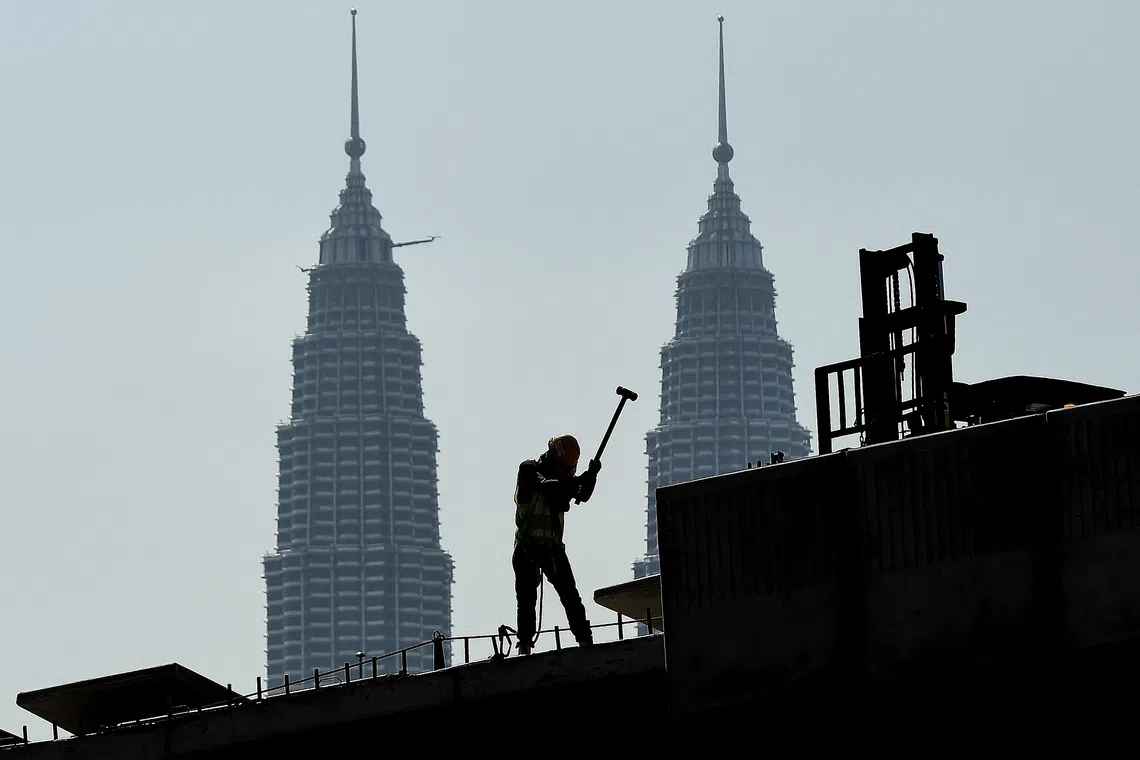
While private technology investments are driving near-term gains, Malaysia’s public infrastructure spending under the 13th Malaysia Plan (13MP) is expected to provide a longer-term anchor, said RHB Research analyst Adam Mohamed Rahim.
Key projects under the plan include the Sarawak-Sabah Link Road, Pan Borneo Highway, Central Spine Road, and transportation systems such as the Shah Alam light rail transit (LRT) line and the Penang LRT project.
The Public-Private Partnership Master Plan 2030 will also diversify project delivery models, with the government projecting RM61 billion in private funding.
The plan lists developments such as the West Ipoh Span Expressway, Bangi-Putrajaya Expressway and the East Coast Expressway Phase 3.
Adam noted that flood mitigation has become another priority, with the government aiming to complete 55 projects by 2030.
Some 43 high-priority schemes worth RM12 billion are already under way, targeting areas in Johor, Pahang, Kedah, Sabah and Perak. Companies such as Malaysian Resources Corp are actively involved in these works, he added.
The Construction Industry Development Board reported that RM226.5 billion in main contractor contracts were awarded in 2024. By end-May this year, contracts worth RM75.5 billion had been given, suggesting that the sector is on track for another strong year.
Kenanga’s Teh expects annual contract awards to average RM180 billion between 2024 and 2026.
Company winners and laggards
Out of 49 constituents in the construction index, about 10 companies had a market capitalisation of RM1 billion and above, as at Sep 17. Gamuda led the pack with RM32.5 billion, followed by IJM Corp at RM10 billion and Sunway Construction at RM8.2 billion.
Gamuda shares had risen more than 18 per cent to RM5.55 in the year to date, as at Sep 17. The company underwent a two-for-one share split at the end of 2024, which adjusted its share price to RM2.36 on Dec 19, 2024, following the split. Gamuda is also a constituent of the FBMKLCI.
According to UOB Kay Hian, Gamuda secured RM17.6 billion worth of contracts in the 2025 financial year, with an additional RM2.6 billion in FY2026. This lifted its outstanding order book to RM39.8 billion.
Shares of Sunway Construction had increased 36.5 per cent to RM6.32, up from RM4.63 at the start of the year. Binastra had risen 10.7 per cent and Ekovest had gained 4.1 per cent over the same period.
However, not all players benefited. IJM Corp’s shares slid 7.4 per cent in the year to date, despite its RM12.9 billion outstanding order book and potential catalysts including the Penang LRT project. Other major players also fell, with declines ranging between 1 per cent and 12.6 per cent.
Outlook and risks

Analysts generally remain upbeat on construction counters. RHB Research has maintained its overweight rating on the sector, highlighting infrastructure facilitation under the 13MP.
Kenanga Research continues to favour IJM Corp for its Penang LRT prospects, Kuantan Port exposure and potential toll-road disposals. It also sees mid-cap Kerjaya Prospek as attractive for its dividend yield of more than 5 per cent.
Despite this, analysts caution that policy changes may have an impact on company earnings, and that challenges in executing projects – causing a delay in their roll-outs – could weigh on share prices of some companies.
Kenanga Research noted that the newly introduced Employees Provident Fund contribution requirement for foreign workers (2 per cent of monthly wages) is expected to affect company earnings, though it may be only a marginal impact of less than 1 per cent of net profits.
Meanwhile, RHB’s Adam added that a multi-tiered foreign worker levy slated for 2026 may squeeze earnings, though its details remain unclear.
He said that companies with proven credentials in local public infrastructure projects, while maintaining substantial exposure either in overseas markets or through private industrial jobs, and possessing a lean balance sheet (net cash or manageable net gearing), will be a safer investment choice.