As Malaysia’s diesel subsidy cuts squeeze businesses, all eyes on next target – RON95 petrol
Economists expect limited inflation from diesel price hike but foresee significant price pressures if RON95 subsidy is removed

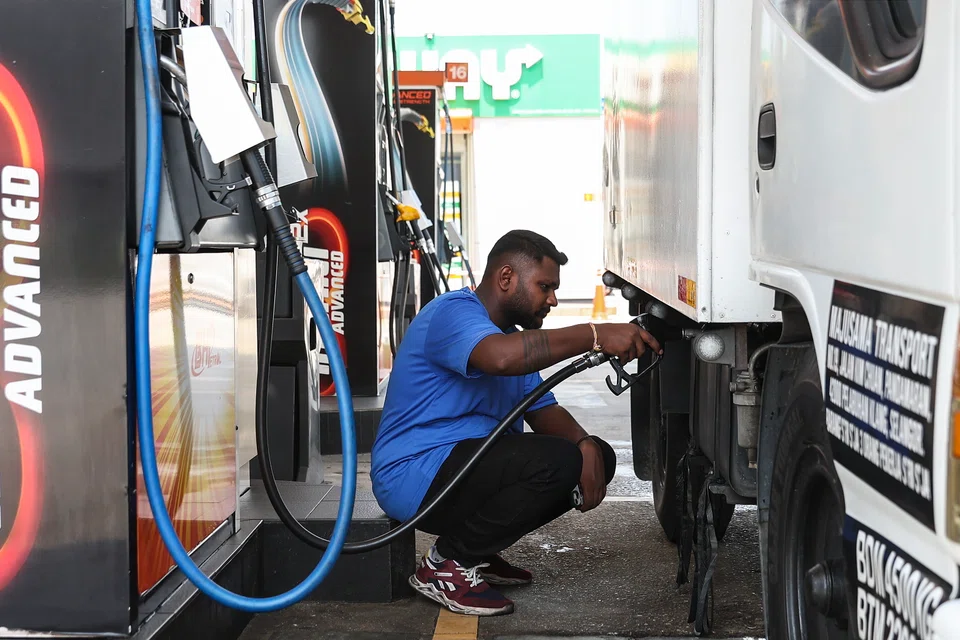
[KUALA LUMPUR] Snaking queues were spotted at several fuel stations in Terengganu, Malaysia’s eastern state, last Sunday evening (Jun 9) as vehicle owners scrambled to get the last pump of “cheap” diesel.
As Malaysia ended diesel subsidies effective Jun 10, resulting in fuel prices rising by more than half to market rates, it is likely that fuel stations across other states also experienced a similar rush.
KT Tan, a semi-retired wood panel trader, dashed to the nearest kiosk in Kuala Terengganu, the state capital, as soon as he heard the news on social media, eager to get a final full tank at RM2.15 (S$0.62) per litre.
Tan goes to the petrol station to refuel his pickup truck two to three times a month, and used to spend RM300 to RM350 monthly. With the higher prices now, he has to brace himself to cough up RM150 to RM170 more a month.
“I am considering switching to a motorbike for short distances, only using my pickup for longer journeys,” said the 66-year-old businessman.
Since Prime Minister Anwar Ibrahim took office in 2022, the oil-producing nation has been aiming to gradually remove its costly blanket fuel subsidy – which totals about RM50 billion annually – to bolster its finances. In place of this subsidy, the government plans to provide a more targeted subsidy mechanism.
The latest diesel subsidy cut, which is expected to save the government about RM2.5 billion this year and RM4 billion annually starting next year, is the first step towards this goal.
At the market rate of RM3.35 per litre, the fuel price has risen 56 per cent. The measure affects only vehicle owners in Peninsular Malaysia. East Malaysia is maintaining the diesel price at RM2.15 per litre.
To mitigate the cascading effects of the price hikes, the government will continue to provide subsidised diesel for 33 types of public transportation and goods vehicles through fleet cards under the Subsidised Diesel Regulation System Pilot Project.
Piling price pressures
Nobody wants to have to pay more, particularly in an environment already beset by rising costs. Hence, the subsidy cuts have sparked discontent across industries.
Anwar, who is also the finance minister, assured that savings from subsidy rationalisation will be redirected through cash aid for the lower-income group.
Chia Jee Onn, president of the Johor Sand and Granite Lorry Operators’ Association, said its members are compelled to negotiate price adjustments with customers. As sand and granite are not classified as essential items, the industry is not eligible for subsidised diesel.
“Even if some of our members manage to renegotiate a new price, the increase will only be around 20 per cent, which will not be sufficient to cover our costs,” he told The Business Times.
He further anticipates a “second or third round” of price adjustments due to a chain effect following the diesel subsidy cuts, as other industry players who are not entitled to subsidised fuel will likely pass on the increased costs to clients.
Chia also expects the transport cost of granite from Johor to Singapore to be adjusted but declined to comment further, citing antitrust law.
The latest development could throw into disarray businesses’ carefully thought-out budgeting plans, said Chai Chow Sang, chairman of the Associated Chinese Chamber of Commerce and Industry Pahang.
He anticipates that 90 per cent of Pahang’s transport operators will be affected, with those without fleet cards potentially incurring an additional RM15,000 in daily fuel costs, forcing some to halt operations until contracts are renegotiated.
The pinch is widespread. In Sungai Petani, Kedah, nearly 100 excavator operators went on strike, demanding rental adjustments to RM600 per day (from RM450) or RM12,500 per month (from RM10,400) to cover additional fuel costs.
Coffee shops and hardware stores have warned clients of imminent price hikes owing to rising transportation costs. Perak-based Kopi Hainan is set to raise coffee prices by 50 sen to RM4.50 starting Jul 15, while Kuala Lumpur’s Chuan Soon Heng hardware store has raised trucking charges by 25 per cent beginning Jun 10.
Limited macro impact
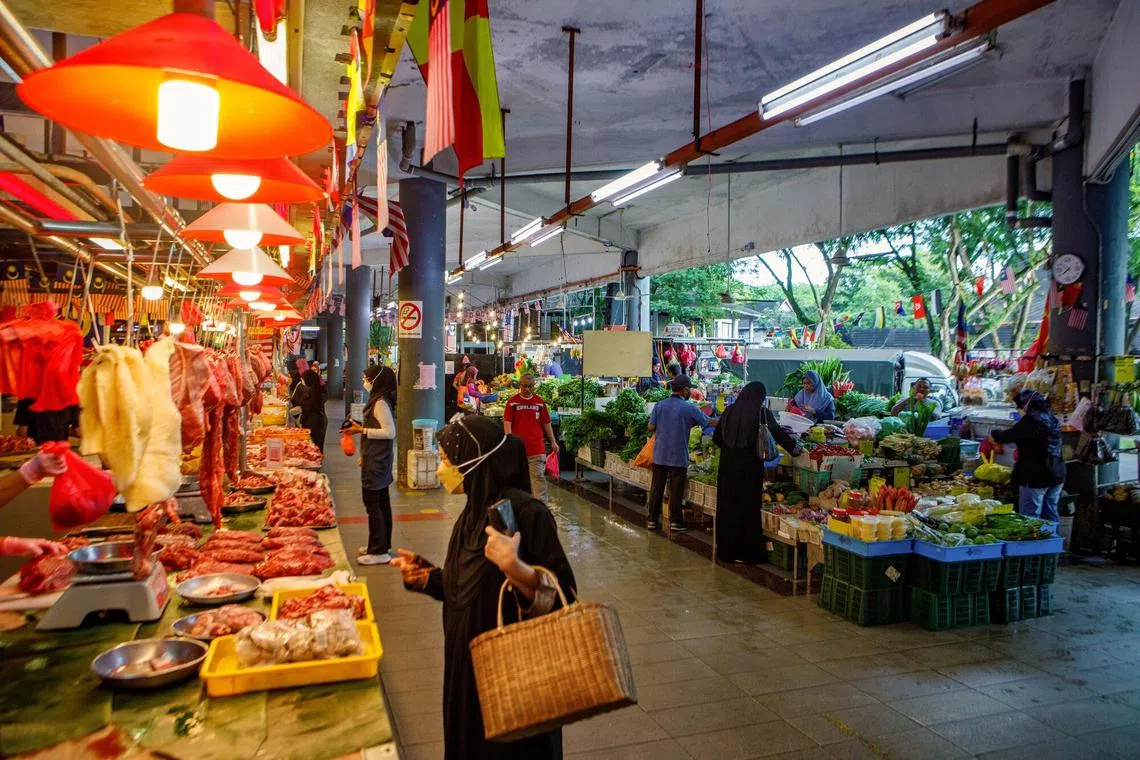
Economists believe the inflationary impact of the diesel price hike will be limited, which may explain why it was targeted first.
Bank Muamalat chief economist Mohd Afzanizam Abdul Rashid noted that diesel accounts for only 0.2 per cent of the total consumer price index (CPI) basket.
A report by Barclays economists Brian Tan and Audrey Ong noted that the diesel subsidy removal will have limited near-term inflation and fiscal effects, but could trigger the central bank to watch for second-round price pressures.
They expect inflation to flatten over the medium term with some fiscal consolidation, and Bank Negara Malaysia is unlikely to cut rates in 2024, having maintained its key policy rate at 3 per cent since a quarter-point hike in May last year.
Julia Goh, senior economist at UOB, said that subsidy rationalisation could drive the private sector towards sustainability, such as through the adoption of hybrid or electric vehicles. However, this transition will be gradual, with increased electricity usage being a concern, she added.
The big question – when is RON95’s turn?
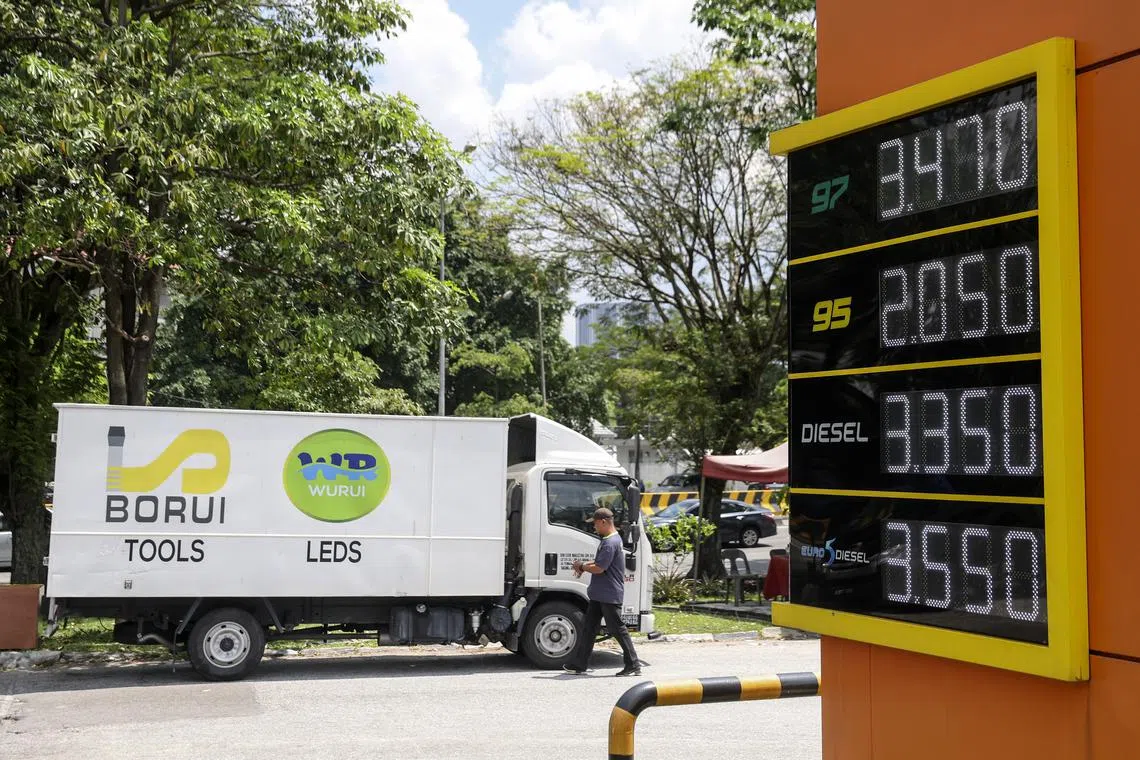
Subsidy reform is expected to next target RON95 petrol, though the timing remains uncertain. RON95 is limited to Malaysia-registered vehicles since a 2010 ban on sales to foreign vehicles.
Motorists with foreign-registered vehicles can refuel with RON97 petrol, a high-efficiency, unsubsidised fuel priced at RM3.47 per litre. Subsidies for that were removed in 2010, allowing prices to float according to the market.
Economists predict significant price pressure if the RON95 subsidy is removed, due to its 5.5 per cent weight in the CPI.
“This will affect the bulk of 36.6 million registered motor vehicle users and RM66.7 billion retail sales of automotive fuel in 2023,” said UOB’s Goh.
Barclays estimates that raising RON95 to RM3.25 per litre (based on market price) from RM2.05 would spike headline inflation by 2.8 percentage points.
Bank Negara has projected headline inflation to average between 2 and 3.5 per cent this year, after incorporating the potential impact of subsidy rationalisation.
Praiseworthy fiscal reforms
The big picture, however, is that Malaysia could earn some brownie points from the investing community and rating agencies, as it shows political will to push through with fiscal reforms.
Hong Leong Investment Bank views the roll-out of subsidy rationalisation positively, as “it signals that the Malaysian government is pushing through its economic reforms, which could also be a tailwind for Malaysia’s sovereign rating”.
The bank added: “Consumer discretionary spending may take a dent with higher fuel prices, though likely a short-lived one based on past experience – not to mention some possible cushioning effect from the flexible account withdrawal of Employees Provident Fund and salary hike for civil servants.”