



Malaysia’s durian prices take a big hit due to prolonged heatwave

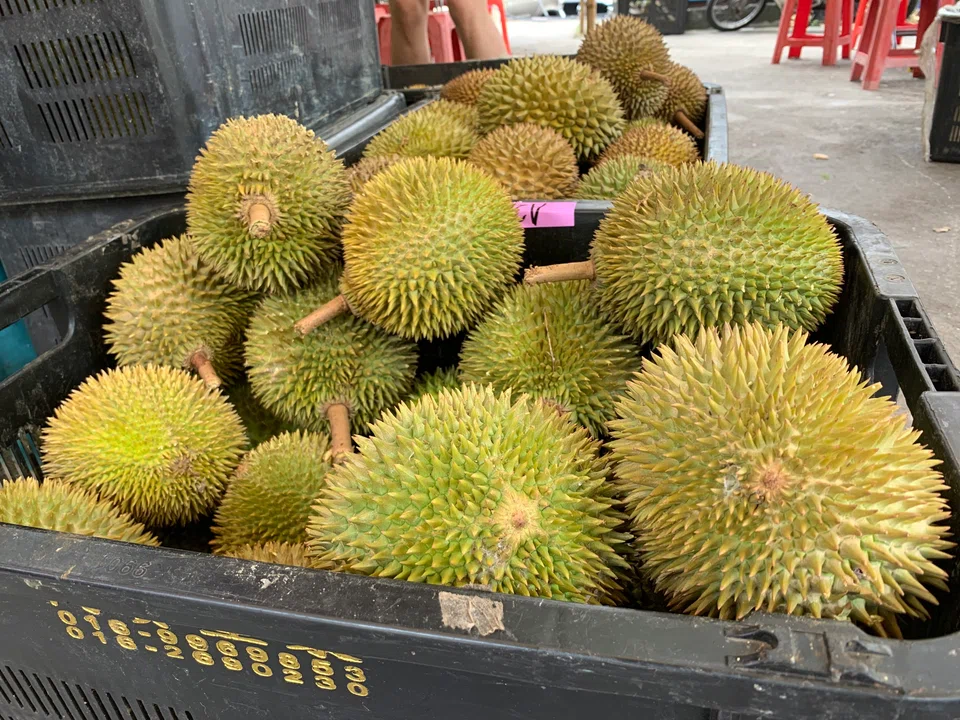
[KUALA LUMPUR] Barely a month into Malaysia’s durian season, prices of the “King of Fruits” are already plummeting because of the incessant hot weather that has affected production and caused lower demand.
Plantation owners are bemoaning the fact that durian prices – in particular, that of the popular and premium Musang King (or Mao Shan Wang, in Chinese) variety – have gone down by more than 50 per cent compared to this same time last year.
A kilogramme of the Grade A Musang King durians fetched a minimum of RM60 (S$17) at wholesale markets last year, but some plantation owners told The Business Times that prices have fallen to RM30 or even lower today.
Malaysia has been experiencing a prolonged heatwave in recent weeks, with the mercury going past 38 deg C at one point in late April. The hot weather is expected to continue throughout June, with the authorities warning that the situation could worsen as the haze season approaches.
The heat has caused havoc at many durian plantations in Malaysia, with the flower buds on the trees drying up and dropping prematurely. The hot weather has also caused many durian-lovers to consume less than they normally would, said plantation owners and fruit-sellers.
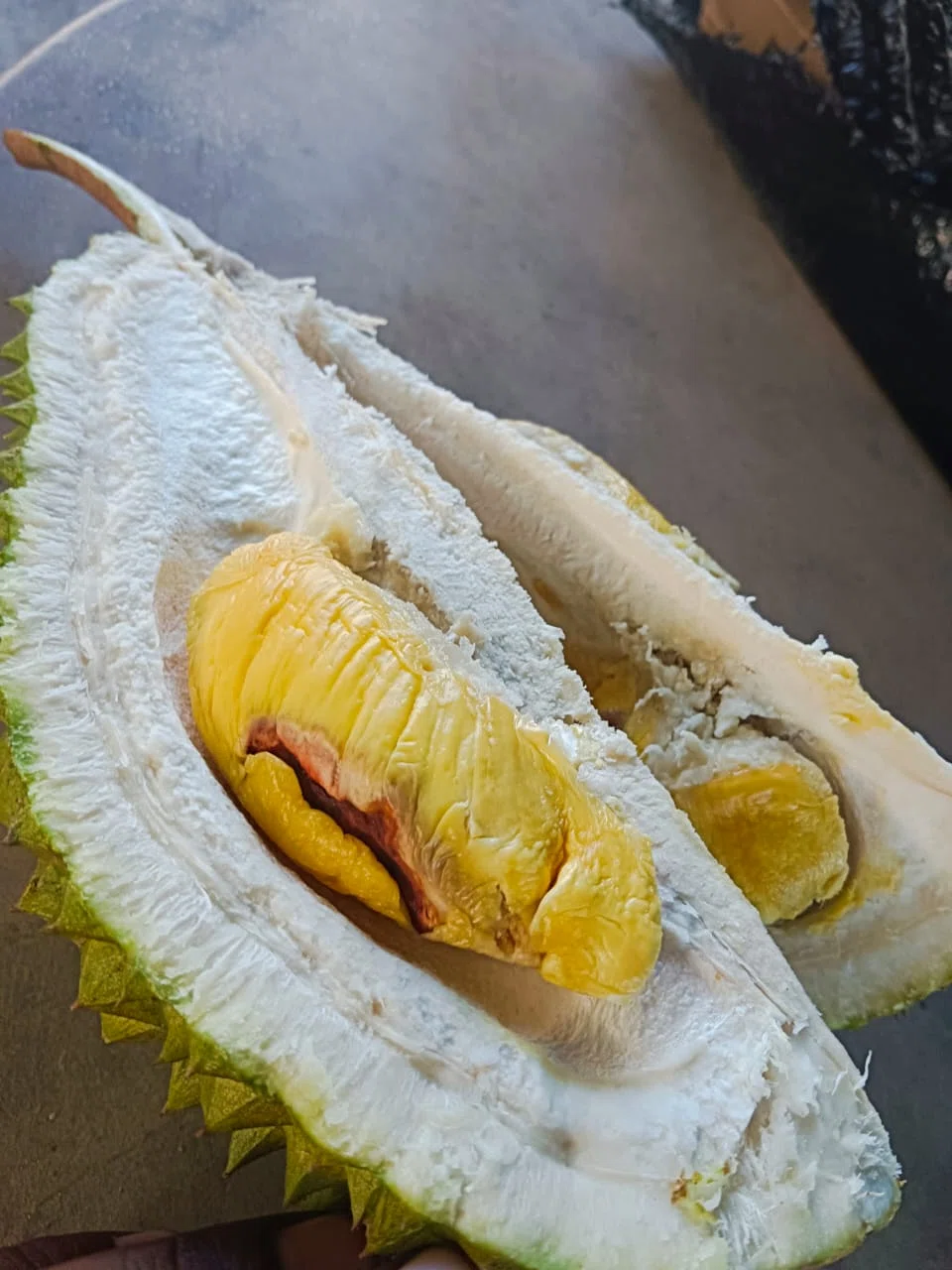
The heatwave is also causing the problem of “burnt seeds” in the durians, with the seeds having black or brownish marks due to the flowers on the trees drying up and withering.
This lowers the desirability of the durians, especially the pricier Musang King, as customers either reject the fruit or ask for a refund due to the appearance of the seed, said industry players.
Alvin Chong, the founder of E&A Plantations, said about one in five durians that his farm has harvested so far has this problem, and this has led to a supply glut.
“Many mistake the burnt seed as a worm infestation, but it’s not. The fruit is edible, but it doesn’t look pleasant,” he said. “Customers who pay a premium for Musang King won’t accept this. For now, we haven’t exported any fruits yet due to the quality.”
Chong said that some exporters have resorted to removing the seeds and packaging the durian flesh in vacuum-sealed packs. This process, however, involves higher costs and more manpower, but it is one way to ensure the durians do not go to waste, he said.
On the whole, many industry players are not optimistic about durian prices making a rebound this season. Yeong Oon Heng, the owner of SLM Durian plantation in Pahang, said prices usually peak in mid-May or early June, but the opposite has happened instead this year due to the inconsistent quality of the durians, especially for Musang King.
Chong expects the prices of Musang King to improve after the frozen fruit factories begin their operations for export packaging.
“The export demand from China is still strong, but we do not have enough good quality fruits for now. Once the quality of upcoming batches stabilises, we believe the prices will rebound,” he added.
Nevertheless, he forecasts the highest price will be around RM40 to RM45 per kilogramme for this season, which is expected to end around October or November.
The plunging durian prices in Malaysia have caught the attention of exporters from Thailand, with some of them visiting durian orchards in Pahang and Johor to buy the fruits at higher prices before shipping them back to Thailand.
These durians are then repackaged as “Thai Musang King” and later exported to China. The practice was later condemned by Malaysia’s Deputy Minister of Agriculture and Food Security Chan Foong Hin, who said: “This is a free market, I do not stop you, but I don’t encourage it.” He added that his ministry plans to raise the issue with the Thai Embassy in Kuala Lumpur.
Chong was one of the orchard owners who benefited from this. Through a middleman, a buyer from Thailand purchased 4,000 kg of Musang King durians from his farm in the space of three days.
Chong noted that Thailand has competitive export advantages compared to Malaysia. Thailand is allowed to export fresh fruits to China, but Malaysian exporters are able to ship only frozen fruits, with jackfruit being the lone exception.
For durians, Malaysian sellers are allowed to export only frozen durian pulp or frozen whole fruits to China.
Recognising the challenges faced by Malaysia’s durian exporters, Chan, the deputy minister, said the government will expedite the process to approve the exports of fresh durians to China.
“This requires time as it involves intricate bilateral technical negotiations and meticulous inspections conducted by the General Administration of Customs of China,” he said.
Nevertheless, the minister said such issues did not impact Malaysia’s position as the top exporter of Musang King durians to China.
“The demand for durian in the Chinese market has remained consistently strong without any signs of decline,” he added.
Last year, Malaysia exported 1,880 tonnes of frozen durian worth RM57 million, with about half of the shipment (930 tonnes) shipped to China.
TRENDING NOW

Higher rates, weaker spending: Is the Philippines entering stagflation?

Protect people, not prices: How Asean+3 can build resilience to energy shocks

Cabin fever: Airlines are rushing to refurbish plane interiors, but will their bets pay off?

DBS, OCBC or UOB? Investors urged to be selective as Q3 reveals widening performance gap

