



Malaysia’s economic outlook is upbeat, but small businesses feel the pinch
Their costs are rising and their sales are falling, contradicting expectations of a more upbeat performance by the economy

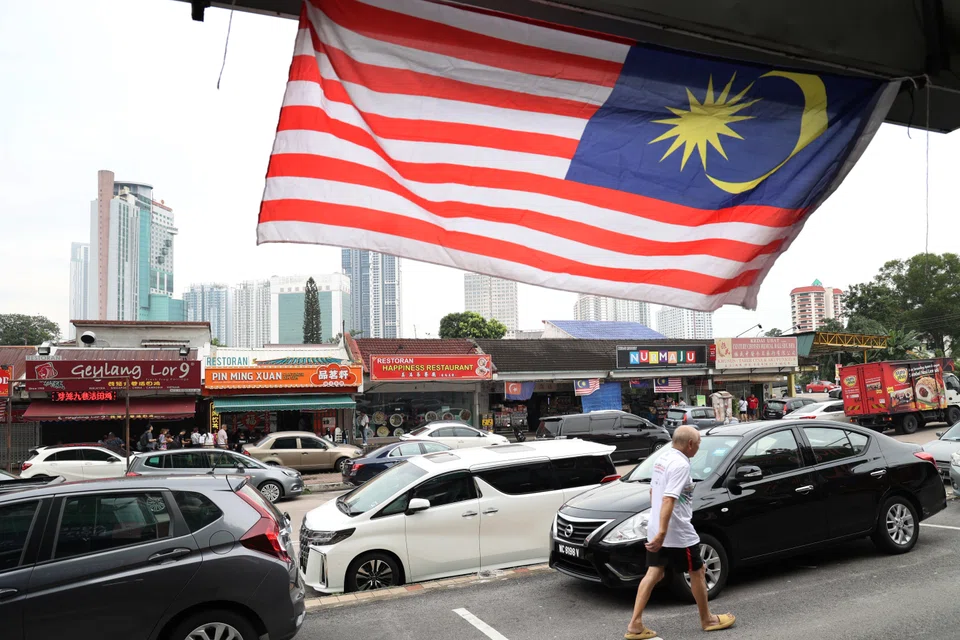
[KUALA LUMPUR] Jessica Looi, who runs a Chinese restaurant in Petaling Jaya in Selangor, is struggling to get the business to break even. The spectre of closure is looming.
The restaurant’s parent company recently shuttered two outlets in Kuala Lumpur on the back of poor sales.
Her outlet, sited in a bustling commercial area, used to pull in daily earnings in the five digits in better times. Lately, it has been a struggle to make even a few hundred ringgit.
From her slimmed down takings, she has to cover a monthly rent of RM18,000 (S$5,100) and pay seven permanent workers an average monthly salary of RM3,000.
In the adjacent commercial stretch, two other food and beverage (F&B) establishments are also grappling with dwindling foot traffic. Restaurant proprietor Thomas Chin notes a stark contrast from the past, when two-thirds of his tables would be taken during mealtimes. Now, even during the peak dinner hour, only three tables are occupied.
“My customers used to complain about the lack of parking spaces, even for double-parking, but now there are plenty of spots available,” he said. “It’s been this way since early this year... I don’t know where everyone has gone.”
The woes of these smaller businesses – rising costs and waning sales – seem to fly in the face of the upbeat prospects for the Malaysian economy, which is estimated to grow by 3.9 per cent in the first quarter of 2024 from the year before, going by advance gross domestic product estimates.
The growth was 3 per cent in the final quarter of 2023, and the economy has grown for nine consecutive quarters since Q4 2021.
Despite this upbeat outlook and confidence that domestic spending will continue to drive the country’s economy, small business owners are feeling a slowdown in sales, with consumers having become more cautious with spending.
A report by Retail Group Malaysia indicated that consumer sentiment has been fading. Sales growth for the fourth quarter of 2023 declined 0.2 per cent from the year before, missing the industry forecast of 2.1 per cent growth.
Retail prices, especially food prices, continued to rise in the last quarter of 2023, chipping away at Malaysian consumers’ purchasing power, said the report.
The cost of raw materials and rents have risen significantly, making it difficult for small businesses to sustain a physical presence.
“Rent is a major issue,” said Gary Crestejo, who owns six F&B outlets across the Klang Valley, including Mak’s Chee Noodles. “Landlords often raise rent when they see a business is busy, ignoring that business owners are struggling to break even.”
Lack of economies of scale

Julia Goh, senior economist at UOB Malaysia, said that unlike large corporations which can reap economies of scale, small business owners are likely to bear the brunt of the rising costs in the current landscape.
“With increasing competition and cautious consumer spending, this prevents them from passing the rising costs (to consumers),” she told The Business Times.
A report by Sumitomo Mitsui Banking Corp (SMBC) suggested that business sentiment and inflation are remaining stable, and that exports are anticipated to rise. However, these factors are unlikely to alleviate the volatility of the ringgit.
“Even if the likelihood of acquiring foreign currency increases due to increased exports, it is difficult for exporters to buy ringgit, as it is expected to weaken,” said the report, adding that ringgit volatility may increase, albeit not as much as some other Asian currencies.
SMBC expects the ringgit to end at RM4.62 against the US dollar by end-2024. On Wednesday (May 8) afternoon, the ringgit was trading at RM4.747 against the greenback. The ringgit has depreciated over 6 per cent against the US dollar, from RM4.45 on May 3 last year.
Retail Group Malaysia noted that the weaker ringgit has boosted tourism; in particular, it has attracted more Singaporeans to Malaysia, even as it puts great pressure on companies selling imported retail goods or which import raw materials and semi-finished goods.
Key growth drivers
The first quarter advance GDP estimates by the Department of Statistics Malaysia (DOSM) were based on the supply data collated from all economic sectors for the first two months of 2024, when all sectors reported improved performance, relative to that of the previous quarter.
The final Q1 2024 GDP showing is set to be announced in little over a week (May 17). The DOSM expects the manufacturing sector to rebound 1.9 per cent, and the services sector to grow 4.4 per cent for the three months to March.
Economists observed that the manufacturing sector will keep driving the growth amid continued expansion in the service sector for the first quarter of 2024.
In a report, UOB economists Julia Goh and Loke Siew Ting said although the official advance estimate undershot their preliminary estimate of 4.3 per cent, they remain cautiously optimistic on Malaysia’s economic growth.
“Improving trade activities driven by electronics and commodity segments, robust tourism activities, the continued progress of multi-year projects and the implementation of catalytic initiatives under the national master plans, are among the factors that support the growth,” they added.
MIDF Research expressed a similar view, noting that the external trade recovery and growing domestic spending – underpinned by stable employment and expected wage growth – will continue supporting the country’s economy.
In March 2024, Malaysia’s exports fell 0.8 per cent from that of the previous year. However, the central bank anticipates a 5 per cent growth in exports for the full year of 2024, rebounding from an 8 per cent decline in 2023.
Bank Negara and the finance ministry forecast a full-year economic growth of 4 to 5 per cent in 2024, following a 3.7 per cent growth in 2023. This marks a significant decline from the 22-year high of 8.7 per cent in 2022.
TRENDING NOW

Two Singapore-listed palm oil firms named in Greenpeace report on Indonesian plantation fires

Singapore Airlines flight returns to San Francisco after ‘unruly’ passenger incident

Singapore looking into which companies responsible for haze-causing fires: PM Wong

Deluge IPO 3.86 times subscribed ahead of SGX debut

