Malaysia’s energy windfall masks a burgeoning ‘two-speed’ economy
While higher oil prices have increased export revenues, businesses face strain from supply disruptions

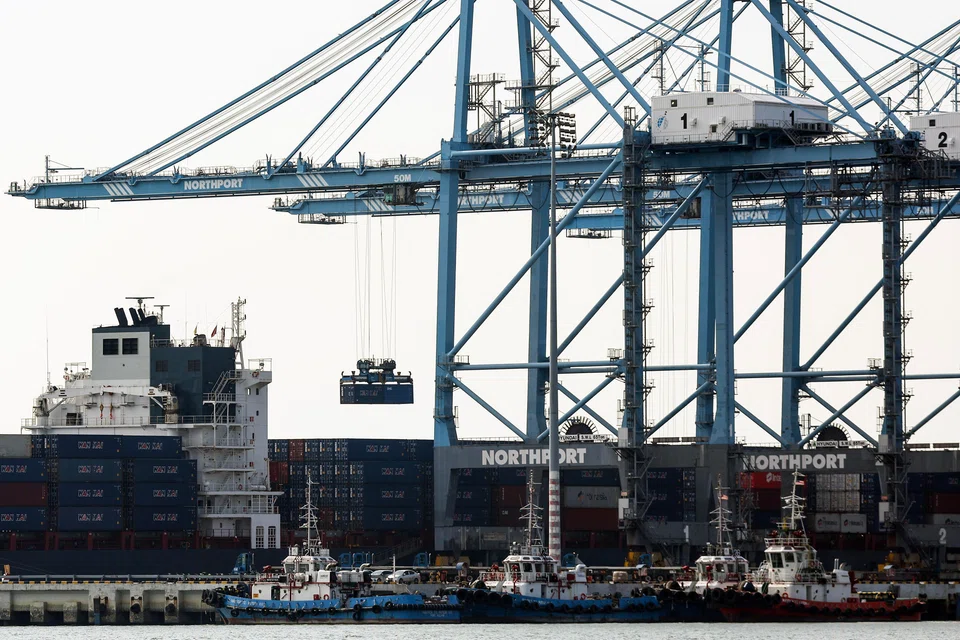
[KUALA LUMPUR] Bustling malls and persistent traffic jams in Malaysia may depict resilience, but one of South-east Asia’s largest economies is facing a “two-speed” reality, with growth faltering under the weight of rising logistics costs and material shortages linked to the Middle East crisis.
Manufacturers, particularly in plastic packaging, gloves and food production, are struggling to secure raw materials, noted Koong Lin Loong, chairman of the small and medium-sized enterprises (SMEs) committee in the Associated Chinese Chambers of Commerce and Industry of Malaysia (ACCCIM).
In addition, he said, it is unfeasible for SMEs to diversify suppliers given the prohibitive costs and extended lead times.
As a result, “everyone is holding back – suppliers, buyers, investors”, he told The Business Times, adding that the widespread hesitation signals trouble for the broader economy.
SMEs are a critical pillar of Malaysia’s economy, accounting for about 40 per cent of gross domestic product and nearly half of total employment. Hence, any sustained pullback in activity could quickly ripple through the wider economy.
A survey by the Federation of Malaysian Manufacturers released on Apr 7 lends further credence to the pain points. It showed that nine in 10 firms were already affected or expected to be so within the following four weeks.
Malaysia’s deep integration into global networks is now a primary vulnerability; about 83 per cent of companies source more than 30 per cent of their raw materials from abroad.
An accidental beneficiary, but with limits
The country initially appeared to be an accidental beneficiary of rising Middle East tensions.
As a net energy exporter, it saw export revenues climb alongside the rise in the price of Brent crude, which has surpassed US$100 per barrel. This has supported the ringgit and equity markets, but there is another side as well.
Yen Voo, head of Malaysia equity research at JPMorgan Chase, told BT: “Higher oil prices do provide a revenue offset, but they also increase subsidy costs and fiscal pressures.”
Under a high-oil-price scenario, she estimates that the gross fuel subsidy burden may swell by RM17 billion (S$5.5 billion), offset partly by around RM7 billion in higher oil-linked revenues. That leaves the net budget shortfall at around RM10 billion, equivalent to about 0.5 per cent of GDP.
She believes that this could push the fiscal deficit from a targeted 3.5 per cent closer to 4 per cent of GDP.
But she adds: “So while the net impact is still negative, it is less severe compared with (that on) net energy importers – and that relative positioning is what makes Malaysia attractive.”
Dr Yeah Kim Leng, economics professor at Sunway University, warned that Malaysia’s status as a net energy exporter has limits. “The economy remains vulnerable to prolonged supply shortages of crude oil and gas,” he said.
Many domestic industries depend on imported feedstocks derived from refining processes, such as fertilisers, polymers and industrial gases, he noted, adding that supply constraints and elevated import prices are already stifling output and fuelling inflation.
Furthermore, “second and third-round effects” are expected to ripple through the economy. As demand softens, the risk of a hiring slowdown or potential layoffs increases, particularly if the conflict remains unresolved, explained Prof Yeah.
Ringgit continues strengthening
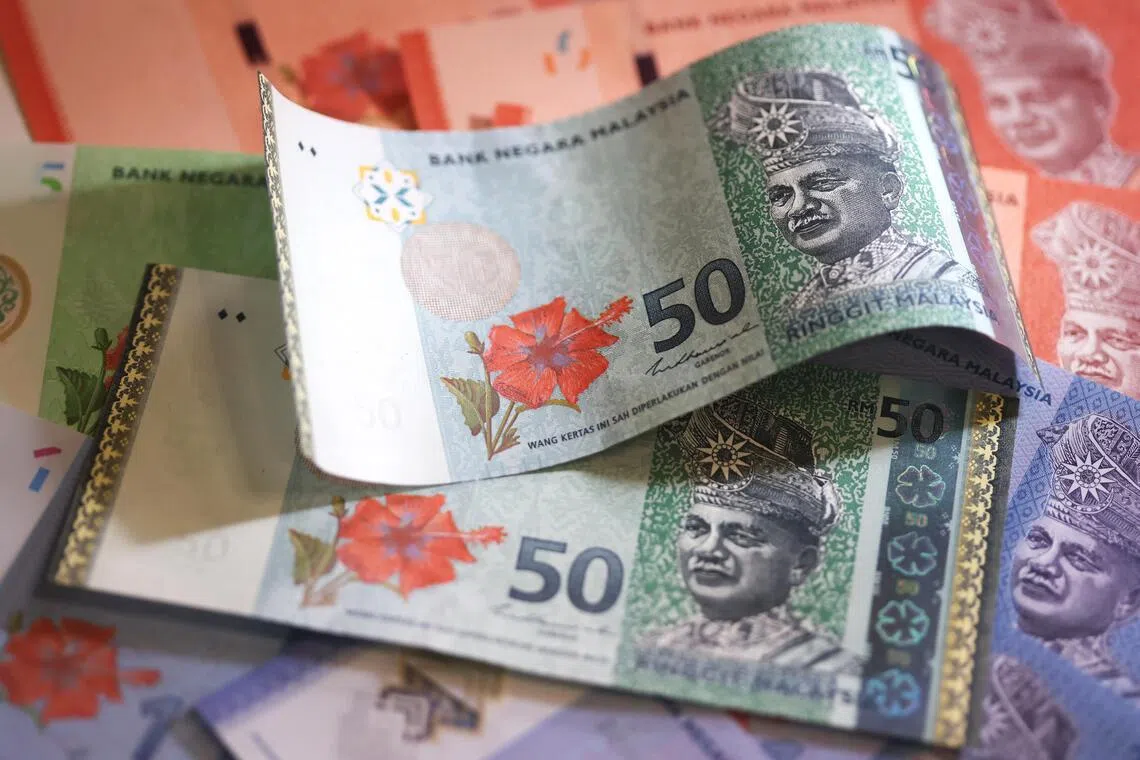
The Malaysian ringgit continued its upward trajectory, trading at 3.9651 against the US dollar as at Friday (Apr 24) – a 9.7 per cent increase from 4.4133 a year earlier.
Year to date, the currency has appreciated around 2.3 per cent from its Jan 1 opening of 4.0585.
The ringgit also showed strength against the Singapore dollar, trading at 3.1031, a 1.7 per cent gain since the start of the year.
Analysts at Kenanga Investment Bank attributed this shift to waning demand for traditional safe-haven assets such as the US dollar, as investors rotate into higher-growth emerging-market currencies.
“Geopolitical headline fatigue is the dominant theme,” the firm noted, forecasting a near-term range of 3.94 to 3.98 against the greenback.
UOB analysts noted that the Malaysian currency has been supported by positive sentiment following the release of the advance estimates of the country’s GDP growth in the first quarter of 2026.
The economy is projected to have grown by 5.3 per cent year on year in this period, according to the Department of Statistics Malaysia. The official figures will be released on May 15.
OCBC maintains a GDP forecast of 4.4 per cent for the full year, calling Malaysia resilient, yet vulnerable to commodity volatility. Despite inflation risks from subsidy reforms and high oil prices, proactive policies keep the nation well-positioned against peers, noted the lender.
Other financial institutions share this optimism. The World Bank raised its 2026 growth forecast for the country to 4.4 per cent, citing robust consumption and labelling Malaysia a “safe haven”.
Meanwhile, the International Monetary Fund upgraded its GDP projection to 4.7 per cent, and Bank Negara Malaysia anticipates 4 to 5 per cent growth this year, driven by resilient economic fundamentals.
Equity market remains resilient
Malaysian equities have remained resilient despite volatility. The FTSE Bursa Malaysia KLCI has risen 3 per cent in the year to date to 1,720.34 as at Friday. While the benchmark hit a high of 1,771.25 on Jan 27, it retreated to 1,674.17 on Mar 9 following a US-led strike on Iran.
Crucially, foreign capital flows have reversed. After four consecutive quarters of net selling in 2025 totalling US$5.2 billion, foreign investors were net buyers in Q1 2026 with inflows of US$680 million. In the period from Apr 1 to Apr 17, foreign net buying came to US$140 million.
Prem Jearajasingam, analyst at CGS International Securities, noted that even in the face of supply shocks, the combination of liquidity and pent-up demand will eventually take centre stage. Reflecting this confidence, CGS International holds its year-end target for FTSE Bursa Malaysia KLCI at 1,810.
Alexander Chia, head of regional equity research at RHB, highlights Malaysia as a standout among emerging markets (EM), for its resilient growth and status as a net energy exporter. Yet he warns that a “premium” equity price tag and a slim 1.1 per cent MSCI EM weightage continue to be a bottleneck for foreign investments.
He noted that the downward earnings revisions in the petrochemical, technology and energy sectors are being balanced by positive outlooks in banking, automotive, property and basic materials.
JPMorgan’s Voo identifies energy, chemicals, banking, utilities and healthcare as high-quality growth opportunities.
In contrast, consumer-facing sectors remain vulnerable to rising costs and diminished discretionary spending. While much of this risk may be priced in, Voo expects further volatility to track shifting macroeconomic conditions.
Costs surge, margins squeezed

Businesses are feeling the weight of cost pressures, with energy expenses increasing, freight rates rising 20 to 50 per cent, and tighter diesel supply causing logistical bottlenecks, said ACCCIM’s Koong.
He warned that higher transportation costs will drive cost-driven inflation of food and materials, acutely affecting SMEs with thin margins.
The Strait of Hormuz also remains a critical choke point for global fertiliser trade; one-third of the world’s supply moved through it before the conflict. The waterway is thus vital for Malaysia, which imports roughly 63 per cent of its fertiliser needs.
MBSB Research noted that, while the plantation sector remains positive, shortages are inflating costs. While major players such as SD Guthrie have locked in procurement for 2026, others are deferring application – a risky move that could compromise long-term yields.
Economy Minister Akmal Nasrullah Mohd Nasir warned that fertiliser and animal feed prices could rise by 20 per cent and 8 per cent, respectively. While food supply is currently stable, prolonged disruptions may eventually hit consumer wallets.
Akmal estimates that it could take up to 18 months after the situation in the Middle East eases for the economy to stabilise, as supply chains and energy flows are restored.
Rajiv Batra, head of Asia and co-head of global emerging markets equity strategy at JPMorgan, noted that a prolonged crisis may lead to higher consumer costs as well as force a shift to alternative energy. If consumer demand is suppressed, the impact would extend beyond South-east Asia, triggering a global crisis due to Asia’s central role as the world’s manufacturing hub.