



Malaysia’s EV race accelerates as Proton moves up launch in booming market
But range anxiety, affordability and limited charging infrastructure remain hurdles to wider adoption

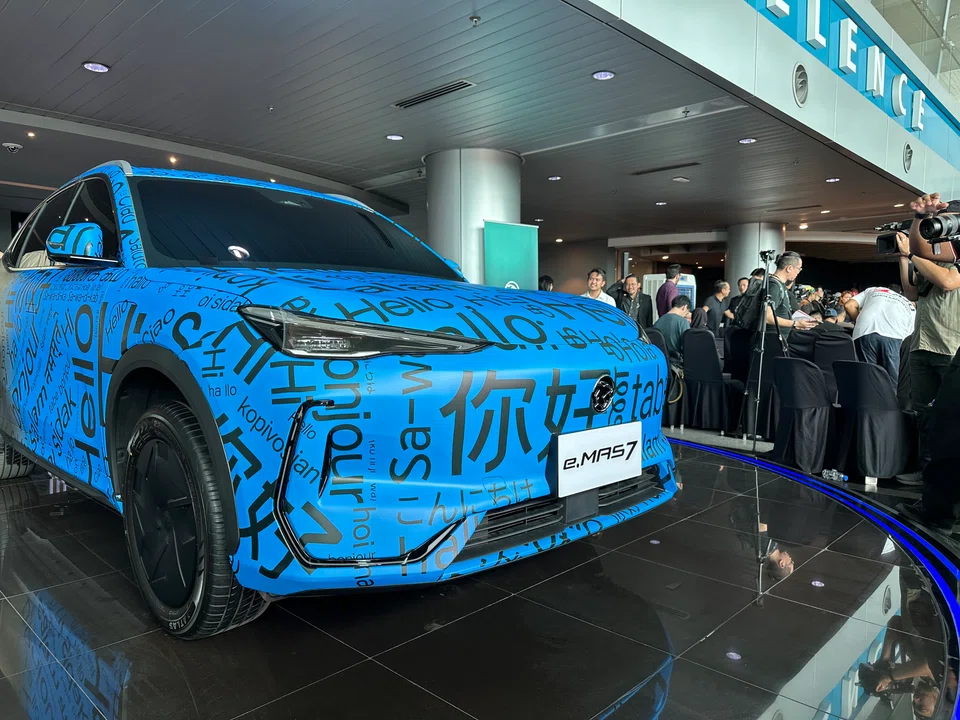
MALAYSIA is experiencing a surge in interest in electric vehicles (EVs) as more players enter the market, with national carmakers racing to launch affordable models to capture the growing mass market demand.
Proton, the national carmaker, revealed the camouflage model of its first EV, the Proton e.Mas, in early August, entering the fiercely competitive EV market currently dominated by foreign brands.
Deputy CEO Roslan Abdullah did not disclose the price but said that affordability, reduced range anxiety and convenience will be key selling points for Proton in the competitive EV landscape.
“Proton is strategically focusing on this segment, and anticipates to bring forward the launch of its first EV – the Proton e.Mas – by end-2024, focusing on affordability and convenience to compete in the EV market,” he told The Business Times after the preview of the e.Mas model.
Proton’s first EV will be a complete built unit (CBU) model during its initial phase, as the company works on enhancing local manufacturing capabilities and workforce readiness, Roslan added.
Perodua, Malaysia’s largest car manufacturer known for its popular Myvi range, unveiled its first EV – the eMO-1 – in May. The company plans to launch the new EV by the fourth quarter of 2025, with an estimated selling price of between RM50,000 (S$14,991) and RM100,000.
Industry observers expect the competitive pricing of below RM100,000 to attract more interest in EVs.
Tan Aik Keong, CEO of technology company Agmo Holdings and an avid EV enthusiast, said: “Pricing remains the primary concern for car ownership.”
Currently, EVs are significantly pricier than their internal combustion engine (ICE) counterparts, primarily due to elevated production costs.
For example, the Nissan Leaf is 42 per cent more expensive than Nissan Almera, despite both models offering similar passenger capacities.
“The price disparity is largely driven by the costs associated with batteries and essential raw materials such as cobalt, lithium and nickel,” said Tan, whose company developed an app to provide EV owners with essential information and resources.
Additionally, the absence of mass production and local assembly of EVs in Malaysia has further inflated prices.
“The local EV market is still in its infancy, with production volumes not yet sufficient to lower costs. Currently, available EVs are imported CBUs – resulting in price tags of over RM100,000,” he added.
Macquarie Equity Research analyst Max Koh said that Malaysia’s national carmakers – Proton and Perodua – dominate the local market with a combined 60 per cent market share.
“EVs currently only make up 0.1 per cent of the cumulative 20 million cars on the road. Once Proton and Perodua roll out their EVs next year, we expect EVs on the road to reach 3.4 per cent by 2030, with EVs making up 30 per cent of annual vehicle sales then,” added Koh.
Currently, the prices of EVs are capped at RM100,000 by the government to protect the interests of national carmakers.
The only way for carmakers to circumvent this is by producing the EV by assembling locally or putting together completely knocked down (CKD) units – vehicles that are shipped in parts and assembled.
Industry observers expect such price caps to be removed once Proton or Perodua starts mass production in 2025 and build their capacity for future exports.
Rising EV sales
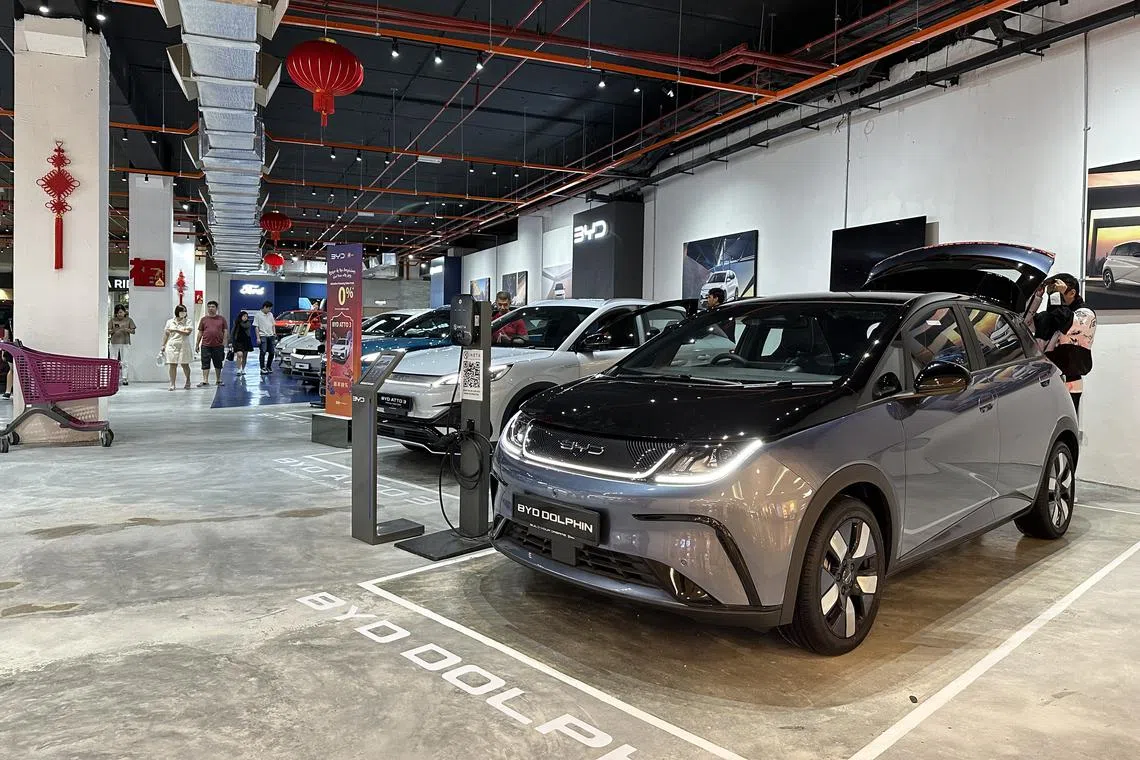
Malaysia’s electric vehicle market is surging, with sales more than doubling in early 2024, but range anxiety, affordability and insufficient charging infrastructure remain key hurdles as the country strives to meet demand and boost EV adoption.
The country’s EV market is experiencing a significant surge, with EV sales more than doubling in the first half of 2024.
Despite a 112 per cent increase in sales compared to the same period last year, with 6,617 units sold – surpassing half of 10,159 units sold in all of 2023 – many potential buyers remain hesitant.
Concerns over battery life and charging infrastructure are causing some consumers to revert to traditional ICE vehicles or delay their purchase plans.
Even so, there are encouraging signs of keen interest. Data from Malaysia Automotive Association (MAA) indicated that the country’s hybrid segment chalked up 15,885 vehicles sold in the first half of 2024 versus 28,055 units sold in the whole of 2023.
Hybrids, which combine a conventional ICE system with electric propulsion, are often viewed as a transitional step towards full electrification.
Rising EV sales in Malaysia is being driven by several factors, chiefly the growing variety of options.
The introduction of new models from prominent brands such as Tesla, BYD, Mercedes-Benz, BMW, and Volvo has significantly expanded consumer choices, making the switch to EVs more attractive and accessible.
Yasuyuki Murakami, partner with the Deloitte Future of Mobility Solution Centre in South-east Asia, observed that the electrification trend is progressing throughout South-east Asia, including Malaysia.
He told BT that consumers’ evolving needs and a realistic road map to sustainable mobility are crucial considerations to encourage more ICE users switching to EVs.
Citing a recent Deloitte survey, Murakami noted that 26 per cent of Malaysian consumers are considering purchasing an EV for their next car, with the majority (22 per cent) leaning towards hybrid EVs.
Lower fuel costs, improved driving experiences and growing environmental concerns are key factors motivating Malaysian consumers to consider switching from ICE vehicles to EVs, the survey indicated.
In the same survey, respondents also expressed concerns about the lack of public charging points and the time required to fully charge EVs, citing these as key factors influencing their purchase decisions.
Range anxiety
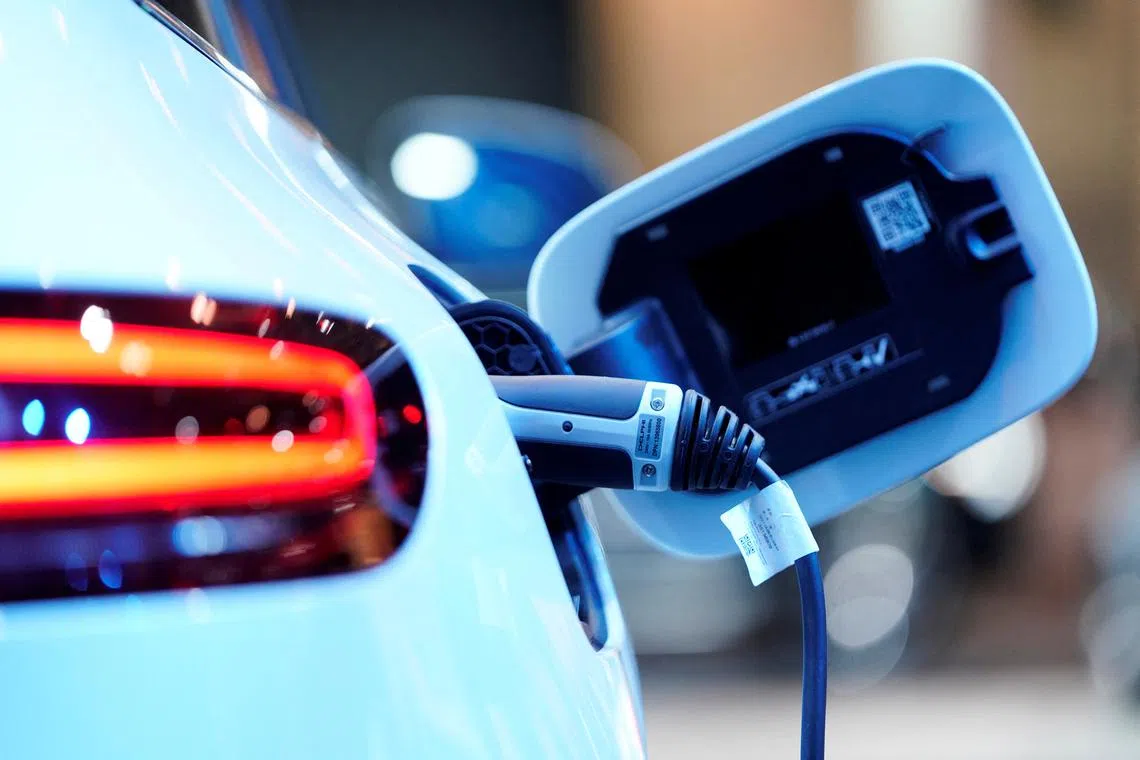
Although the government aims to establish 10,000 public EV charging points by 2025 to reduce range anxiety and encourage EV ownership, only 2,585 charging points were available as at late June this year.
This highlights the need for continued effort in expanding the charging infrastructure to meet the ambitious target and support the growing demand for EVs.
Agmo’s Tan highlighted that capital and revenue funding constraints pose significant challenges in the establishment of EV chargers, particularly fast chargers, which require substantial capital investment.
“In emerging EV markets, a low utilisation rate can extend the return on investment period, making it difficult to project clear financial returns. This uncertainty can complicate efforts for charge point operators to secure financing from banks,” he added.
The technological complexity involved in setting up EV charging infrastructure presents another hurdle. He noted that establishing these systems requires a comprehensive understanding of various technologies, including software integration, energy management systems and grid compatibility.
New entrants lacking expertise in these areas may struggle to deliver reliable and efficient services, further impeding the growth of the EV charging network.
Fuel subsidy removal to drive sales
Macquarie is optimistic on Malaysia’s EV adoption among its regional peers and believes the removal of blanket fuel subsidies will lead to more consumers buying EVs.
“The government has recently increased petrol pump prices for diesel by 56 per cent, and RON95 is expected to follow suit. If RON95 rises to RM3.25 per litre, we estimate 35 per cent in annual cost savings for an EV model,” said Macquarie’s Koh.
As part of the National Energy Transition Roadmap, the government aims for EVs to make up 15 per cent of new vehicle sales by 2030, up from the current 1 per cent, with a target of 80 per cent by 2050.
However, government officials believe the 15 per cent new EV sales could be realised sooner, once national car manufacturers Proton and Perodua introduce their own EV models into the market from 2025.
The debut of affordable and locally produced EVs is anticipated to significantly boost consumer adoption, added Koh.






