



Malaysia’s exports fall for ninth consecutive month in November


[KUALA LUMPUR] Malaysia’s exports declined for the ninth straight month in November, sliding 5.9 per cent year on year to RM122.1 billion (S$34.7 billion), according to Department of Statistics Malaysia data on Tuesday (Dec 19).
The fall was steeper than October’s 4.5 per cent contraction and worse than the 5.2 per cent decline predicted by 14 economists in a Reuters poll.
Malaysia’s exports have been declining since March due to a high base effect and slower external demand.
Imports, however, rose 1.7 per cent year on year in November to RM109.7 billion, beating the economists’ projection of a 0.8 per cent decline.
Total trade shrank 2.4 per cent to RM231.8 billion in November, down from RM239.5 billion in October.
Economists are taking a cautiously optimistic view on the rebound of exports next year, anticipating that an improved Chinese economy and the bottoming out of the global tech sector will give a boost to Malaysia’s exports.
MIDF Research noted that the weakness in electrical and electronics shipments, as well as the sharp fall in exports to major destinations such as China and the United States, were the main reasons for the decline.
“Despite the weaker-than-expected performance in November, we still expect exports to pick up and recover going forward in view of improving regional trade performance in recent months,” said MIDF in a report on Tuesday.
RHB economists Chin Yee Sian and Wong Xian Yong shared a similar view, noting that the recovery in China’s growth will help Malaysia’s trade, investment and tourism arrivals in the coming year.


Citing projections from World Semiconductor Trade Statistics, UOB economists Julia Goh and Loke Siew Ting said the global tech cycle has shown signs of recovery that will bode well for electrical and electronics exporting countries, including Malaysia.
The World Semiconductor Trade Statistics projected that global semiconductor sales will increase by 13.1 per cent next year.
UOB expects Malaysia’s export growth rebound to hit 3.5 per cent in 2024, but noted that there might be some wildcards that could affect the country’s export growth outlook.
These include escalating geopolitical tensions, in particular Middle East conflicts and US-China tech war, tighter-than-expected financial and monetary conditions, as well as elevated price pressures.
For the first 11 months of 2023, Malaysia’s total trade was down 7.5 per cent at RM2.4 trillion, and its trade surplus was down 11.3 per cent at RM202.5 billion, compared to the same period last year.
In November, exports of manufactured goods decreased 6.7 per cent. This was dragged down by lower demand for electrical and electronic products, as well as chemicals, transport equipment and optical products.
Manufactured goods form the bulk of total exports, at nearly 84 per cent.
Shipments of agriculture products, which account for 6.9 per cent of total exports, fell 5.5 per cent. Exports of mining products, which form 8.6 per cent of total exports, rose 0.5 per cent.
Exports to Singapore – the biggest destination market for Malaysia – fell 17 per cent year on year to RM18.3 billion, due to lower exports of electrical and electronic products.
Exports to China fell 8.4 per cent to RM17.2 billion, due to lower exports of palm oil and palm-based agriculture products.
In November, imports of capital and consumption goods increased 53.3 per cent and 2.2 per cent, respectively. Imports for intermediate goods declined 5.2 per cent.
Imports from China – forming 21.6 per cent of total imports – fell 2.4 per cent to RM23.7 billion, due to lower orders for electrical and electronic as well as petroleum and chemical products.
Imports from Singapore – accounting for 12.1 per cent of total imports – rose 22.6 per cent to RM13.3 billion, on higher demand for electrical and electronics as well as machinery, equipment and parts.
Decoding Asia newsletter: your guide to navigating Asia in a new global order. Sign up here to get Decoding Asia newsletter. Delivered to your inbox. Free.
Copyright SPH Media. All rights reserved.
TRENDING NOW

Cracks emerge in AI borrowing boom as CoreWeave, Oracle and SoftBank debt worries grow

Could stablecoins be the future of money?
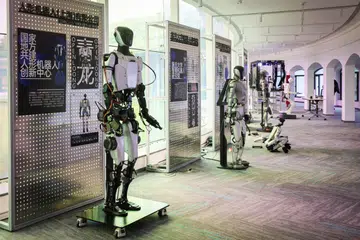
‘How many will survive?’: Bubble fears arise as China’s humanoid robotics face reality check

Philippine power giant First Gen rebuffs foreign offers, plans up to US$2.6 billion in expansion

