Asean Business logo
SPONSORED BYUOB logo

Malaysia’s first search fund Nusatu Capital targets SME acquisition

It aims to acquire by Q2 2026 a business that is based there, with annual revenue of more than RM30 million

Summarise
Paige Lim
Published Tue, Apr 8, 2025 · 07:00 AM
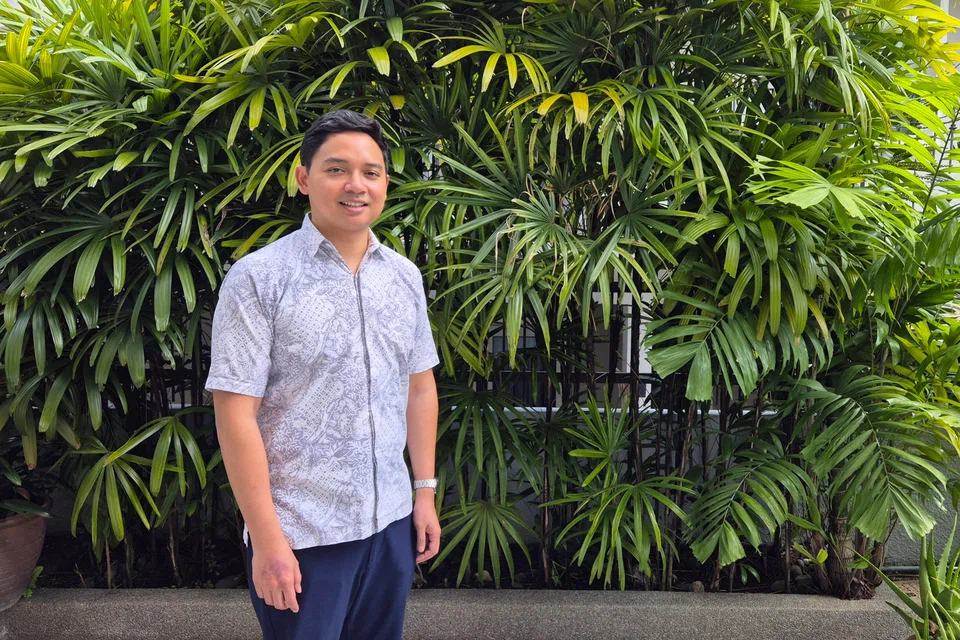
    • Nazrul Johari founded Malaysia's first search fund Nusatu Capital, having raised an undisclosed seven-figure ringgit sum in search capital from 17 investors.
    • Nazrul Johari founded Malaysia's first search fund Nusatu Capital, having raised an undisclosed seven-figure ringgit sum in search capital from 17 investors. PHOTO: NAZRUL JOHARI

    [SINGAPORE] Backed by local and international investors – and helmed by a seasoned corporate strategist – Nusatu Capital is billing itself as Malaysia’s first search fund, and is now a year into its mission to acquire and run a small and medium-sized enterprise (SME).

    “I haven’t come across anyone in Malaysia who has done this, so I took the opportunity to be a pioneer,” Kuala Lumpur-based founder Nazrul Johari told The Business Times in a virtual interview.

    A search fund is an investment vehicle that raises capital from investors to find, acquire and run an SME. It is often taught in Master of Business Administration (MBA) programmes as a form of entrepreneurship through acquisition – buying a business rather than starting one.


    Search funds have primarily been a North American phenomenon, but are gaining traction in Asia as more MBA graduates see them as a fast track to the CEO seat.

    Two search funds have been launched in Singapore since 2024. Others have been launched in Taiwan, mainland China and Vietnam since 2022.

    Consulting background

    Nazrul launched Nusatu Capital in April 2024, after raising an undisclosed seven-figure ringgit sum in “search capital” from 17 institutional and private investors.

    These include international search fund investors such as Ambit Partners, AIJ Global and Singapore-based Lighthaven, as well as Malaysian-based family offices and high net-worth individuals.

    He intends to find a good but possibly “stagnating” business and grow it further, as its new CEO.

    “A lot of SMEs have already reached a certain size, where the business owners are in their 60s, 70s, and are content to just sustain their day-to-day operations,” he said.

    “But there’s a lot of opportunity for digitalisation and professionalisation; there’s opportunity to think bigger about where and how the business can grow and scale.”

    He believes his experience at consulting giant McKinsey & Co will help him steer such changes.

    From 2013 to 2022, he was based in McKinsey’s Kuala Lumpur and New York offices, leading transformation projects across sectors from healthcare to retail. He later joined Amazon Web Services in Kuala Lumpur as head of sales strategy and operations for Malaysia.

    He considered starting his own business, but ultimately decided not to. “I felt my value-add was more in finding opportunities in existing businesses and transforming them.”

    In end-2023, he was introduced to search funds by ex-colleagues who learnt about them during their MBA studies in the US. Seeing the model as a good fit with his skill set, Nazrul left his day job in March 2024 to start Nusatu Capital.

    The initial capital will fund at least two years of search, including paying him a nominal salary and covering operating expenses. Once a deal is identified, he will raise whatever more is needed for acquisition, with his investors ready to deploy up to RM80 million (S$24.1 million).

    Nazrul aims to acquire an SME – either through a controlling stake or a full buyout – by the second quarter of 2026.

    Still searching

    A year into his search, he has spoken to more than 70 SME owners in Malaysia and made five offers, but with no takers so far.

    Most SME owners are unfamiliar with the concept of search funds, he said. They are more acquainted with the private equity model or a strategic buy, where the acquirer is another company, not an individual.

    “As a search fund, we are a new buyer in town,” he said. “It takes a while for them to see us as a credible buyer, that we have the funds to execute the transaction, and that they’ll be leaving the company in good hands.”

    Nazrul, 35, has also met owners who were reluctant to sell their business to an industry outsider, especially someone so young.

    Other difficulties include contacting potential sellers, as many SMEs in Malaysia do not have an online presence, he said. He looks for leads through cold-calling, e-mailing, engaging brokers and attending trade shows, and has hired interns to support him in his search.

    Still, he is hopeful that search funds will eventually be embraced as a solution for succession planning as ageing business owners look to retire.

    “We’re still in the early days for search funds, so people like me need to break down doors to figure out how this is going to work,” he said.

    “But if I can successfully acquire an SME, hopefully that sparks more interest in entrepreneurship through acquisition in Malaysia.”

    He hopes to strike a deal between RM30 million and RM100 million, with the transaction to be funded via a mix of debt and equity.

    His ideal target is a business located in Klang Valley, Penang, Johor or East Malaysia with a stable and annual recurring revenue of more than RM30 million, as well as an earnings before interest, taxes, depreciation and amortisation margin of more than 15 per cent.

    He prefers a company that offers business-to-business services – such as facilities management or logistics – as these tend to have higher levels of customer stickiness.

    What is most key is the seller’s motivation, he noted, adding: “We want a seller who’s motivated to sell their business, who is open to working with someone for a transition and to preserve their legacy.”

    According to the Stanford Graduate School of Business 2024 Search Fund Study, search funds generated an internal rate of return of 35.1 per cent as at end-2023. Nazrul is working towards a similar target, though he said his investment time horizon is flexible.