Asean Business logo
SPONSORED BYUOB logo

Malaysia’s industrial production slips 2.2% in June as manufacturing and mining output decline

Tan Ai Leng
Published Tue, Aug 8, 2023 · 05:25 PM
    • The factory output figure reversed the growth of 4.7% in May. It was also below the forecast of a 1% decline by a group of 12 economists in a recent Reuters poll.
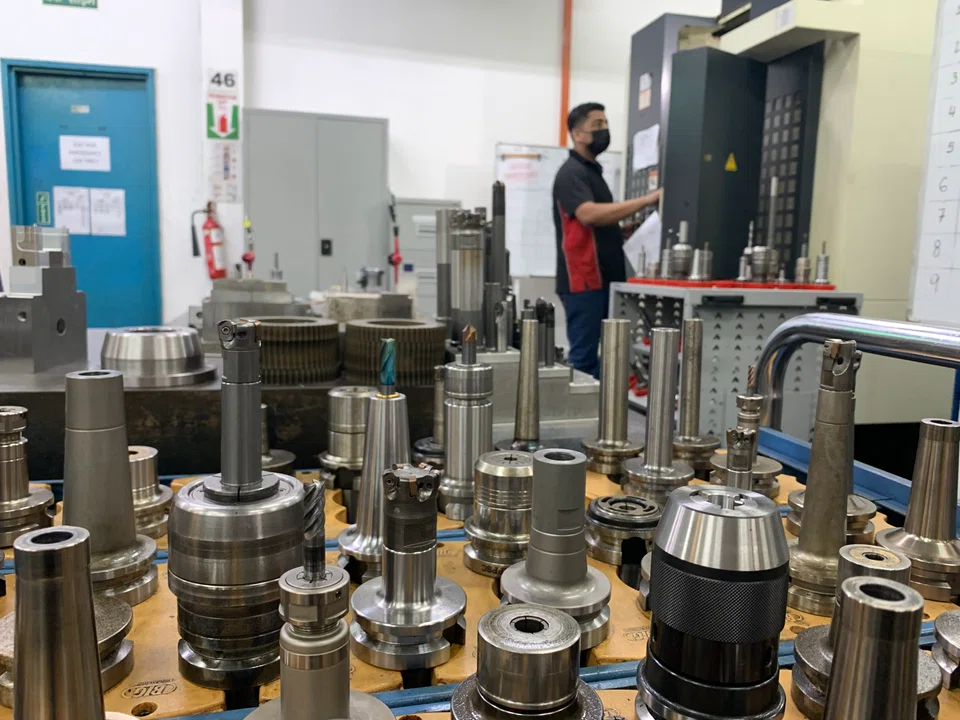
    • The factory output figure reversed the growth of 4.7% in May. It was also below the forecast of a 1% decline by a group of 12 economists in a recent Reuters poll. PHOTO: TAN AI LENG, BT

    [KUALA LUMPUR] Malaysia’s Industrial Production Index (IPI) fell 2.2 per cent year on year in June due to contractions in the manufacturing and mining sectors, the Department of Statistics Malaysia (DOSM) said on Tuesday (Aug 8).

    The factory output figure reversed the growth of 4.7 per cent in May. It was also below the forecast of a 1 per cent decline by a group of 12 economists in a recent Reuters poll.

    In June, the output from the manufacturing sector fell 1.6 per cent year on year, from 5.1 per cent growth in the previous month, mainly due to declining production of petroleum, chemical, rubber and plastic as well as electrical and electronics products.

    Mining sector output dropped by 6.4 per cent in June, weighed down by falling demand for natural gas. The decline in mining output also came on the back of drops in the crude oil and condensate indices, which fell 7.8 per cent and 4.5 per cent, respectively.

    As production activities slowed down, the electricity sector grew modestly at 2.8 per cent year on year in June, slower than 5.9 per cent in May.

    For the second quarter of 2023, Malaysia’s IPI saw a marginal decline of 0.3 per cent from a year earlier. From January to June, the country’s industrial production increased 1.3 per cent year on year.

    In view of declining industrial production, economists anticipate Malaysia’s economic growth to moderate in the coming months as export orders grow slower.

    MIDF Research said that manufacturers were more cautious on production planning due to concerns over near-term demand outlook and the commodity price correction has reduced the urgency to make purchases.

    In a note on Tuesday, MIDF said that the recent Purchasing Managers Index also showed that businesses scaled back production and hirings in response to softening demand. “If production continues to decline, this will affect the outlook for both energy demand and electricity output.”

    Barclays’ senior regional economist Brian Tan said that the softening factory output in June reflects a normalisation following the post-holiday surge in May, but the country’s industrial production remains relatively resilient compared with other countries in emerging Asia.

    On quarterly comparison, Tan noted that the decline of IPI in Q2 2023 was partly due to unfavourable base effects reflecting the post-pandemic reopening last year.

    “We estimate the gross domestic product (GDP) growth to moderate to 2.9 per cent from 5.6 per cent in the first quarter, largely due to unfavourable base effects,” he pointed out.

    Bank Negara Malaysia will announce Malaysia’s second-quarter GDP next Friday (Aug 18). The central bank expects the country to achieve a growth ranging between 4 per cent and 5 per cent this year.

    DOSM chief statistician Mohd Uzir Mahidin said that the declining export demand is the main reason for the weaker performance in the manufacturing sector.

    The factory output of the export-based industries declined by 3.9 per cent year on year in June, due to lower production of coke and refined petroleum, electronics and rubber products.

    “Nevertheless, the domestic-oriented industries continued to expand at a moderate pace of 4.1 per cent in June, contributed by the manufacture of fabricated metal, food processing and basic metal products,” he added.