Malaysia’s inflation eases to 3.4% in March on falling petrol prices
 Add BT as a preferred source
Tan Ai Leng
DeeperDive is a beta AI feature. Refer to full articles for the facts.
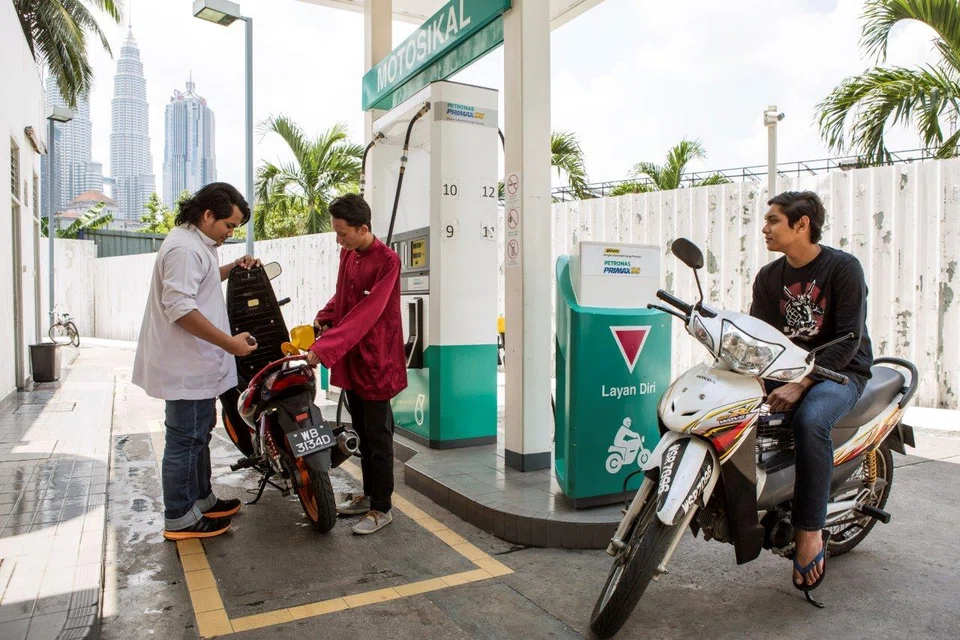
[KUALA LUMPUR] Malaysia’s inflation rate eased to 3.4 per cent in March, down slightly from 3.7 per cent in February, largely due to a decrease in the price of premium grade petrol.
The March figure was also just below the 3.6 per cent growth forecast by a group of 20 economists in a recent Reuters poll.
The Department of Statistics Malaysia (DOSM) said on Thursday (Apr 20) that headline inflation decelerated for the seventh straight month to reach a nine-month low.
Explaining the slower growth, the department said a decrease in petrol prices helped ease inflation in the transport segment to 2.4 per cent, from 3.7 per cent in February.
In a note, MIDF Research pointed out that fuel prices declined for the first time in two years, with a year-on-year decrease of 9 per cent, in tandem with the normalisation of commodity prices.
“We believe the government will maintain the status quo for the current fuel-subsidy mechanism, at least for 2023. Hence, we foresee fuel inflation to stay on a deceleration path and reduce overall inflationary pressure,” it said.
Navigate Asia in
a new global order
Get the insights delivered to your inbox.
The price growth in over half of the consumer goods and services segments moderated in March, as the restaurants and hotels sector recorded a slower increase of 7.2 per cent, down from 7.4 per cent in February. Growth in the food and non-alcoholic beverages sector also slowed slightly to 6.9 per cent in March, from 7 per cent the month before.
Prices of recreation services and culture, health and education continued to climb in March, registering growth of 1.9 per cent (from 1.7 per cent in February), 2.2 per cent (from 1.8 per cent) and 1.7 per cent (from 1.6 per cent), respectively.
For the first quarter as a whole, Malaysia’s inflation rose 3.6 per cent, compared with the same quarter in 2022. On a quarterly basis, inflation grew 0.6 per cent in the first three months, driven by fluctuating petrol prices and the higher ceiling price of chickens.


Core inflation, which excludes volatile items and those with government-administered prices, grew slower at 3.8 per cent, from 3.9 per cent in February.
In March, prices rose for 455 out of 552 – or about 82.4 per cent – of the items in the index. Among these, the prices of 43 items went up by more than 10 per cent.
Some economists whom The Business Times spoke to were not surprised with the moderating inflation growth, although they noted the increase was lower than their initial projections.
In view of the elevated core inflation, Barclays senior regional economist Brian Tan expects Malaysia’s core inflation to average at 3 per cent this year.
He noted that the sticky core inflation will trigger another 25-basis-point rate hike in July, taking the country’s overnight policy rate (OPR) to 3 per cent (from the current 2.75 per cent).
“Bank Negara governor Nor Shamsiah Mohd Yunus has delivered a relatively hawkish comment on inflation, highlighting the central bank’s discomfort over the policy rate which has been remaining too low for too long,” he said in a report on Thursday.
UOB economists Julia Goh and Loke Siew Ting, meanwhile, said that Malaysia’s core inflation has surpassed headline inflation for a sixth consecutive month, and this implied resilient domestic demand.
They expect the central bank to raise rates as early as May and leave it unchanged for the rest of the year, in anticipation of a global rate hike starting in mid-2023 and rising recession risks in advanced economies.
Compared with other countries in the Asia-Pacific region, Malaysia’s inflation rate remained lower than other markets, such as the Philippines (7.6 per cent), Indonesia (5 per cent) and South Korea (4.2 per cent). Beyond Asia, Malaysia’s inflation was also lower than the eurozone (6.9 per cent) and the United States (5 per cent).
Decoding Asia newsletter: your guide to navigating Asia in a new global order. Sign up here to get Decoding Asia newsletter. Delivered to your inbox. Free.
Copyright SPH Media. All rights reserved.