Asean Business logo
SPONSORED BYUOB logo

Malaysia’s inflation growth slows to 1.5% in November, beating economists’ forecast

Tan Ai Leng
Published Fri, Dec 22, 2023 · 05:16 PM
    • Malaysia’s year-on-year inflation growth has stayed below 2 per cent since September, due to a higher base last year and slower growth in food prices.
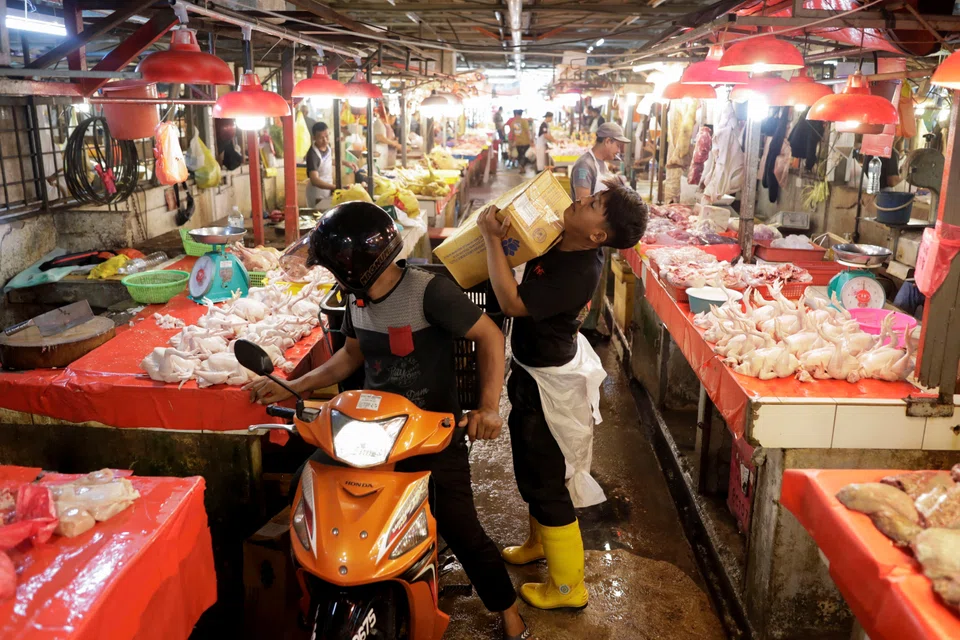
    • Malaysia’s year-on-year inflation growth has stayed below 2 per cent since September, due to a higher base last year and slower growth in food prices. PHOTO: REUTERS

    [KUALA LUMPUR] Malaysia’s inflation growth continued easing for the third consecutive month in November, with headline inflation growing slower at 1.5 per cent from a year earlier, a Department of Statistics Malaysia (DOSM) report indicated on Friday (Dec 22).

    This was slower than the 1.7 per cent forecast by 17 economists in a recent Reuters poll.

    Malaysia’s year-on-year (yoy) inflation growth stayed below 2 per cent since September, due to a higher base last year and slower growth in food prices. Last month, inflation expanded by 1.8 per cent in the country.


    The yoy growth of core inflation moderated to 2 per cent in November, from the previous month’s 2.4 per cent.

    As inflation growth continues to decelerate, economists believe this will provide a window of opportunity for the government to implement targeted subsidies, particularly concerning fuel.

    MIDF Research anticipates the targeted fuel subsidy will be rolled out as early as May next year, through a managed-float price mechanism for RON95 petrol and cash handouts to lower-income groups.

    Maybank Investment Bank forecasts Malaysia inflation to reach 2.6 per cent this year, and further accelerate to 3 per cent next year due to the adjustments in fuel subsidy.

    Bank Negara expects the inflation rate to average between 2.1 and 3.6 per cent in 2024.

    Alexander Chia, regional head of regional equity research at RHB Investment Bank, said initiatives to reduce subsidies will have implications for inflation and may crimp disposable incomes.

    “We believe that the overnight policy rate (OPR) will likely be maintained at 3 per cent for 2023. No OPR cuts or hikes are expected at this juncture,” he said in a report.

    The DOSM report indicated that 381 out of 552 – or 69 per cent – of items in the consumer price index (CPI) experienced price increases in November. Among these, the prices of 12 items went up by more than 10 per cent while the prices of 123 items declined.

    Prices of food and non-alcoholic beverages, which constitute 29.5 per cent of the total CPI, recorded a slower increase of 2.6 per cent in November from a year earlier. Prices of housing, water, electricity, gas and other fuels – contributing 23.8 per cent of the total CPI – rose 1.7 per cent.

    From January to November, Malaysia’s inflation increased 2.5 per cent, compared with 3.4 per cent for the same period last year.

    Overall, Malaysia’s inflation rate in November was lower than in several Asia-Pacific countries. The Philippines had one of the higher prints in the region at 4.1 per cent. South Korea was at 3.3 per cent, and Indonesia stood at 2.9 per cent.

    The eurozone experienced inflation of 2.4 per cent, and US inflation stood at 3.1 per cent in November.