



Malaysia’s Khazanah to steer more capital to power grids and chip firms, its chief says in Davos
 Add BT as a preferred source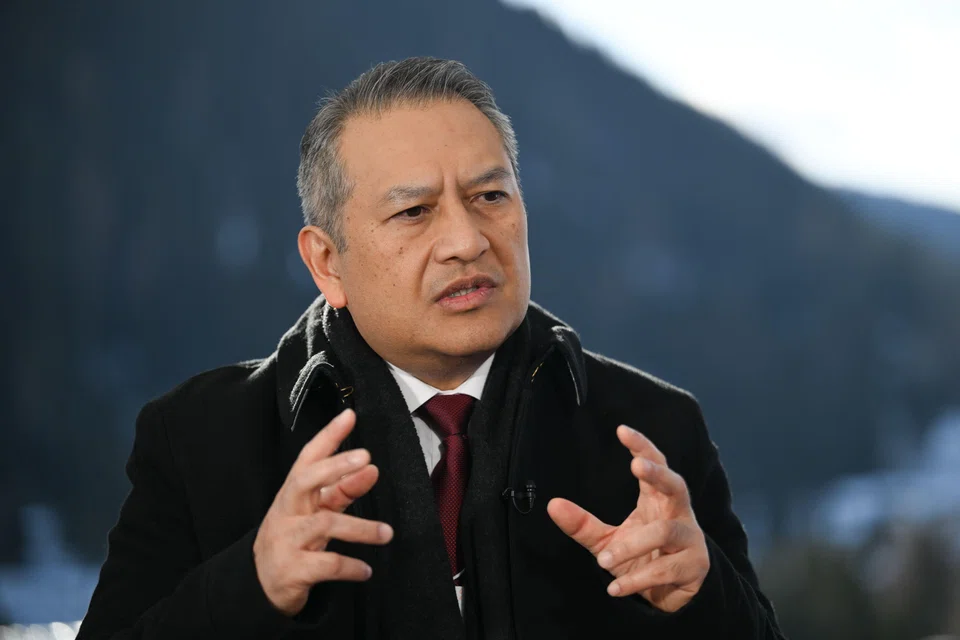
DeeperDive is a beta AI feature. Refer to full articles for the facts.
[DAVOS] Malaysia’s sovereign wealth fund Khazanah Nasional plans to channel more capital into strengthening the power system and supporting local semiconductor firms as artificial intelligence (AI) drives the next investment cycle, said its managing director Amirul Feisal Wan Zahir.
Surging AI computing needs were reshaping what is “investable” in the AI boom, with energy supply and grid resilience being central to competitiveness, he said in an interview on Monday (Jan 19) at the World Economic Forum’s annual meeting in Davos.
“What it does need is computing power, and what computing power means energy. So that’s when we think about capturing some of that growth,” Amirul Feisal told the Reuters Global Markets Forum.
While global investors have been pouring money into data centres, he said Khazanah would instead focus on infrastructure.
“We are really looking at the energy part, so again looking at grid resilience,” he said, adding that cheap and reliable power, including renewables, would be critical as AI infrastructure scales up.
Semiconductors, not data centres
The firm was also “seeing how we can help fund some of the capital requirements of our semiconductor players to move up the value chain to advanced packaging”, Amirul Feisal said.
Navigate Asia in
a new global order
Get the insights delivered to your inbox.
Malaysia has been rolling out industrial policies aimed at strengthening its role in the global chip supply chain.
Prime Minister Anwar Ibrahim had said in May 2024 the government aims to attract at least RM500 billion (S$158.6 billion) in semiconductor investment, supported by at least US$5.3 billion in fiscal incentives, and that it plans to build up local capabilities in chip design and advanced packaging.
Khazanah invests in Malaysia and internationally across markets, asset classes, sectors and geographies, and counts the country’s second-largest lender CIMB Group and national carrier Malaysia Aviation Group among its portfolio.



Its net asset value rose 22 per cent to RM103.6 billion in 2024, from RM84.8 billion a year earlier.
Amirul Feisal said Khazanah expects its international portfolio share to rise gradually over time.
Asked about the ringgit, he said there was “room” for the currency to strengthen depending on the US dollar, citing uncertainty over the path of US interest rates, although he did not specify a level. REUTERS
Decoding Asia newsletter: your guide to navigating Asia in a new global order. Sign up here to get Decoding Asia newsletter. Delivered to your inbox. Free.
Share with us your feedback on BT's products and services
TRENDING NOW
‘Boring’ is the new black: The stars are aligning for a Singapore stock market revival

Near sell-out launches in March boost developer sales to 1,300 units after four slow months

China pips the US if Asean is forced to choose, but analysts warn against reading it like a sports result

Genting Singapore’s Lim Kok Thay receives S$7.5 million pay package for FY2025

