



With Malaysia’s monsoon season on the way, renewed calls for greater flood insurance coverage

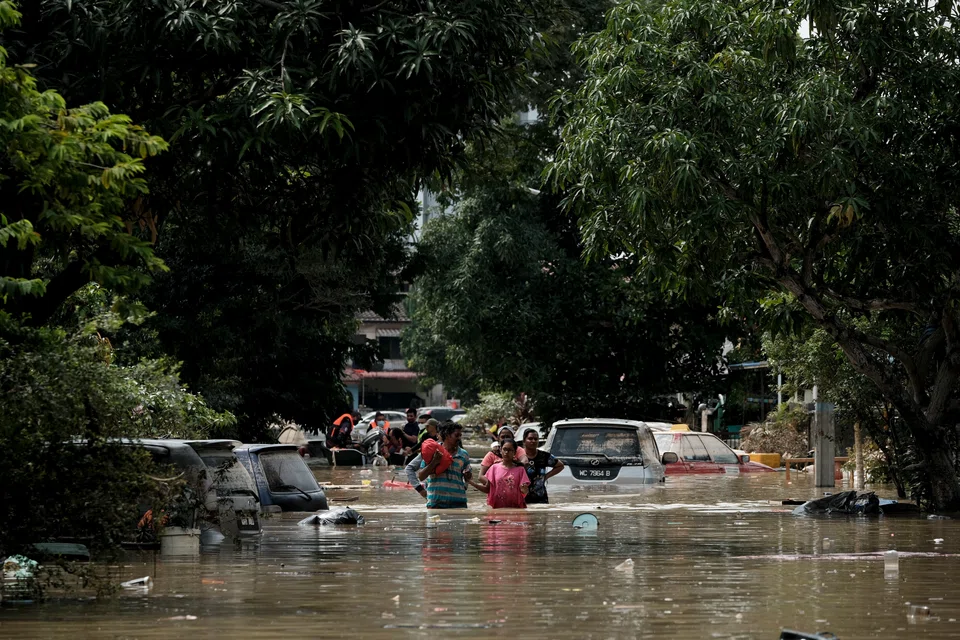
[KUALA LUMPUR] With Malaysia’s annual monsoon season fast approaching, there is a growing debate about whether companies and individuals have insured themselves against flooding – the country’s most severe and frequent natural disaster.
The heavy downpour and floods typically take place from October to March each year, with those staying in the east of the country being affected the most.
But even states such as Johor in the south are experiencing record levels of rainfall, which have raised fears of flooding in some areas. Earlier this year, over four days from Feb 28 to Mar 3, the state reported a record 731mm of rainfall – well above the previous four-day high of 621mm in 1991.
The country’s worst floods occur roughly once every three years, said Malaysian Re – the largest reinsurer in Malaysia – in its latest annual report.
The costliest flood in Malaysia’s history was in 2021, when four straight days of rainfall in December caused economic losses of up to RM6.5 billion (S$1.9 billion), with insurers forking out an estimated RM2 billion in claims.
That year, the country’s public assets and infrastructure recorded the greatest losses at RM2 billion, followed by housing (RM1.6 billion) and vehicles (RM1 billion). Collectively, the agriculture and manufacturing sectors accounted for nearly RM1.5 billion in losses.
The 2022 floods were less serious, with the overall losses amounting to around RM622.4 million according to official estimates. The bulk of the damage is usually in states such as Selangor, Pahang and the Federal Territory of Kuala Lumpur, which have many manufacturing sites.
While it is not possible to completely prevent flooding from causing damage to homes and businesses, industry watchers said there should be more effort to alleviate the impact and reduce losses.
According to Malaysian Re, about five million Malaysians live in flood-prone areas. About a quarter of homes and just 5 per cent of all vehicles in Malaysia were insured against flood damage in 2021.
Another insurer, Zurich Malaysia, conducted a survey last year and found that 74 per cent of homeowners admitted that they did not have coverage for their properties against floods.
Ong Kian Ming, a former member of parliament who was involved in the 2021 rescue efforts in Selangor, called for a national flood insurance programme for low-income families, with the cost of the premiums borne by the government.
Ong, who is now an academic at Taylor’s University, recalled how he was taken aback when he arrived at one of the most affected areas in Selangor and saw rows of double-storey houses almost submerged.
“The situation was horrible in Taman Sri Muda (a residential and commercial area located in Shah Alam). Houses were underwater, victims who were trapped had no way to escape and were on the rooftops waiting to be rescued,” he remembered.
Using kayaks, Ong and his team made about 15 trips over a four-hour period and managed to rescue about 40 people.
Lee Nai Jia, the head of PropertyGuru’s real-estate intelligence unit, said that flood insurance should be included in all mortgage loans.
“It’s essential that banks take flood risks into account when determining the loan amounts for borrowers. In the event of borrower default during major floods, the repercussions could exert significant strain on the financial system,” he noted.
He added that there is “compelling evidence” that climate change and flood risks have resulted in a negative impact on Malaysia’s home prices over the years.
He also cited data showing how, from 2018 to 2020, the median price of residential properties deemed to be at a high risk of flooding was “consistently lower” than those with a lower risk.
Property developers also face the risk of overpricing their land acquisitions, particularly if they buy during the non-monsoon period and use transaction prices from the flooding season as a benchmark.
He suggested that developers incorporate flood mitigation strategies in their planning, to safeguard their investments and enhance the long-term value of their properties. Such measures range from climate risk modelling when selecting sites to the integration of flood-resilient features in the property designs.
In South-east Asia, Malaysia is not the only country to struggle with flooding problems, said Lee, with others including Singapore, Thailand, Vietnam and Indonesia all facing similar challenges and making considerable investments to minimise flood risks.
TRENDING NOW

First Resources blames El Nino, outside fires for Kalimantan hotspots amid haze scrutiny

High Court rules against Julius Baer’s Singapore trust arm in US$50 million family trust dispute
Singapore key exports jump by higher-than-expected 68.4% in September, led by non-electronics

MSCI proposes downgrading Indonesia to standalone market status

