



Malaysia’s new KL-JB train tickets snapped up ahead of debut; frequency to double in January
‘Further increases’ will follow in the coming months, says the country’s Transport Minister Anthony Loke

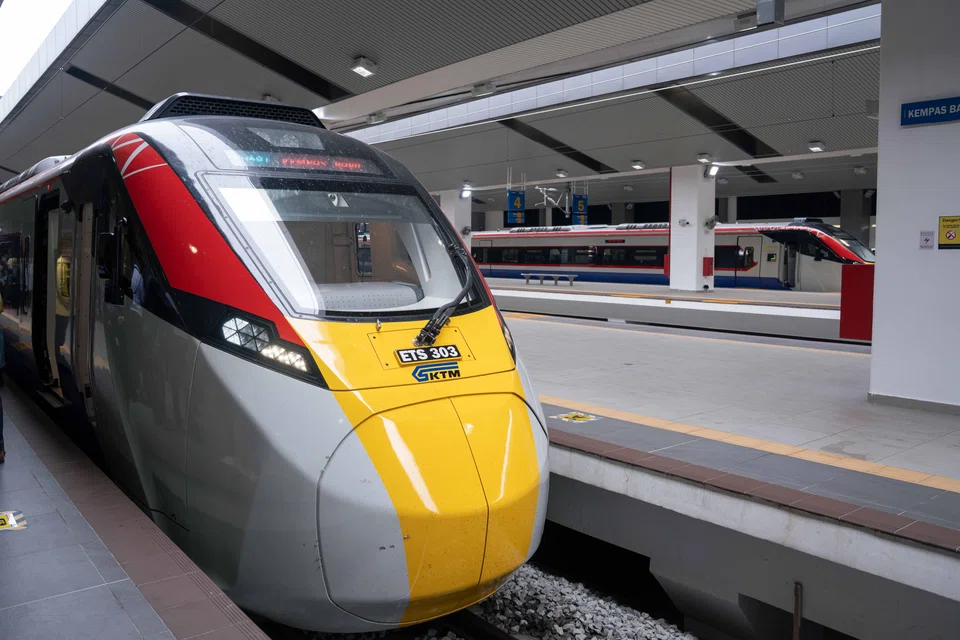
[KUALA LUMPUR] The Kuala Lumpur-Johor Bahru Electric Train Service (ETS) has yet to begin operations, but demand is already overwhelming, with most northbound tickets snapped up ahead of the first departure on Friday (Dec 12).
Tickets went on sale at midnight on Tuesday. Within 24 hours, seats for the inaugural services had sold out, as Malaysians and Singapore-based travellers rushed to secure spots on the faster electrified route.
One-way fares begin at RM82 (S$27), with tickets available through May 2026 via Malaysia’s national railway operator Keretapi Tanah Melayu (KTM) kiosk, website and the Kits Style app.
KTM’s 30 per cent launch promotion discount, for travel from Friday to Jan 11, was fully redeemed on the first day.
Checks on KTM’s ticketing system showed only a few seats for persons with disabilities remaining on the two northbound services scheduled for launch day. Saturday morning’s service has sold out, while seats for Christmas Day and the eve of Chinese New Year are running low.
KTM said the first 8.40 am departure from JB Sentral on Friday has 409 passengers booked. Of these, 115 are non-Malaysians, The Straits Times reported, signalling strong cross-border interest.
Malaysian Minister of Transport Anthony Loke said the KL-JB ETS frequency will be increased to four trips a day from January 2026, up from the current two.
Currently, KTM operates two daily KL-JB ETS services in each direction: southbound from KL Sentral at 7.55 am and 5.35 pm, and northbound from JB Sentral at 8.04 am and 4.20 pm.
“We will increase the train frequencies to four trips next month, with further increases in the following months,” said Loke at the launch of the Gemas-Johor Bahru Electrified Double-Tracking Project (EDTP) at Kempas Baru station on Thursday.
SEE ALSO





The new ETS service marks the completion of the 192 km EDTP: a major upgrade bringing electric intercity rail to Malaysia’s southernmost city for the first time.
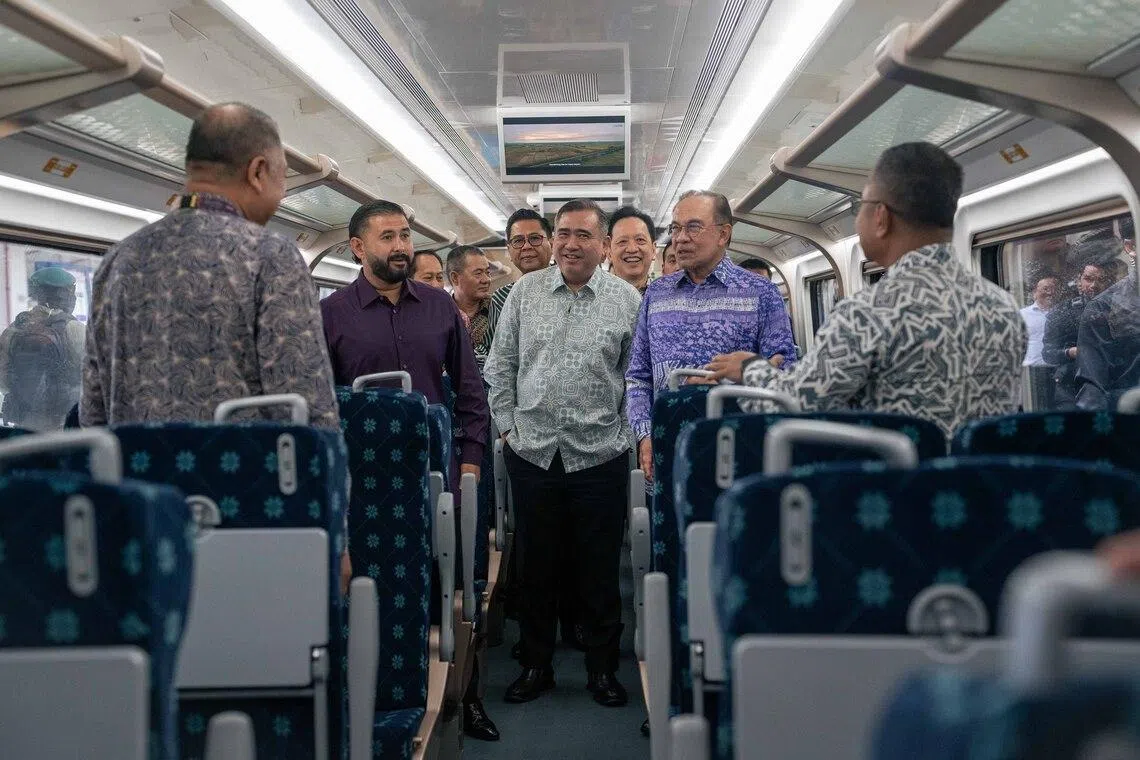
The Regent of Johor, Tunku Ismail Sultan Ibrahim, and Malaysian Prime Minister Anwar Ibrahim officiated at the launch event.
PM Anwar said investments in the Johor-Singapore Special Economic Zone (JS-SEZ) could reach RM100 billion.
“This RM100 billion record has already surpassed the performance of Penang and Selangor,” he said.
The ETS, he noted, represents “an additional leap” for a state already recognised for strong inflows.
Earlier this year, Johor Chief Minister Onn Hafiz Ghazi set an ambitious RM100 billion investment target for the state. By June, he revealed that Johor had already secured RM30.1 billion in approved investments in the first quarter, leaving about RM70 billion needed to reach the year-end goal.
The EDTP spans 192 km and includes 11 new stations: Segamat, Genuang, Labis, Bekok, Paloh, Kluang, Mengkibol, Rengam, Layang-Layang, Kulai and Kempas Baru.
The KL-JB ETS now cuts travel time between Kuala Lumpur and Johor Bahru to about 4 hours and 20 minutes, compared with five to seven hours by car or existing diesel services.
The roll-out caps a multi-year southern expansion. Previously, ETS trains stopped in Gemas. KTM extended the service to Segamat on Mar 15, then to Kluang on Aug 30, with the ETS3 line attracting more than 10,000 passengers in its first month and prompting the addition of extra weekend trains.
The new six-coach ETS trains seat 312, offering amenities such as power sockets, toilets and a prayer room. Business-class features include wider seats, complimentary meals, personal entertainment screens and in-seat ordering.
The train effect
Industry observers say the electrified link is poised to boost tourism, improve mobility and spur investment across the Johor-Singapore economic region.
OCBC senior Asean economist Lavanya Venkateswaran said the ETS will enhance domestic connectivity while benefiting Singapore. The rail link, which includes 16 stops, is more cost-effective than flying and provides a crucial boost to domestic tourism.
“Crucially, the ETS serves as a vital piece of the ‘last mile’ connectivity framework essential for Johor’s infrastructure, directly bolstering the prospects of the JS-SEZ,” she told The Business Times.
By offering an alternative, affordable link between Kuala Lumpur and Johor Bahru, the train service also allows for greater migration into the JS-SEZ, reducing potential labour market constraints, she added.
Transport consultant Wan Agyl Wan Hassan said the ETS changes the fundamentals of travel between the two cities. “For the first time, the journey becomes predictable,” he said.
He noted that travellers previously faced either long highway congestion or the hassle of connecting airport transfers. With electrified rail now reaching Johor Bahru, passengers get a four-hour to five-hour trip that starts and ends in the heart of both cities.
He added that business travellers may find the service especially compelling. “A flight may be quicker in the air, but the day is still lost to queues and transfers,” he noted. “On the ETS, travellers can work for four uninterrupted hours; that changes how companies plan day trips and meetings.”
Bank Muamalat Malaysia chief economist Mohd Afzanizam Abdul Rashid said the ETS expansion broadens travel choices while supporting environmental and local economic benefits.
“Greater use of the ETS can help reduce carbon emissions by shifting travellers away from road transport… Stations along the corridor may also benefit through increased foot traffic, stronger demand for small businesses, better logistics connectivity and even property development,” he said.
Next station, Perlis?
The EDTP began in 2017 and was originally slated for completion in 2021, but the Covid-19 pandemic and land acquisition challenges delayed the project by more than three years.
With the full stretch now open, electrified rail travel is possible from Padang Besar in Perlis to Johor Bahru.
Loke said the completed double-track system aims to enhance national rail capacity, improve mobility and strengthen regional logistics.
With ETS speeds of up to 140 kmh, “the journey from Johor Bahru to Kuala Lumpur Sentral will only take around 4½ hours”, he said, adding that travel from Johor Bahru to Padang Besar will take about 10½ hours.
The project, he noted, will also “generate job opportunities in surrounding areas and boost the local economy by making Johor Bahru a key logistics hub”.
Decoding Asia newsletter: your guide to navigating Asia in a new global order. Sign up here to get Decoding Asia newsletter. Delivered to your inbox. Free.
Copyright SPH Media. All rights reserved.






