Malaysia’s pre-war shophouses seeing renewed interest as collectors go on the hunt
Tan Ai Leng
[KUALA LUMPUR] Property consultants in Malaysia say there are stirrings in the market for pre-war buildings as listings have gone up in tandem with the ongoing rebound of the tourism industry.
While the number of transactions cooled slightly in recent years, largely due to the pandemic and lockdowns, consultants told The Business Times (BT) that this niche market continues to retain plenty of interest and attention from investors.
There are a total of 24,459 pre-war shophouses in Malaysia, with Perak and Penang having the most at 5,853 and 5,064 units respectively, according to latest data from the National Property Information Centre.
Categorised as commercial properties, these shops make up around 4.5 per cent of all commercial properties in Malaysia. The data did not segregate the transactions of this segment, except for deals that fetched a value of over RM10 million (S$2.89 million).
Two pre-war buildings in Penang were sold last year, with a total transaction value of RM60.6 million. One of the deals – a building with a land area of 6,311 square metres – changed hands for RM50.3 million.
YY Lau, the country head of JLL Property Services (Malaysia), said pre-war shophouses have continued to attract investors’ interest in recent years. More listings have gone up on various platforms, with Penang, Kuala Lumpur and Melaka the top three cities as these are among the most-visited by tourists.
“These properties are drawing interest from local and international investors as they have higher intrinsic value for their unique architecture, limited supply, historical value and good location,” she told BT.
Unlike in conventional property investment, buyers of pre-war or heritage buildings are typically collectors who appreciate the historical value of such buildings, said Low Khee Wah, the director of Henry Butcher Malaysia.
“Given the historical value, buyers have plans to use these buildings for tourism purposes, such as turning them into food and beverage outlets, boutique hotels, art galleries and retail shops,” he added.
In terms of rental, he said there are no fixed guidelines on the asking amounts. “It all depends on willing takers of the units for their own business,” he said.
In Melaka, where there is a total of 2,094 pre-war shophouses, Low observed that pre-war shophouses or heritage buildings are located within the conservation zone of the city centre, such as the famous Jonker Walk, Jalan Tun Tan Cheng Lock and Jalan Tukang Emas.
The prices of pre-war buildings in Melaka’s city centre went above RM1,800 per square feet (psf) in 2019. During the height of the pandemic, however, prices fell nearly 30 per cent to RM1,300 psf, said Low.
But with renewed confidence in the market after the pandemic and investor sentiment remaining strong, he expects prices to rebound soon.
JLL’s Lau noted that current prices for pre-war buildings in desirable locations in Malaysia range from RM800 to RM1,000 psf.
Many pre-war properties require re-planning in order to be used, and the refurbishment costs are usually higher than constructing a new property.
She observed that more and more investors from Hong Kong and Singapore have expressed interest in investing in pre-war shophouses in Malaysia, as they are familiar with successful examples of how heritage buildings have been refurbished or retrofitted in their countries.
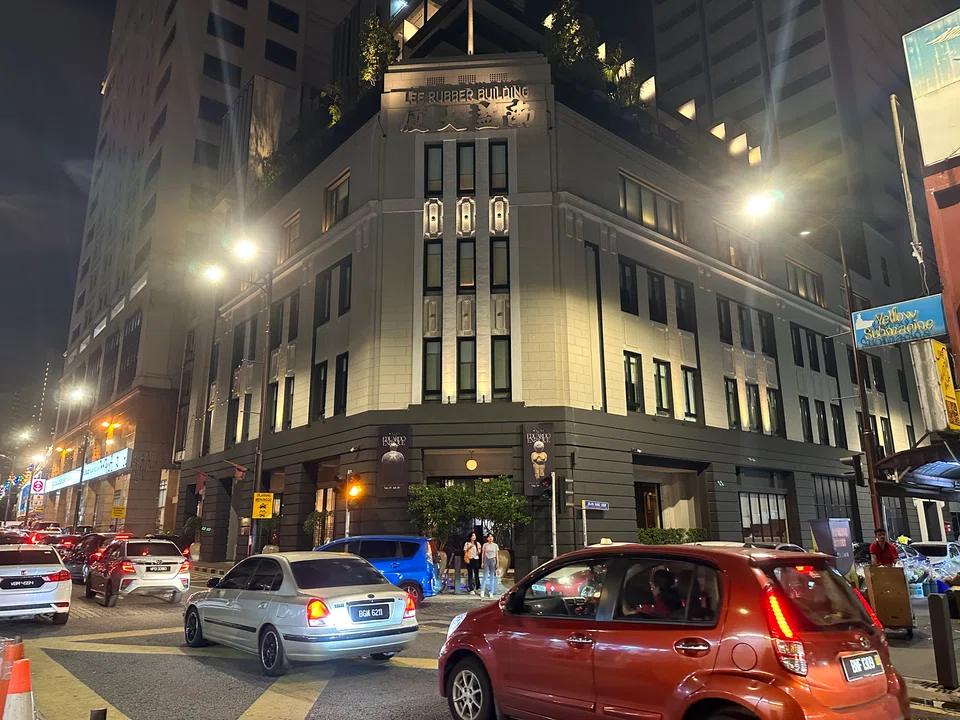
In Kuala Lumpur, Singapore-based Arcc Holdings recently unveiled the Else boutique hotel near Petaling Street last October.
The 49-room hotel was retrofitted from a 92-year-old pre-war shophouse named Lee Rubber Building. The five-storey building was sold in January 2016 for RM29 million.
Else is among the latest refurbished and retrofitted pre-war buildings in Malaysia, said Lau, noting that there are several such buildings in Kuala Lumpur and Penang that are now being retrofitted to become retail spaces or hotels.
The distinguished architecture of the historical buildings could evoke a sense of prestige and value that is attached to collectibles and antiques, she said.
“A cafe, retail unit or a hotel located in a historical building will attract discerning patrons due to its uniqueness. Therefore, historical mansions may achieve higher revenue compared to other common assets,” she said.
TRENDING NOW
Fed hike throws Singapore banks a margin lifeline; UOB most likely to feel impact
He built the Vingroup empire. Now South-east Asia’s richest man is handing some key roles to his sons
Real-estate veteran Desmond Sim quits from CEO roles at Realion, ETC
Chagee, Mixue and Luckin won the market. Sustaining their edge is the harder part