



Malaysia’s record budget aims to expand tax base, reduce subsidies
PM Anwar focuses on lifting economic growth as he announces largest-ever budget spending of RM421 billion

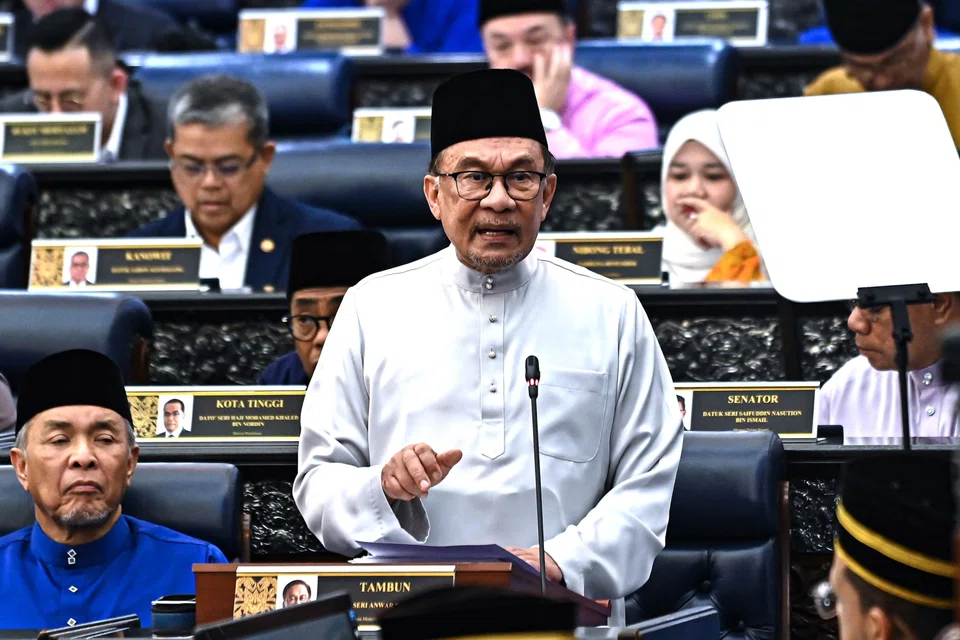
[KUALA LUMPUR] MALAYSIAN Prime Minister Anwar Ibrahim on Friday (Oct 18) announced the country’s largest budget of RM421 billion (S$128.3 billion) for 2025, focusing on boosting economic growth while continuing to cut subsidies to reduce the fiscal deficit.
Anwar, who is also the finance minister, said that RM335 billion will be used for operating expenditure, and RM86 billion for development spending.
The spending plan is higher than the previous budget of RM393.8 billion.
The 77-year-old premier, delivering the third budget since he took office, stressed that no major infrastructure development will be initiated next year, as the current focus will be on enhancing public infrastructure and facilities that support industrial development across all states.
Anwar said that he expects gross domestic product to grow between 4.8 and 5.3 per cent this year, with GDP growth in 2025 predicted to be between 4.5 and 5.5 per cent.
This is within the World Bank’s latest projection of 4.9 per cent for 2025, which was revised from 4.3 per cent previously.
Anwar added that better-than-expected economic performance, robust foreign direct investment, and a stronger ringgit reflect heightened investor confidence, all of which will support Malaysia’s growth.
The government’s revenue is expected to increase by 5.5 per cent to RM340 billion in 2025, while the fiscal deficit is projected to fall to 3.8 per cent of GDP, from an estimated 4.3 per cent in 2024. The country’s total debt and liabilities stood at RM1.2 trillion, which is 64 per cent of the country’s GDP.
Broader tax base
While acknowledging that Malaysia has the lowest tax revenue compared with its regional peers, Anwar noted that the government is looking at increasing the tax revenue by expanding the scope of the country’s sales and service tax (SST), starting in May next year.
Simultaneously, the government will be rolling out a targeted subsidy plan for the widely used RON 95 fuel, starting in the middle of next year.
The Malaysian government has spent RM20 billion a year on blanket subsidies for RON 95 petrol, which unfairly benefited the top per cent of high-income earners, including foreigners.
By implementing a targeted fuel subsidy, stressed Anwar, 85 per cent of the population would still be able to enjoy the subsidised fuel while the government could save up to RM8 billion.
He also emphasised that, while deciding to broaden the scope of the SST, essential items will be excluded, but imported non-essential goods, such as salmon and avocado, will be taxed.
In addition, the SST will include commercial financial services that charge fees on business-to-business transactions.
The new budget also included plans to introduce a progressive tax of 2 per cent on dividend payouts exceeding RM100,000, starting next year.
“These measures aim to broaden the tax base by collecting revenue from avid stock investors, while exempting dividends from statutory bodies and investment entities such as the Employees Provident Fund,” he added.
Towards a greener future
Under the energy-transition agenda, the allocation for the National Energy Transition Facilitation Fund has increased to RM300 million, from RM100 million in 2024. Additionally, the Green Technology Financing Scheme will continue to 2026 with a funding of RM1 billion.
The government will implement a carbon tax on the iron, steel and energy industries by 2026 to promote the adoption of low-carbon technologies.
Anwar said that the government plans to offer logistics companies engaged in smart logistics activities a 60 per cent investment tax allowance over the next five years to enhance industry capacity through the adoption of Industry 4.0 technology.
Attracting investments
The government also plans to implement a new investment incentive framework in the third quarter of next year to enhance the resilience of supply chains.
Anwar noted that the framework will include tax cuts for three years for multinational enterprises (MNEs) that spend up to RM2 million in manufacturing expenses, as well as tax reductions for joint investments between MNEs and local suppliers.
Additionally, the framework will feature outcome-based tax incentives specifically for local suppliers.
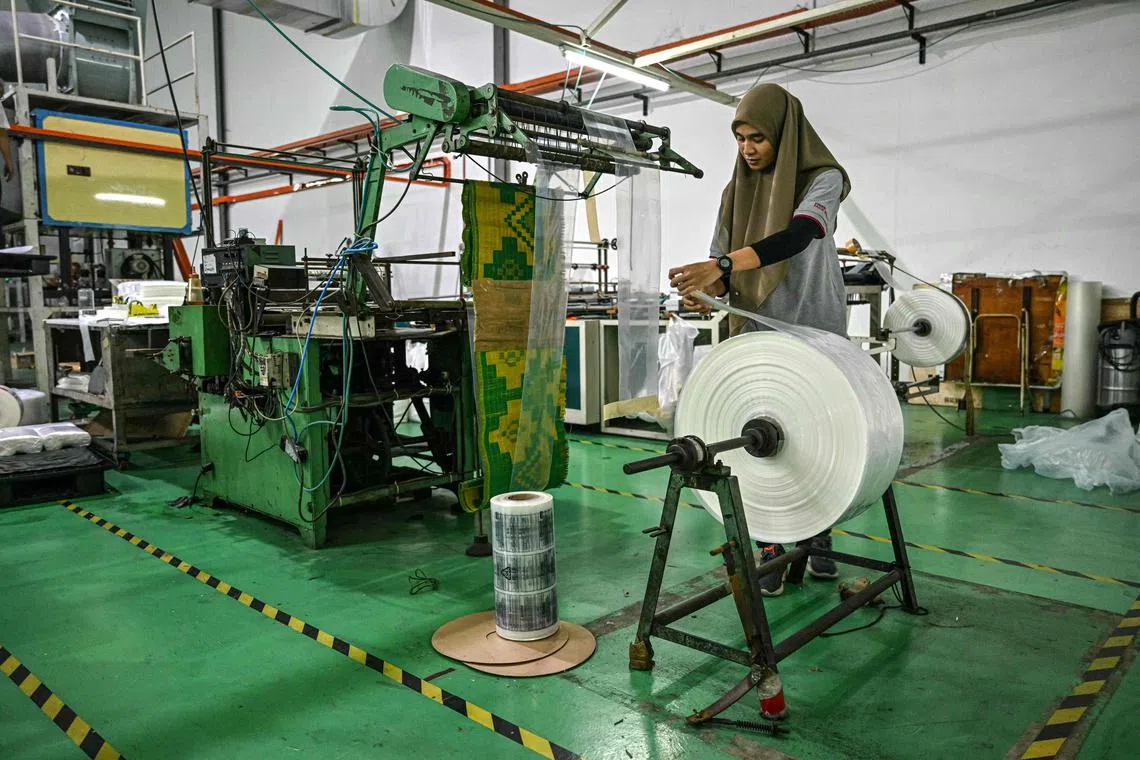
To further support local businesses, the government will facilitate investment-matching exceeding RM100 million through a public-equity funding platform, targeting growth in sectors such as electrical and electronics, speciality chemicals and medical devices.
The budget statement will be debated for eight days from Oct 18, followed by responses from the relevant ministries from Nov 6.






