



Malaysia’s role in non-China rare earth chain grows, but gaps remain
Lynas Rare Earths is now producing samarium at its plant in Pahang
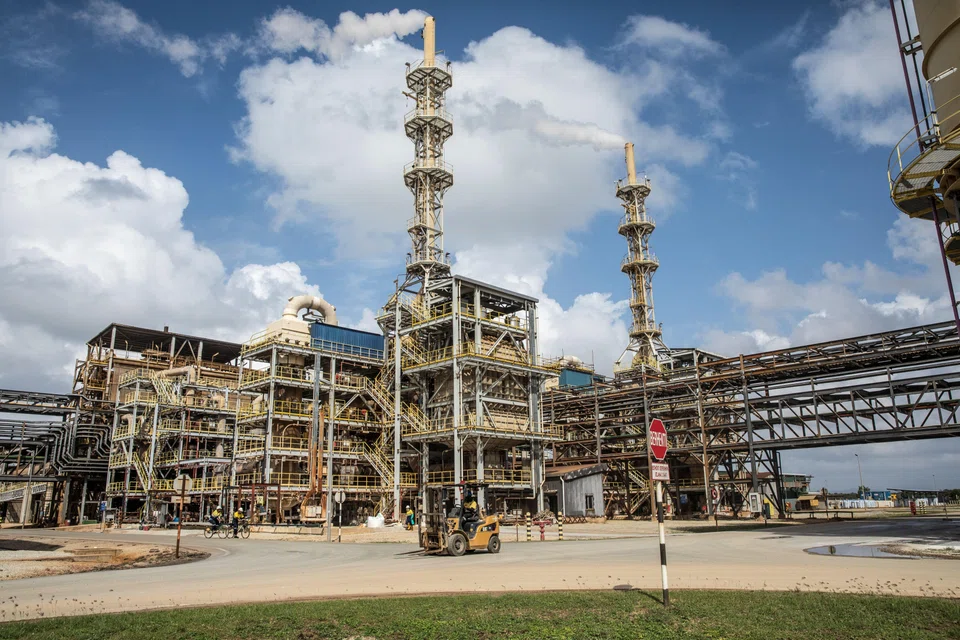
[KUALA LUMPUR] Malaysia is gaining strategic relevance in the global push to build rare earth supply chains that do not involve China. However, analysts said the South-east Asian nation still faces major hurdles in moving beyond its role as a processing base for foreign players.
That tension has come into sharper focus after Lynas Rare Earths began producing samarium at its plant in Pahang on Mar 19, adding to scarce ex-China processing capacity for a strategically important rare earth used in specialised magnets.
“Few facilities outside China are able to separate samarium oxide, so this strengthens Lynas’ capabilities within the ex-China rare earths industry,” David Merriman, research director at Project Blue, told The Business Times.
Still, industry observers said the development does not by itself turn Malaysia into a fully integrated critical minerals hub.
Qarrem Kassim, an analyst at the Institute of Strategic and International Studies Malaysia, said the move was “symbolically and industrially significant” because it showed non-China capability in certain heavy rare earth elements.
But he added that Malaysia remains primarily a host to foreign-owned midstream processing, with limited domestic integration in higher-value activities such as metallisation, alloying and magnet manufacturing.
He said Malaysia also lacks home-grown technological and industrial depth in areas such as advanced separation, rare earth metallurgy and materials science, making it difficult to move further up the value chain without stronger research capability, foreign partners and deeper integration with global supply chains.
China’s entrenched dominance across refining and downstream manufacturing continues to shape pricing and commercial viability, Qarrem said, meaning any Malaysian ecosystem would need reliable demand from non-Chinese buyers willing to support local production economics.
Lynas Malaysia managing director Mashal Ahmad said in a response BT’s queries that all of the group’s separated rare earth products are produced at the Gebeng facility in Pahang. Lynas can now supply three heavy rare earth elements – samarium, terbium and dysprosium – from a single processing facility outside China.

The company had previously guided for first samarium production from the facility by April 2026. The earlier-than-expected start follows Malaysia’s renewal of Lynas’ operating licence for 10 years until 2036, giving the group a longer runway to expand production.
Processing is the key
“The bottleneck is processing rather than mining,” Selena Ling, chief economist at OCBC, told BT, noting that while China produces 60 to 70 per cent of mined rare earths, it controls about 90 per cent of global processing capacity.
She said non-Chinese processors such as Lynas were significant because there are few alternatives serving supply chains seeking to diversify away from China.
Dr Abdul Hafidz Yusoff, an associate professor at Universiti Malaysia Kelantan and founder of the Gold Rare Earth and Material Technopreneurship Centre, said rising geopolitical friction was reinforcing concerns over mineral security.
Lynas’ operations in Malaysia are pivotal because they form one of the few large-scale rare earth processing hubs outside China, he said.
Rare earths are increasingly being treated as strategic industrial assets in trade disputes, the professor added, making long-term capability in processing and related technologies an important policy objective for Putrajaya.
Lynas posted gross sales revenue of A$413.7 million (S$365.7 million) for the half-year ended Dec 31, 2025, up from A$254.3 million a year earlier, driven by a 14 per cent increase in neodymium-praseodymium (NdPr) sales volumes and a growing share of contracts priced independently of the Chinese market index.
Japan has committed to take at least 5,000 tonnes a year of NdPr oxide until 2038 under the Enhanced Jare Agreement announced on Mar 10, which includes a US$110 per kilogram floor price.
Lynas is also extending its reach beyond Malaysia. The company announced on Mar 26 a Framework Agreement with LS Eco Energy, a subsidiary of South Korean cable maker LS Cable & System, to develop a rare earth metals production facility in Vietnam.
The facility would process Lynas oxides into finished metals – including samarium, dysprosium and terbium – with samarium metal production the first priority.
Both companies have committed to cross-subscribe convertible instruments valued at about A$30 million each, underscoring the financial stakes of the partnership. The Vietnam development comes as competition for non-Chinese rare earth supply intensifies.
Lynas said its 2030 growth strategy includes expanding into the metals and magnet supply chain outside China.
But Qarrem said Malaysia’s broader ambitions would depend on its ability to build intermediate and downstream capabilities beyond separation. The samarium milestone, while significant, does not by itself resolve that wider industrial challenge.
Decoding Asia newsletter: your guide to navigating Asia in a new global order. Sign up here to get Decoding Asia newsletter. Delivered to your inbox. Free.
Share with us your feedback on BT's products and services
TRENDING NOW

DBS, OCBC, UOB rout lops billions off STI as inflation, rate concerns spook investors

Grab CEO’s wife Chloe Tong on life with Anthony Tan and finding her purpose

OCBC sheds S$8 billion in value as shares close nearly 6% down; analysts cautious on banks

Deal between tycoon friends sparks scrutiny of Philippine power sector

