



Malaysia’s semiconductor firms continue to expand capacity amid inventory correction
Tan Ai Leng
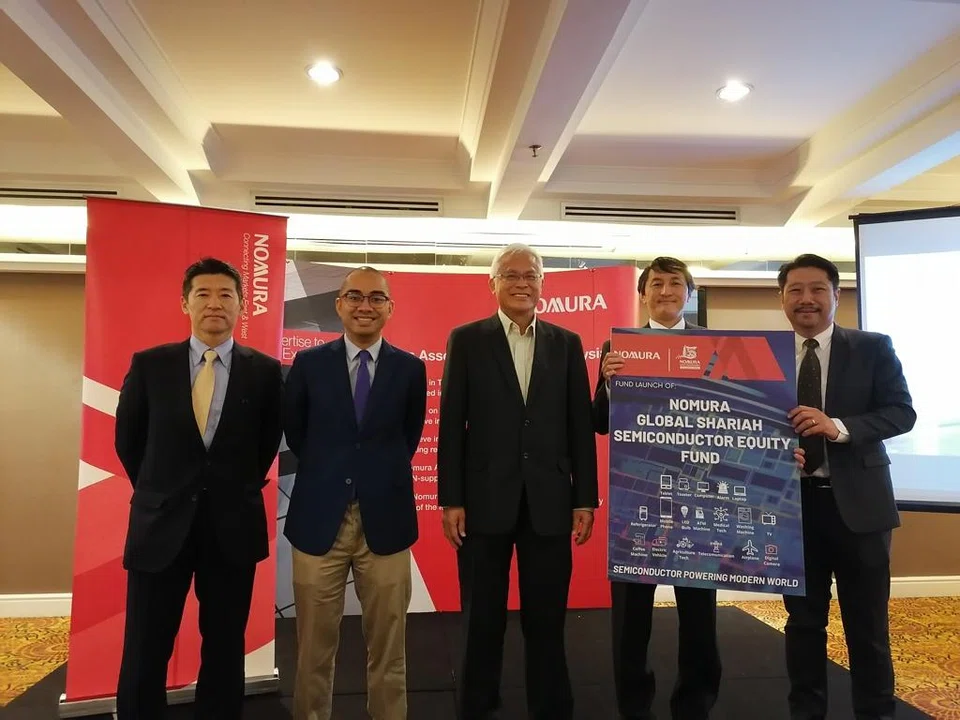
Semiconductor companies in Malaysia are actively expanding their capacity amid global inventory correction, as the majority of them anticipate there will be surging demand from automotive, cloud computing and telecommunication industries.
Wong Siew Hai, president of Malaysia Semiconductor Industry Association (MSIA), said television, computer and smartphone manufacturers are reducing their orders due to the fear of recession, but demand from other industries remained resilient.
“The fear (of recession) will go away, but capacity expansion takes years to build. In September last year, 6 major companies in Malaysia had difficulties delivering the global order due to limited capacity, hence most companies are expanding now to prepare for the next rebound,” he told The Business Times after the launch of Nomura Global Sharia Semiconductor Equity Fund on Wednesday (July 27).
Malaysia is the sixth largest exporter of semiconductor and integrated circuits (IC) globally, accounting for 6.3 per cent of the world’s total exports. The country’s electric and electronics (E&E) product exports totalled RM455.7 billion (S$142 billion) in 2021, representing 36.8 per cent of Malaysia’s total exports. The E&E industry has also garnered RM148 billion of approved investment in 2021 – nearly half of the country’s approved investment of RM306.5 billion.
One such investment was US-based Intel Corp’s US$7 billion (S$9.7 billion) expansion of its Penang plant. Recently, German-based Infineon Technologies’ Malaysia subsidiary also announced its plan to invest RM8 billion to build the third wafer fabrication plant.
Outside Malaysia, major semiconductor players are planning over US$550 billion investments to build fabrication plants. The global semiconductor market is expected to grow by 8.8 per cent to US$601 billion in 2022, said Wong, citing Digitimes Research.
Although Malaysia’s matured ecosystem, complete infrastructure and local talent pool have been the country’s advantages to attract foreign investors, Wong noted that there’s a need for the industry players to venture into the design and manufacturing segment, especially for IC products.
“We have a big IC design centre in Malaysia, which is Intel Corp’s that has over 4,000 engineers, but we are hoping to see more local companies explore this segment,” he said.
Wong noted that high initial investment cost is the main reason. “The tools (machinery or equipment) cost around RM1 million to a few million ringgit, excluding human and material costs. Furthermore, this doesn’t guarantee success.”
In order to encourage more local companies to explore this segment, MSIA is now in talks with the Malaysian government for funding support to procure the machinery and equipment to rent it to the local companies by pay-per-use model, he said, adding that there might be good news in the second half of this year.
Separately, Nomura Asset Management Malaysia introduced the Nomura Global Sharia Semiconductor Equity Fund on Wednesday to offer investors opportunities to access the rapidly growing semiconductor sector driven by global digitalisation trends.
The minimum initial investment of the fund is RM1,000 or US$1,000. It will focus on quality semiconductor companies that have high growth potential, healthy profit margins and strong intellectual property, pricing power and balance sheets.






