



Malaysia’s six upcoming state elections, and what’s at stake
Tan Ai Leng
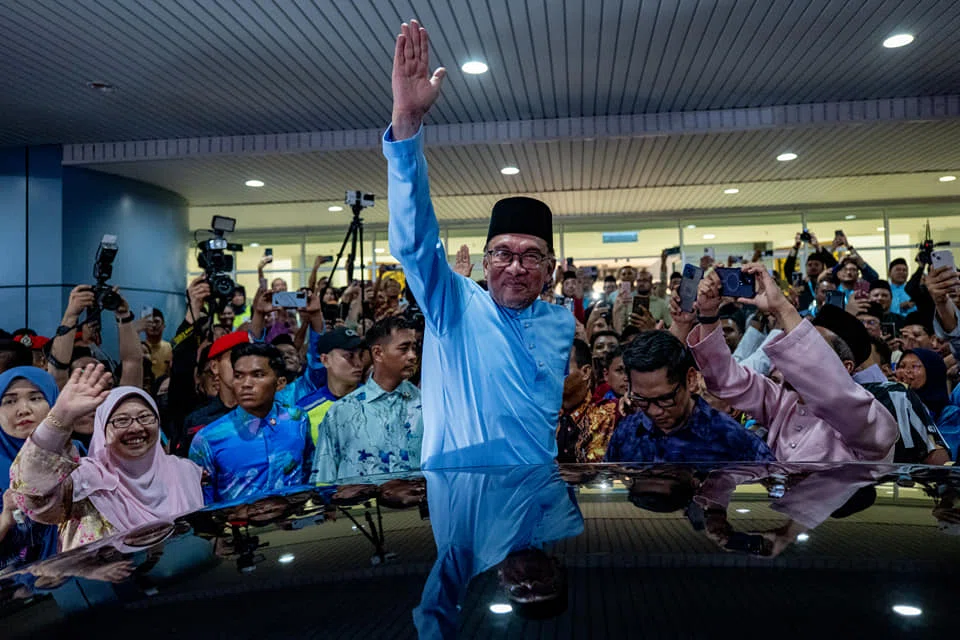
[KUALA LUMPUR] The upcoming state assembly elections in six Malaysian states – expected to be held simultaneously by July – are seen as a crucial test to the ruling political coalition that formed the unity government.
With only weeks to go, unofficial campaigning has already started, with the coalition and the opposition parties out in full force as they canvass for support.
The six states heading to the polls are Selangor, Negeri Sembilan, Penang, Kelantan, Terengganu and Kedah.
Kelantan, Terengganu and Kedah are currently led by the Malaysian Islamic Party (PAS), a key component of Malaysia’s leading opposition coalition Perikatan Nasional (PN). The other three states are led by Prime Minister Anwar Ibrahim’s Pakatan Harapan (PH) coalition.
Here is the lowdown on what is at stake at these elections, which are largely seen as a gauge of the support level for Anwar and his administration.
How important are these state elections?
With no single political party or coalition managing to secure a simple majority at last year’s general election, the unity government’s mandate continues to come under scrutiny by the opposition. Getting a strong result in the PN-led states is important for the ruling coalition; doing so would enable the federal government to have a greater influence on policy implementation as well as gain it momentum for the next general election.
What are the chances of Anwar’s coalition making a breakthrough in the three PN-controlled states?
PAS has strong influence in Kelantan, Terengganu and Kedah, which have a combined population of more than 5.2 million. The majority of the voters there are Malay.
The grassroots’ support for the long-serving statesmen there makes it difficult for opponents, especially those from the PH coalition. This time, however, voters’ frustrations on several unresolved issues could help the governing coalition.
Two key issues faced by people in these three states are poverty and lack of infrastructure development.
Despite being rich in natural resources, the World Bank lists Kelantan and Kedah as among the poorest states in Malaysia. Data from the Department of Statistics Malaysia showed that nearly 57 per cent of households in Kelantan and 44.2 per cent in Kedah earn below RM4,000 (S$1,162) a month. In 2020, the poverty rate was 21.2 per cent in Kelantan, and 12.7 per cent in Kedah.
Terengganu was once the poorest state in Malaysia, before the discovery of oil and gas reserves. Over the years, the state has experienced rapid industrialisation and growing economic activity. The state is regarded as the new investment hub in the East Coast, attracting 29 approved manufacturing projects worth RM2.3 billion from 2017 to 2022.
The state’s average monthly household income was about RM2,500 in 2016, less than half the national average of RM5,288.
Politicians from the governing coalition have repeatedly stressed that the authorities will attract foreign investment to the three states, which will create jobs and raise the household income levels.
During his recent visit to Kedah, Anwar promised to facilitate investments from China into the Kulim Hi-Tech Park in the state.
At a separate event in Terengganu, the prime minister said the state has the potential to attract investment from China’s Rongsheng Petrochemical.
What are the infrastructure developments proposed by the PH government?
In Kedah, Anwar has announced an allocation of RM1.6 billion for the state’s development.
In Kelantan, lack of infrastructure has been a pressing issue for its population of 1.9 million. For instance, just two-thirds of households have access to piped water at home. This has been a problem for many years due to the state’s financial constraints.
Deputy Prime Minister Ahmad Zahid Hamidi, who is also rural and regional development minister, said Putrajaya has set aside RM1 billion for Kelantan to solve its water woes.
For Terengganu, Anwar has repeatedly said that the development of the East Coast Rail Link (ECRL) will boost the prospects of the oil-rich state. The ECRL project is one of the few infrastructure developments that has not been affected, despite the constant change of governments in recent years.
The 665-kilometre double-track line crosses four states – Kelantan, Terengganu, Pahang and Selangor – and is expected to start operations in 2027.
Are Penang, Selangor and Negeri Sembilan still “safe states” for the PH coalition?
Penang, Selangor and Negeri Sembilan are among the most urbanised states in Malaysia, with a combined population around 8.5 million.
Voters in these states are more concerned about policies and measures that could accelerate the economy as well as improve their quality of life, such as strengthening connectivity and reducing traffic congestion.
In Penang, Anwar has announced that the federal government will allocate more funds to expedite a Light Rail Transit (LRT) project to ease the traffic congestion in Penang island. The 22 km LRT linking Bayan Lepas to George Town is a major component of the state’s RM27 billion transport master plan, which involves the development of a cable car line, monorail lines and an undersea tunnel.
In Negeri Sembilan, Anwar has allocated RM1.2 billion to implement various infrastructure and socio-economic developments, including the construction of an exit road to Seremban’s city centre.
PH has ruled Selangor for 15 years since 2008, including the period when PH was known as Pakatan Rakyat. However, Malay support shifted towards PN in last year’s general election.
In an op-ed piece published on the Fulcrum website, former health minister Khairy Jamaluddin described the divided Malay support as “dangerous undercurrents (that) lurk below the calm waters”.
Seeking balance of power is the key reason that urban voters in Selangor lean towards PH. But the formation of a unity government which included Barisan Nasional – the party rejected by many due to the corruption allegations of several leaders including former premier Najib Razak – has displeased many residents.
TRENDING NOW

Gas Supply may pursue remedies if contract breached following Indonesia’s export cuts: Tan See Leng

Why the biggest business decision about AI isn’t which model to choose

If Europe goes to war, the fallout will be felt in East Asia
Singapore expects all parties to honour commitments, says PM Wong after Indonesia cuts gas exports

