



Malaysia’s strong ringgit squeezes export reliant glove makers
Strategists say the currency is poised to extend gains in 2026
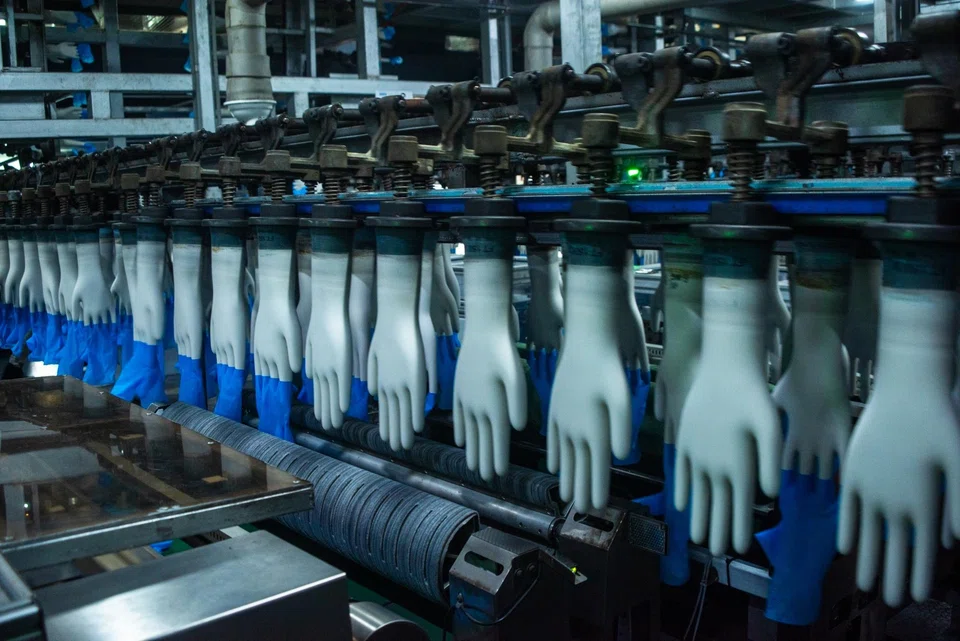
[KUALA LUMPUR] Malaysia’s world-leading producers of latex gloves are facing tightened profit margins as the nation’s strong currency bites into US dollar-denominated earnings, underscoring challenges of the nation’s exporters.
“While ringgit strength lowers systemic risk at the macro level, it comes at the expense of exporter earnings,” said Teck Yong Eng, business enterprise and analytics professor at the University of Reading Malaysia.
The strengthened Malaysian currency hurt first-quarter earnings of Top Glove, the world’s largest glove maker. Its year-on-year sales volume growth of 17 per cent was dampened by a 11 per cent fall in average selling prices due to a weaker US dollar against the ringgit.
“As over 90 per cent of glove manufacturers’ sales proceeds are denominated in US dollars, we expect the persistent softness of the USD versus the ringgit to adversely impact glove makers’ profitability,” Chun Sung Oong, an analyst at CIMB Securities, said in a Jan 7 note.
The ringgit climbed more than 10 per cent against the US dollar in 2025, making it Asia’s best-performing currency as Malaysia’s deep linkages to the global tech supply chain, an improving economic growth outlook and the government’s continued push for fiscal consolidation bolstered investor confidence. Strategists say the currency is poised to extend gains in 2026.
That worsens exporters’ price disadvantage against competitors in overseas markets.
“Exporters will start to worry about whether Malaysia’s export competitiveness will be affected,” said Lee Heng Guie, executive director of the Socio-Economic Research Centre.
For glove makers in particular, a firmer exchange rate erodes company earnings when converted back to ringgit, tightening margins for an industry grappling with excess capacity, intense overseas competition and price-sensitive customers.
“The sectors that are most affected in Malaysia by a stronger ringgit are the tech and rubber glove companies, the companies that have exposure to US dollar revenue,” said Ivy Ng, head of Malaysia research and agribusiness at CIMB Securities.
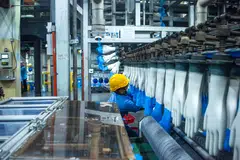
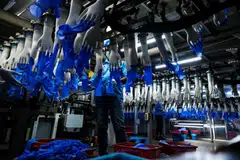
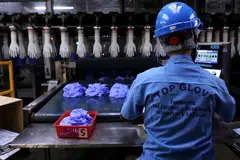
Top Glove’s peer Hartalega Holdings posted a 24 per cent on-year decline in its first-half earnings, pulled down by weaker sales volume. Kenanga Investment Bank cut its net profit forecast for the company by 12 per cent on missed expectations and lower-than-expected sales volume.
Glove maker Supermax’s first-quarter losses more than doubled on-year to RM134.6 million (S$43 million), with shares falling as much as 6.8 per cent on Dec 1 following its results.
Palm oil companies, on the other hand, are able to mitigate a stronger ringgit with currency hedging, Ng said.
Some companies may continue to keep export proceeds in US dollars, which they can use to buy materials, Lee said. “They will not be rushing to convert everything into the local currency.”
Glove makers, though, are not always in a position to set aside large amounts of cash for currency hedging or stashing away dollars for future material purchases, moves that weigh on liquidity, Eng said. They often operate on thin margins with just-in-time contracting cycles that tie up working capital, he said.
A further weakening of the US dollar against the ringgit may lead glove producers to raise average selling prices, potentially reducing short-term demand, William Wo, an analyst at CGS International, wrote in a note last month.
“We view the rise in sales volume as an indicator of Top Glove sacrificing margins to gain market share,” he said. BLOOMBERG
Decoding Asia newsletter: your guide to navigating Asia in a new global order. Sign up here to get Decoding Asia newsletter. Delivered to your inbox. Free.
Share with us your feedback on BT's products and services
TRENDING NOW

Once staunchly pro-China, Malaysian Chinese businesses are now distancing themselves from Beijing

Looking beyond looming CEO succession, should UOB potentially pursue a transformative merger?

Could stablecoins be the future of money?

Grab CEO’s wife Chloe Tong on life with Anthony Tan and finding her purpose

