Asean Business logo
SPONSORED BYUOB logo

Malaysia’s unity government faces test of mandate in Aug 12 state polls

Tan Ai Leng

Published Wed, Jul 5, 2023 · 02:13 PM
    • The rising support of Malay voters for Parti Islam Se-Malaysia – a component party of Perikatan Nasional coalition – has been described as a "green wave".
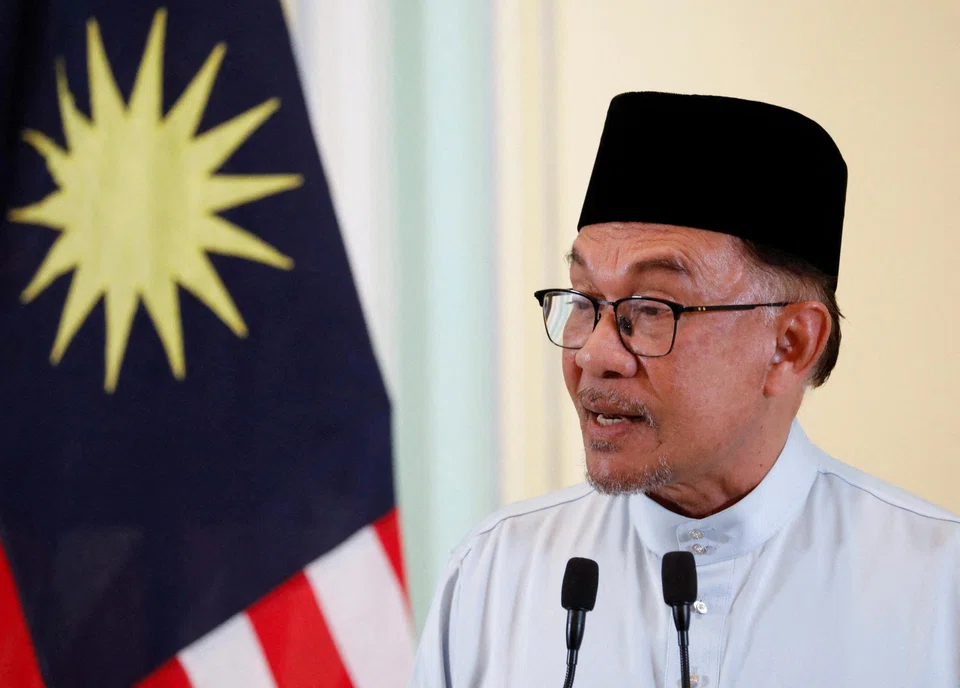
    • Political analysts say the results of the state polls may affect future policy decisions by Anwar's unity government.
    • The rising support of Malay voters for Parti Islam Se-Malaysia – a component party of Perikatan Nasional coalition – has been described as a "green wave". PHOTO: PARTI ISLAM SEMALAYSIA
    • Political analysts say the results of the state polls may affect future policy decisions by Anwar's unity government. PHOTO: REUTERS

    [KUALA LUMPUR] Malaysia’s unity government, led by Prime Minister Anwar Ibrahim, faces its first test of public support in six state polls on Aug 12, with the Election Commission (EC) announcing the date on Wednesday (Jul 5).

    Political analysts expect the polls to serve as a barometer of support for the unity government, and to indicate the strength of the opposition “green wave”, named after the colour of the Parti Islam Se-Malaysia (PAS) flag.

    Close to 9.8 million registered voters are expected to cast their ballots in the state elections, to be held simultaneously in Selangor, Negeri Sembilan, Penang, Kedah, Kelantan and Terengganu.

    PAS is the incumbent in the latter three states, while the other three fall under Anwar’s Pakatan Harapan (PH) coalition.

    Malaysia’s other states held their state polls simultaneously with last November’s general election. These six states did not do so, and have now dissolved their assemblies as their terms expire this year. Kelantan was the first to do so on Jun 22, and Negeri Sembilan the last, on Jul 1.

    Nomination day for the state elections is Jul 29, giving the candidates 14 days for campaigning.

    Applications for overseas postal voters, which began on Jun 15, will close on Jul 8. Domestic postal voter application will end on Jul 26.

    The six state polls will cost RM420 million (S$122 million) to hold, said EC chairman Abdul Ghani Salleh at the press conference, after the committee met on Wednesday morning to decide the date.

    A total of 245 state seats will be contested: 36 in Kedah; 45 in Kelantan; 32 in Terengganu; 40 in Penang; 56 in Selangor and 36 in Negeri Sembilan.

    Anwar’s legitimacy as Malaysia’s tenth prime minister has been questioned, after the 15th general election last November resulted in no single coalition securing a simple majority of 112 parliamentary seats.

    Instead, Anwar’s unity government comprises the PH coalition that he leads as well as Barisan Nasional and two East Malaysia-based parties, Gabungan Parti Sarawak and Gabungan Rakyat Sabah.

    PAS, a component party of the opposition Perikatan Nasional (PN) coalition, made solid gains in last year’s general election, winning 49 parliamentary seats – up from 18 in the previous election.

    Professor Liew Wui Chern, political analyst and lecturer at Universiti Tunku Abdul Rahman, said the rising support of Malay voters for PN or PAS was seen as a green wave.

    “However, it is unsure whether the votes for PN coalition are for their religious ideology, or frustration towards the United Malays National Organisation (Umno) – the leading party of the long-ruling (Barisan Nasional) coalition,” he told The Business Times.

    “We will know from the results and this will also affect the unity government’s future policymaking,” he said. If the PN coalition secures more seats or gains more Malay votes, the unity government’s future policies may pay more attention to religious concerns to regain support, he added.

    The support of Malay voters remains crucial to the unity government, as they are the country’s majority ethnic group, forming nearly 70 per cent of the 32.7 million population in 2022. The Chinese and Indian shares of the population are around 23 per cent and 6.6 per cent, respectively.

    “Nevertheless, if the ruling coalition manages to win more seats or even win a majority of state seats in PN-controlled states, this shows that the impact of the green wave has subsided, and the unity government could take bolder actions in policymaking as well as fiscal reforms,” said Prof Liew.

    Lau Zhe Wei, associate professor at the International Islamic University Malaysia’s Department of Political Science, expects the cost of living and economic growth to remain voters’ main concerns in the coming state polls.

    He therefore does not expect major changes: “Everything will remain (per the) status quo, with minor changes on seats winning or losses, but it will not result in the change of federal government.”