



As May 14 polls loom, Thais once again wish for a more democratic future
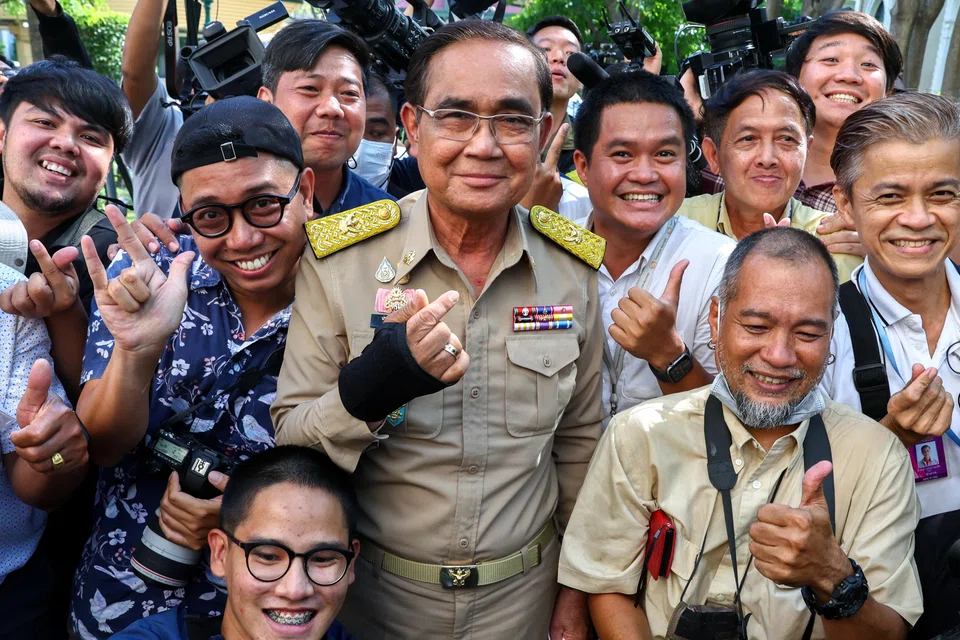
[BANGKOK] Thailand heads to the polls on May 14 for a hotly contested general election that many voters hope will go some way towards restoring democracy in South-east Asia’s second-largest economy.
Thailand has a long history of coups that have destabilised the political scene to varying degrees, with at least 13 successful ones since the end of absolute monarchy in 1932. The most recent coup took place in 2014, led by current Prime Minister Prayut Chan-o-cha – the army chief at that time – that resulted in the government under Yingluck Shinawatra being forced out.
This year, there is another Shinawatra in the mix – Yingluck’s niece Paetongtarn, the youngest daughter of billionaire Thaksin Shinawatra. The 36-year-old Paetongtarn, who is likely to be the Pheu Thai Party’s nominee for prime minister, will square off against military-linked candidates at the polls, including Prayut.
With election campaigning now in full swing across the country, many political observers are already looking to the post-election manoeuvres as being more crucial than the polls’ outcome itself.
Thitinan Pongsudhirak, the director of the Institute of Security and International Studies and an associate professor at Chulalongkorn University, wrote in a recent opinion piece for The Bangkok Post: “We will either see Thailand settling deeper into a long-term conservative-royalist bureaucratic state, or perking up with a qualitatively different government that could move the country forward again.”
Under Thailand’s current constitution, the appointed senate of 250 members has inordinate power in selecting the country’s next prime minister, regardless of the election result.
Following the polls, the most successful party must win more than half the combined votes of the 500 elected members of parliament (MPs) and of 250 senators to secure the premiership, or a total of more than 375 votes.
The current senate was appointed by the military regime that came to power following the May 2014 coup.
Prayut has led the country for the past nine years, presiding over an under-performing economy – although he was credited for pushing through hefty public investments in infrastructure projects in recent years, which are likely to boost the country’s long-term competitiveness.
The 69-year-old Prayut now heads the United Thai Nation Party, after leaving the military-backed Palang Pracharath Party, which supported him at the last election in 2019.
He remained as Prime Minister that year with strong support from the senate, despite the fact that Palang Pracharath came second in terms of winning MPs at the polls (115).
The Pheu Thai Party, which is backed by the fugitive former premier Thaksin, came in first in 2019 with 136 elected MPs. However, it failed to muster sufficient coalition parties to support its bid for power and the premiership, and was snubbed by the senate.
This year, Pheu Thai is hoping to win by a landslide with 310 seats. Together with support from some coalition parties, it could have the necessary 376 MPs needed to overcome senate opposition.
According to a recent opinion poll conducted by the National Institute of Development Administration (Nida), about 38 per cent of Thais support Paetongtarn as the next prime minister; only 15.7 per cent said they support Prayut.
Pita Limcharoenrat, the leader of the Move Forward Party (MFP) – a new political force that won 80 seats in the 2019 election on a platform of pushing for dramatic political reforms – came in second in the Nida poll with a support level of 15.8 per cent.
The MFP has strong support among younger voters, who wish to see real changes in Thai politics and society. Observers say the party would be a viable candidate to join a Pheu Thai-led coalition.
Another important player after the election is the Bhumjaithai Party (BJP) led by Anutin Charnvirakul, and the Palang Pracharath Party headed by political veteran and former army chief Prawit Wongsuwan.
Most of the contending parties’ election platforms have focused on increasing the monthly allowance for some 15 million Welfare Card holders, or raising the minimum wage.
Pheu Thai has promised to raise Thailand’s minimum wage to 600 baht (S$23.30) a day by 2027, from the current rate of between 328 baht and 354 baht. The party also hopes to raise minimum salaries for graduates to 25,000 baht a month, from the current 15,000 baht.
These targets have distressed the Thai business community, especially the small and medium-sized enterprises, but the policies are unlikely to have a huge impact on foreign direct investment (FDI).
For the past five years or so, the government has been promoting a “Thailand 4.0” strategy, targeting FDIs in high-tech sectors such as electric vehicles, while moving away from cheap labour sectors.
A bigger factor that might affect FDI is the possibility of more political inertia should the conservative power factions try to once again stymie a popularly elected coalition government that threatens their comfort zone.
“If this election is subverted and distorted again to end up with more or less the same kind of government, Thailand will see more signs of political decay,” said Thitinan.
TRENDING NOW
China Investment Corp, PGIM’s 50% stake in Nex mall up for sale; asking about S$1.2 billion

Higher rates, weaker spending: Is the Philippines entering stagflation?
Singapore tech stocks plunge as Nasdaq bloodbath spills into region
OCBC wealth clients turn defensive amid market volatility as Q3 profit rises 3%

