



Vietnam welcomes MNC wave with smarter and greener industrial parks
Jamille Tran
[HO CHI MINH CITY] In recent years, the likes of Foxconn, Lego, Google and Microsoft have either relocated to or expanded their production in Vietnam, as part of a concerted effort to diversify their supply chains beyond China.
These multinationals have, in turn, pushed the developers of Vietnam’s vast industrial parks to tap on the growing demand for smarter and greener facilities and infrastructure.
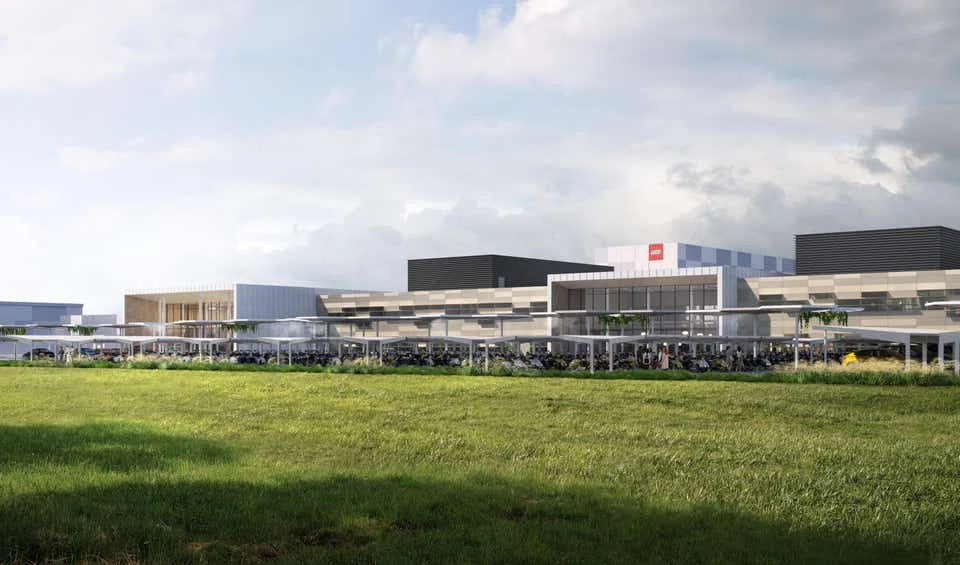
Among the big-money investments was by Danish toy group Lego, which poured US$1 billion into a new carbon-neutral plant that is considered a “green cornerstone” for the next generation of foreign direct investment (FDI) inflows to Vietnam.
This modern facility called Lego Manufacturing Vietnam broke ground in 2022 and is the company’s sixth-largest facility in the world.
It is located in the Vietnam-Singapore Industrial Park (VSIP) III in the southern province of Binh Duong. This smart and sustainable industrial park is one of 13 that were established by a joint venture between Singapore’s Sembcorp Development and Vietnam’s state-owned enterprise Becamex IDC Corporation.
In August, during Singapore Prime Minister Lee Hsien Loong’s visit to Hanoi, Sembcorp and Becamex announced they had received an investment licence to develop one more VSIP, and in-principle approval to develop three others. This would take the total in the portfolio to 17.
VSIP III was designed to incorporate smart technology in every aspect of its operations, from its energy, water and waste use, to traffic and security management. There are also decarbonisation solutions like rooftop solar systems, solar farms, and green-certified buildings.
At least five more VSIPs of this type of design, with a total value of US$1 billion, are being planned across Vietnam in the coming years.
Shashi Jagadiswaran, a technology consulting partner at EY Consulting Vietnam, said the motivation to have such industrial advances in terms of smart and green facilities is to attract more FDI.
“Being in the status quo is not no longer an option. (Vietnam is) going to lose opportunities by just remaining the same,” he said.
Sustainability goals
The government is pushing manufacturing and every other sector in the economy towards a higher level of sustainability and digitalisation, he said.
As a regional manufacturing hub, Vietnam has committed to carbon neutrality and to phase out the use of coal by 2050.
The government has also introduced a national strategy for the fourth Industrial Revolution with the aim of boosting the digital economy’s contribution to its national GDP to 30 per cent by 2030.
Tan Boon Thor, the commercial head and director of design management at Frasers Property Vietnam, said that given such supportive government policies at the highest level, the current sustainability efforts in Vietnam are mainly driven by corporations, “which means this can be fragmented”.
“The demand comes mainly from MNCs that take a long-term view and have sustainability as a key agenda,” he told The Business Times. “Other companies that are suppliers, or have businesses which form part of the value chain of MNCs, have also come onboard this shift towards greater sustainability.”
Echoing this view, Shashi said companies must look at the economic benefits before they jump on the green bandwagon and set up shop at these advanced industrial parks.
“Moving into a smart or green industrial park should enable them to be more cost-effective, or enjoy cost advantages. If not, it should at least let them break even,” he said.
According to Tan, tenants at buildings with green features can save significant energy costs in the long run. Frasers Property’s portfolio in Vietnam spans across the north and south of Vietnam with multiple asset classes such as residential, commercial, and industrial real estate. It aims to have 80 per cent of its owned and asset-managed properties to be green-certified by 2024, aligning with the group’s sustainability goals including a target to achieve net-zero carbon emissions by 2050.
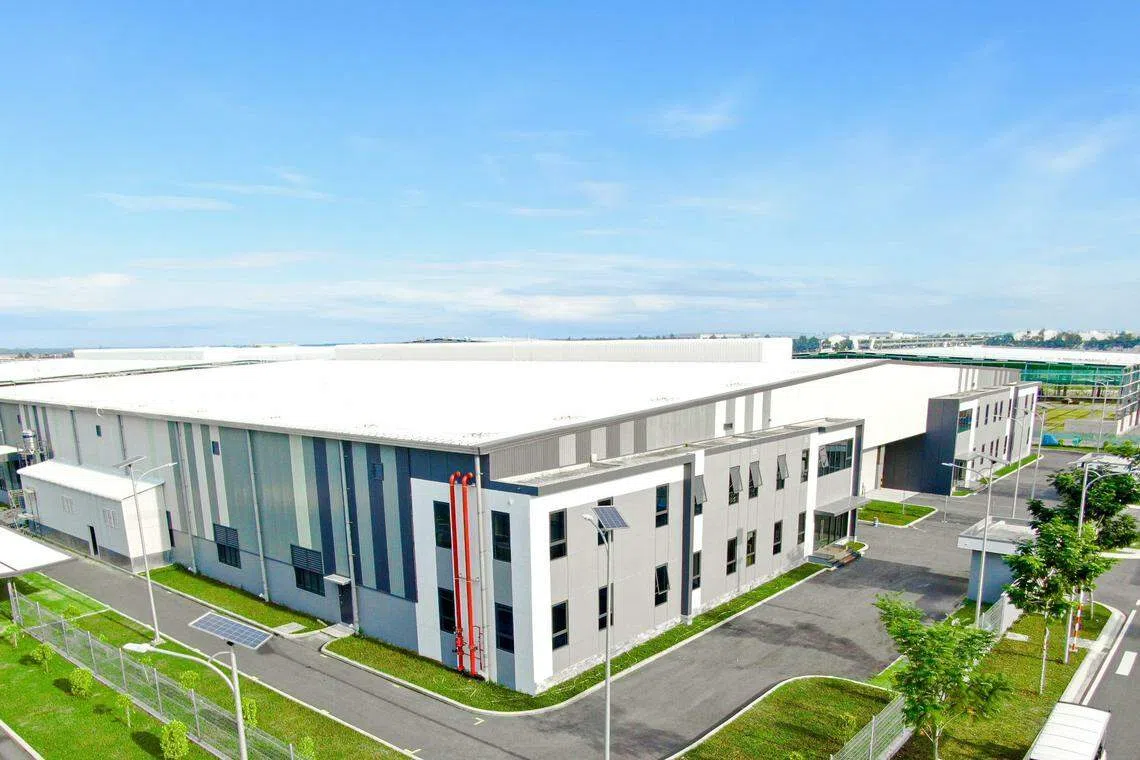
Tan said that the company has noticed that green certification features are a key priority in its tenants’ leasing decisions, even before negotiations have started on rental rates.
This could be attributed to how many countries are paying greater scrutiny on the supply-chain sustainability of their companies and foreign suppliers.
In a 2022 survey conducted by PwC, 37 per cent of respondents in the Asia-Pacific region said that environmental, social and governance factors were mandatory considerations in their real-estate investment decisions – much higher than the 22 per cent that said so a year earlier.
Therefore, Tan believes there is more room for credit and financial institutions to play a bigger role when it comes to green financing in Vietnam.
According to data from Environmental Finance, Vietnam has only issued two green, social, sustainability and sustainability-linked bonds since January 2020 – far less than Malaysia (176) Thailand (65) and Singapore (42).
Observers said this is due to Vietnam lacking a formal sustainable finance framework and legal provisions to facilitate green lending.
Shashi also pointed out that only a handful of around 400 industrial parks in Vietnam today were developed with a “smart” concept. However, he believed that many are expected to be upgraded to meet these new standards over time.
Developers also have to factor in how far they want to go on this green push, given the high cost of bringing in the newer technology and engaging international experts.
“Let’s be practical, it’s not one size fits all. The level of automation or advancement that you see in Germany, Singapore or Japan is very different from what is required in Vietnam,” he said.
TRENDING NOW

He built the Vingroup empire. Now South-east Asia’s richest man is handing some key roles to his sons
US dollar falters after Iran’s offer to reopen Hormuz sends oil lower
Temasek’s Wan Chee Foong to helm PIL, Lars Kastrup to be board adviser

Despite the de-dollarisation debate, demand for dollar liquidity in Asia is growing

